China has signaled it will let ByteDance and Alibaba buy Nvidia’s RTX Pro 5500 workstation chip, according to a report from The Information carried by Reuters on Sunday. ByteDance is weighing an order of about one million cards, and Chinese chip stocks fell on Monday on the news.
China’s Ministry of Industry and Information Technology recently asked companies including ByteDance and Alibaba to report how many RTX Pro 5500 chips they plan to buy and what they will use them for. The ministry told some of them it intends to approve the purchases. Reuters could not verify the report, and no approval date, criteria or volume limits have been published. Nvidia’s own guidance has not changed.
An Nvidia spokesperson told Reuters that US firms remain restricted by a combination of what it called outdated US export controls, which cover gaming products released nearly half a decade ago, and China’s own limits on US imports. The statement frames the chip as sitting in a gap between two regulatory regimes, which is exactly where the story gets interesting.
Why this chip threads the needle
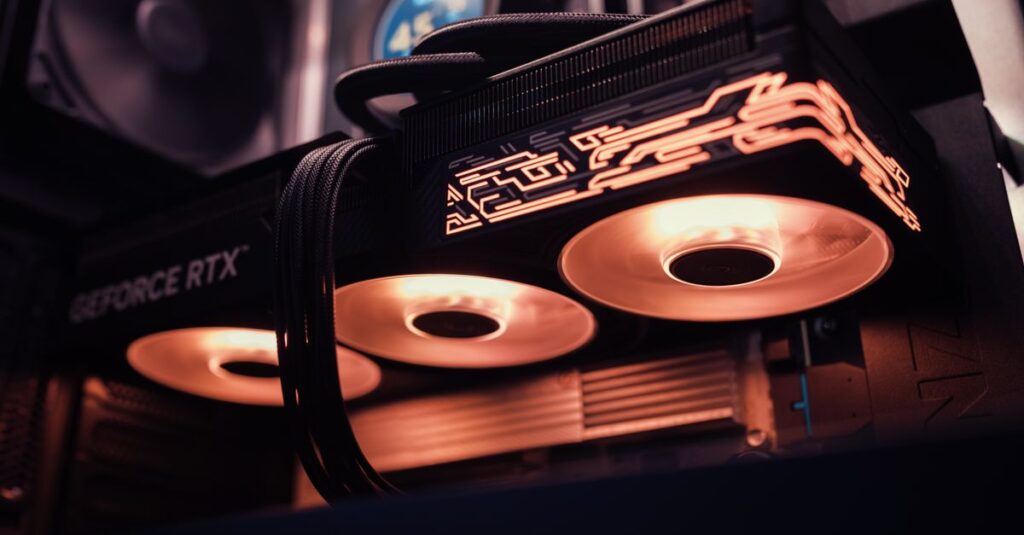
The RTX Pro 5500 is a workstation card, not a data-center flagship. Nvidia unveiled it in September with 84GB of GDDR7 memory, 21,760 CUDA cores and power draw of up to 600 watts, built on the same GB202 processor as the GeForce RTX 5090. It carries about 2.6 times the gaming card’s 32GB of memory. It connects over PCI Express and targets rack-mounted professional workstations. What it lacks is the high-bandwidth memory that makes Nvidia’s B200 and GB200 accelerators the standard for large training runs. For inference and content production, though, eight of these cards in one server can go a long way, and at least one prospective buyer has exactly that configuration in mind.
US export controls were written around data-center accelerators and gaming products. Industry executives cited in the report expect the workstation part to fall outside the current restrictions. Washington has not said publicly whether it agrees. That silence is the open question hanging over the whole arrangement, since any large shipment to China would still need to clear US rules before it leaves American jurisdiction. The US already cleared sales of the H200 data-center chip to China earlier this year, which shows Washington can move fast when it wants to, and also that approval is only half the journey.
The volume math
ByteDance alone is considering roughly one million cards. Nvidia is reportedly planning to ship about 500,000 per quarter to China starting in late December, so ByteDance’s order would equal two quarters of planned supply. At the reported Chinese price of 85,000 to 90,000 yuan per card, about $13,000, a million-card order runs to roughly $13 billion at list prices.
The price point matters for another reason. Huawei’s Ascend 950PR, the domestic accelerator Beijing has promoted as the national alternative, sells in the same range. Chinese chip stocks fell on September 28 on the report: SMIC lost 3.7%, Moore Threads 6.3% and Cambricon 5.7%. If Chinese buyers can legally buy Nvidia again, the scarcity that has lifted domestic vendors comes into question. Huawei rotating chairman Eric Xu said this month that demand for Ascend chips still significantly outstrips supply, so near-term pain may be limited, but the long-run logic of forced substitution weakens. Charu Chanana, chief investment strategist at Saxo, described the possible approval as a pragmatic response to gaps in domestic chip performance and supply.
History says be careful
Earlier rounds of chip diplomacy did not deliver much. China asked Alibaba, Tencent and ByteDance to prepare H200 orders in January 2026. The United States later licensed seven Chinese companies to buy as many as 75,000 H200 chips each, yet no H200 had been delivered by May. ByteDance and Tencent were told to keep their first shipments in Hong Kong rather than bring them onto the mainland. In September 2025, the Cyberspace Administration of China ordered major tech firms to stop testing the RTX Pro 6000D and cancel orders outright. A policy that can be reversed by a ministry notice can be reversed again, which is one reason Chinese buyers hedge with domestic suppliers even when US hardware is available.
Nvidia’s China revenue reflects all of this. Sales to customers headquartered in China, including Hong Kong, fell to $4.55 billion in the most recent quarter from $9.66 billion a year earlier, according to the company’s filings. Chief executive Jensen Huang has said Nvidia’s market share in China has effectively fallen to zero, squeezed between US controls on one side and Beijing’s push for self-reliance on the other.
That is the context for the current report. Two governments that have spent two years restricting the same trade may be feeling out a narrow reopening. Beijing’s motive is probably mixed: domestic AI compute is genuinely scarce, and showing flexibility costs little while Washington and Beijing explore a broader technology dialogue. The report rests on two anonymous sources, and both governments have reasons to let it float as a trial balloon before anything is signed.
What would turn signal into substance: formal MIIT approvals with named quantities, an unchanged US posture on workstation-class exports, actual deliveries in late December at anything close to the planned pace, and a response from Huawei on pricing. Customers have reportedly been told to place orders by September 30. Watch whether those orders get stamped.