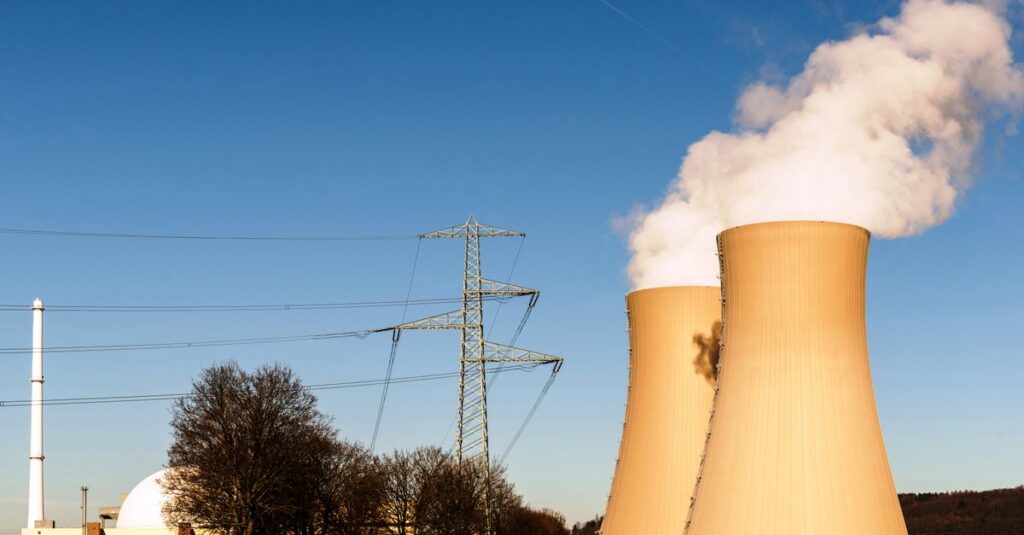
Google and Constellation Energy signed a 20-year power agreement covering 890 MW of new nuclear capacity for the PJM grid, backed by $4.3 billion of upgrades across 11 existing reactor units. The deal lands as hyperscalers for the first time outbid each other for the output of an existing nuclear fleet rather than waiting for new reactors to be built.
Constellation owns the largest nuclear fleet in the US, 22 reactors across several states in and around the PJM footprint. PJM is the regional transmission organization covering parts of 13 states from Pennsylvania down to North Carolina and west to Illinois. Data center construction in Northern Virginia and elsewhere in the footprint has pushed the grid operator into periodic reliability warnings as demand outpaces what the transmission system can handle.
Why the deal shells out for existing reactors
The fastest path to more clean firm power in the US is not a new reactor program. New nuclear plants have a long history of cost overruns. The two Georgia Vogtle units completed in the last two years took nearly a decade and cost roughly $35 billion combined, well above what either Utility had promised when construction began. Upgrading existing reactors, from turbine replacements to new digital control systems and better cooling, typically delivers incremental megawatts faster and with higher predictability on cost, because the site, the license, and the workforce are already in place.
The $4.3 billion in the deal funds exactly that kind of work across 11 units. The result is 890 MW of firm, zero-carbon capacity, enough to power something in the range of 1 million homes, delivered on a schedule measured in years rather than the decade-plus horizon of greenfield nuclear finishes. Grid operators have historically struggled to lock in long-term contracts with industrial buyers of this size, because most data center deals up to now assumed cheap abundant gas would handle the baseline.
Google is not the first to try this route. Microsoft signed a 20-year power purchase agreement with Constellation in 2024 tied to the restart of Three Mile Island Unit 1, renamed Crane Clean Energy Center after a shutdown in 2019. Amazon bought a data center campus next to a Pennsylvania nuclear plant the same year to lock in local capacity. Meta followed with nuclear procurement in 2025 under its own 4-gigawatt request for proposals, shortlisting several sites across the country.
The gap between demand and capacity
AI data centers are consuming power at rates that older forecasts underestimated. A single large GPU cluster can draw the load of a small city. Analysts at major banks have put data center electricity demand growth in the double digits annually through the end of the decade, and PJM’s own capacity auction results this year cleared at much higher prices than prior years as generators priced in the demand wave.
Firm clean power, meaning generation sources that deliver around the clock regardless of weather, is the scarcest form of supply for that demand profile. Wind and solar cover large portions of the day but need storage or backup to work alone. Nuclear delivers the baseline at a utilization rate above 90% in the US fleet. Windless winter spells in January and February are exactly when data center demand peaks, and that is a hard constraint for any buyer trying to sign a power purchase agreement with confidence.
Reactor uprates alone will not fill the gap. Analysts following the space note that the entire US fleet could realistically yield 5 to 10 gigawatts of uprate potential over the next decade, a fraction of what the data center industry says it will need. Advanced reactors promised by the Department of Energy for the 2030s arrive too late to absorb most of the current construction wave. For now the hyperscalers are buying time as much as power.
The deal pattern also puts pressure on the remaining merchant nuclear operators. Two of the larger ones, Constellation and Vistra, saw their share prices rise sharply after the Microsoft and Google deals respectively. Utilities that own nuclear are now repricing what they think a 20-year contract should cost, and buyers planning similar deals later this year will likely face higher prices per megawatt than the ones Google just agreed to.
What comes next for regional grids
PJM announced in early October that it expects additional changes to its capacity market rules in response to demand growth. Grid operators across the US are wrestling with versions of the same problem. Data center buildout concentrates in a handful of regions because of fiber, land, and permitting, which produces demand pockets rather than smooth national growth. Congestion is local before it is national, and capacity prices in a stressed region can spike years before national averages move.
The deal is one of several large clean-power agreements announced by a hyperscaler this week, after separate agreements covering solar and wind supply was reported earlier. Utility regulators and lawmakers in several states have started asking harder questions about whether data centers are paying their fair share of grid infrastructure costs, and whether residential ratepayers end up subsiding the load growth from tech customers. Hearings are scheduled in at least two states before the end of the year.
Whether nuclear uprates keep attracting this kind of long-term contract at current valuations is the signal to watch through the rest of the quarter. If a second hyperscaler signs a similar deal within weeks, the repricing of nuclear as data center collateral will be well underway and the next set of contracts will be structurally different from the ones signed this year.