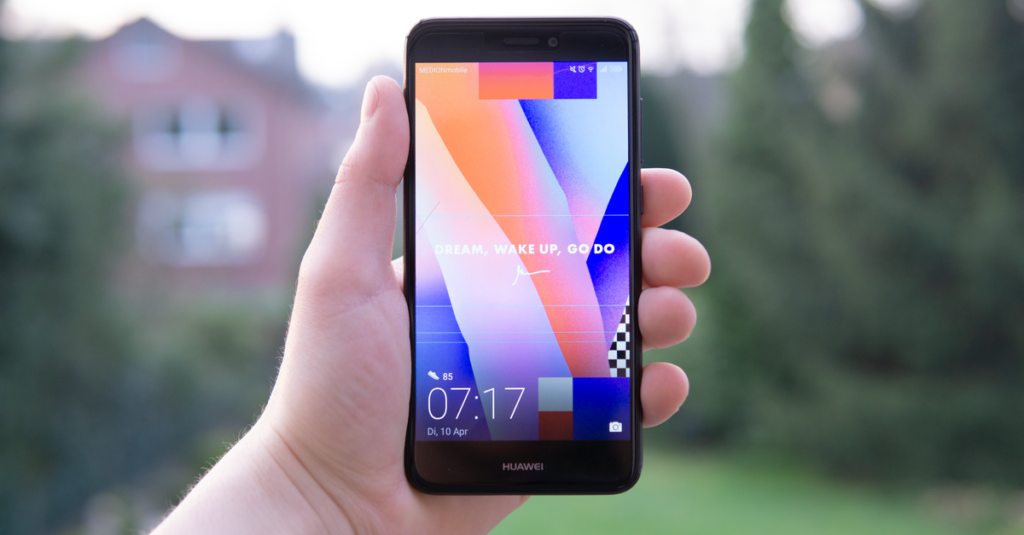
Huawei launched its Mate 90 smartphone series on October 1, betting on a new homegrown chip architecture to keep its phones competitive despite US export controls that have cut the company off from the most advanced fabrication processes. The flagship Kirin 9050 Pro inside the Mate 90 Pro Max and the RS Ultimate Design model uses a technique Huawei calls LogicFolding, which restructures chip wiring in three dimensions instead of the conventional flat two-dimensional layout.
Huawei claims the approach compresses critical path latency enough to enable five million signal transmission bonds and 125 terabytes per second of inter-die bandwidth. The Pro Max Premium and RS Ultimate Design versions gain 31 percent overall performance over the prior generation. The Pro model uses a Kirin 9035 chip with a 20 percent boost, and the standard Mate 90 runs a Kirin 9030 with 27 percent gains. All four models run HarmonyOS 7, which Huawei says is vertically integrated with the chip and the cloud, from hardware up through applications.
Richard Yu, the head of Huawei’s consumer business, acknowledged the constraint before the launch, telling reporters that advanced semiconductor capacity in China remains very limited and that Huawei’s Ascend AI chips draw on the same production lines. Huawei has not disclosed who manufactures the Kirin 9050 Pro, though SMIC, China’s largest contract foundry, is widely believed to produce the Kirin chips used across the Mate line and the Ascend processors.
How LogicFolding works around the fab gap
The Tau scaling law, as Huawei labels the broader approach, stacks logic circuits vertically rather than relying only on shrinking transistor size. The Kirin 9050 series uses a packaging density Huawei puts at about 238 million transistors per square millimeter, a 53.5 percent increase over last year’s Kirin 9030 Pro. That gain comes from architecture and packaging rather than from a smaller process node, which is essentially the only route Huawei has when US sanctions block access to extreme ultraviolet lithography, the tool Western chipmakers use to reach leading-edge nodes.
The technique has a real cost. Stacking logic in three dimensions requires more wafers to produce the same chip area, which raises manufacturing cost and puts added pressure on domestic wafer supply that is already tight. Industry analysts who follow the Chinese semiconductor market say this trade-off is the price Huawei pays for performance while imported advanced tools stay out of reach. It is also why Yu’s admission about limited capacity matters inside Huawei’s own portfolio, not just as a general statement about China’s chip industry.
| Model | Chip | Performance gain vs Mate 80 |
|---|---|---|
| Mate 90 | Kirin 9030 | +27 percent |
| Mate 90 Pro | Kirin 9035 | +20 percent |
| Mate 90 Pro Max | Kirin 9050 Pro | +31 percent |
| Mate 90 RS Ultimate Design | Kirin 9050 Pro | +31 percent |
The broader phone lineup and what it signals
The Mate 90 series succeeds the Mate 80 line, which launched in November 2025, and arrives about two months earlier than the usual annual cadence. Huawei has also been scaling production of the Tau chip across its wider product range, putting the same self-developed silicon into the Mate XT 2 tri-fold phone, which launched in early September and is tracking toward a million units sold. The company had already shared preliminary details of the chip technology in May, giving time for the wider rollout across models and giving rivals advance warning of what was coming.
China’s smartphone market is the largest in the world by unit volume, and Huawei has been clawing back share at the expense of Apple since sanctions forced it out of 5G phones in 2020 and homegrown Kirin chips brought it back. The Mate 90 launch is a test of whether that momentum holds when the phone’s headline claim is architectural novelty rather than process leadership. Benchmark comparisons with the latest Snapdragon chips in Android rivals, and with Apple’s A-series silicon in the iPhone, will show whether the performance claims hold up in independent testing rather than in Huawei’s own lab numbers. Huawei’s footnotes in its own release note the figures come from Huawei labs, comparing HarmonyOS 7 results against the Mate 80 running HarmonyOS 6 with app versions from August 2026.
The chip announcement also matters for a separate reason: the same fabrication lines that make Kirin phone chips also supply Huawei’s Ascend AI accelerators, which the US government considers a strategic export concern. Tighter wafer supply for phones means less headroom for AI chips, or the reverse, depending on where Huawei allocates scarce capacity. Yu’s comment about limited domestic capacity was, in effect, a public admission of that bottleneck, and a signal that phone output could suffer if AI chip demand takes priority.
Wafer supply is not the only constraint on the Mate 90’s global reach. Huawei remains under US sanctions that limit its access to Google Mobile Services, which keeps the phones out of most Western sales channels and restricts the practical market to China, parts of Asia, Russia and the Middle East. The launch is therefore a capability demonstration aimed at domestic buyers and at the export-control debate in Washington, not at a global rollout the way Samsung or Apple frame theirs. Huawei has sold the Mate XT 2 tri-fold in several Asian and Middle Eastern markets, but Western carriers still carry nothing from the company.
Success for the Mate 90 would measure Huawei’s ability to keep advancing chips under the tightest technology restrictions any major smartphone maker faces. A strong launch cycle also gives Chinese regulators evidence that the domestic chip industry can effectively substitute for imported silicon at the high end, which is a key part of the broader industrial policy.