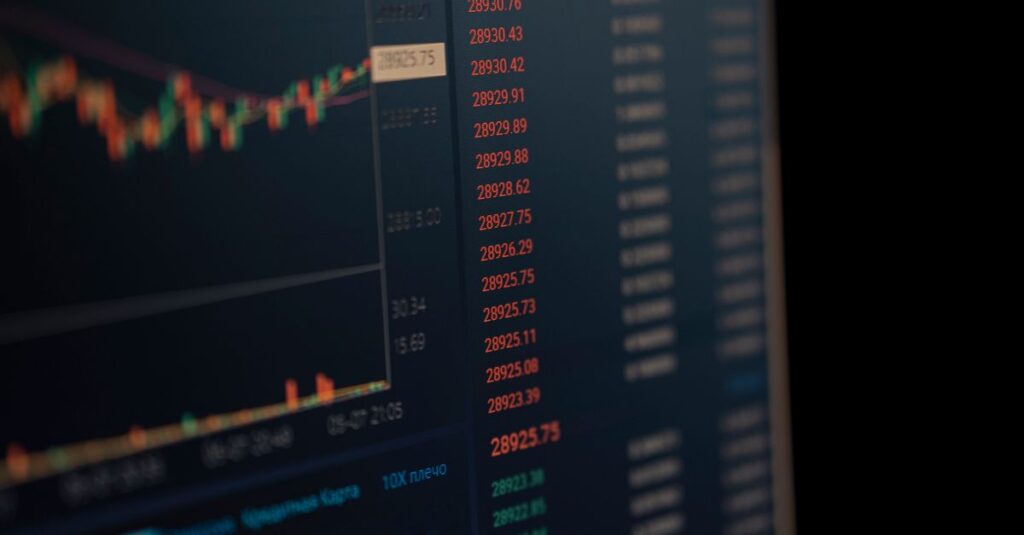
Kraken parent Payward plans to open onchain perpetual futures to US clients for the first time, starting with Hyperliquid’s HIP-3 markets, and the announcement has put the HYPE token in front of a Wall Street audience. Grayscale now tracks the protocol in its research coverage, reporting that Hyperliquid’s second-quarter open interest reached $9 billion as the venue became the busiest onchain derivatives market in crypto.
The plan, announced by Payward on September 16, would let American traders access perpetual futures through a registered broker and a clearinghouse that already supports the crypto perpetual contracts Payward offers today. Perpetuals have traded outside the United States since 2016, and no US venue offered them for most of the past decade. The CFTC began permitting perpetual futures listings in May, which opened the door for US-regulated operators to build products around them.
“A US client would open a futures account with Payward’s registered broker and trade new perpetual futures contracts on Hyperliquid, cleared through the same clearinghouse that already supports the crypto perpetual contracts Payward offers US clients today,” said Jon Pham, head of US derivatives at Payward.
The scale of the prize explains the push. Perpetual futures generated more than $85 trillion in global volume in 2025, according to CoinGecko’s State of Crypto Perpetuals report. Hyperliquid, live since 2023, ranked as the most active onchain perpetuals venue of 2025 and handled more than $200 billion of volume in the past 30 days, per DefiLlama. HYPE, the protocol’s token, has drawn attention from asset managers in part because the venue’s growth translates directly into fee revenue and buybacks.
How the HIP-3 route works
HIP-3 is Hyperliquid’s builder-deployed market framework, which lets approved operators launch permissioned perpetual markets on the protocol. Payward’s plan uses that framework to run markets that meet US requirements while keeping the trading layer onchain. Kraken’s head of onchain, Calvin Leyon, described the approach as a template: decentralized infrastructure adapting to regulated markets, with a framework the company believes can be replicated across products and markets globally.
The regulatory path has been forming all year. Bloomberg reported in early September that Hyperliquid Labs and Payward were in advanced talks to use Bitnomial, the US-regulated derivatives exchange Payward owns, as the vehicle for a US launch. Payward has since filed to bring single-stock perpetual futures to US traders and deepened a partnership with Nasdaq on tokenized equities, building out the infrastructure stack that a Hyperliquid launch would sit on. Kraken clients can already earn onchain yield on xStocks, the tokenized equity product Payward launched earlier this year.
The infrastructure consolidation is deliberate. Payward separates infrastructure from product surfaces, running one global liquidity pool, one risk and margin engine, and one compliance framework across products like NinjaTrader, Breakout, xStocks and CF Benchmarks. That architecture lets the company launch new products at low marginal cost, and Hyperliquid perpetuals would be the highest-profile expression of it yet.
Grayscale takes notice
Grayscale’s coverage adds an institutional seal to the story. The asset manager’s report flags Hyperliquid’s Q2 open interest of $9 billion and its position as the leading onchain derivatives venue, the kind of framing that precedes product decisions. Payward’s own numbers support the institutional case: 6.6 million funded accounts as of June 30, with proof-of-reserves showing client assets backed above 100 percent.
The competitive read matters too. Payward noted that multiple venues run builder-deployed perpetuals on Hyperliquid, one of which holds 98 percent of open interest, and that no registered US exchange or clearinghouse had deployed a market there. Being first gives Payward a window to set the compliance template others would have to follow, and the company has already committed to sharing that framework across its global markets.
What could go wrong
The launch is an intent, not a product. Payward’s announcement says the deployment is subject to regulatory approval, and US derivatives approvals have a habit of taking longer than companies project. The CFTC’s May decision opened listings, but clearing, brokerage and market-surveillance requirements for onchain venues remain untested at scale in the US. The CLARITY Act’s Senate defeat leaves the statutory picture unsettled, which adds another layer of uncertainty for any novel market structure.
There is also concentration risk on the protocol side. A single operator holding 98 percent of open interest in builder-deployed markets is the kind of statistic that attracts scrutiny, and US regulators will want assurances that permissioned deployment does not recreate the opacity of offshore venues. Hyperliquid has faced outages and exploit scares like every fast-growing protocol, and a US launch would raise the stakes of any incident.
Timing adds its own risk. The tokenized equity market has surged past $3 billion in recent weeks, driven by Robinhood Chain and Solana, and regulators are watching the space closely after the AMC chief executive criticized synthetic stock tokens. Any incident in the adjacent tokenization market could complicate approvals for onchain derivatives, which share infrastructure and, in some cases, regulators.
For HYPE holders, the news is unambiguously positive on demand: US retail and institutional access to the protocol’s markets would expand the user base the token accrues value from. For competitors, it narrows the moat that offshore perpetuals venues have enjoyed for a decade. Both effects compound the broader institutional shift this month, from record ETF inflows to the House committee advancing the Strategic Bitcoin Reserve bill 28-21.
The next milestone is approval. If the CFTC and SEC clear the structure, Payward would become the first registered US operator running perpetual markets on Hyperliquid, and the template it builds would likely define how onchain derivatives enter American markets for years.