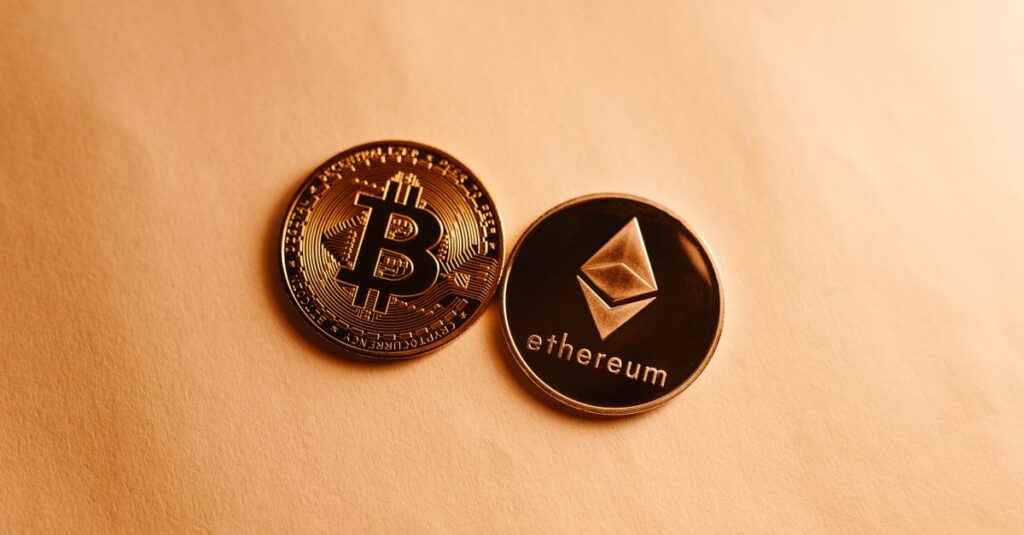
Moscow Exchange will start trading perpetual futures on five crypto indices on September 22, widening a derivatives line that until now has been limited to a single bitcoin contract. The new instruments track BTC, ETH, SOL, XRP and TRX indices and are open only to qualified investors.
The contracts carry the codes BTCUSDF, ETHUSDF, SOLUSDF, XRPUSDF and TRXUSDF. They are quoted in US dollars and cash-settled in rubles, with no delivery of the underlying coins. Settlement is non-deliverable, meaning the investor receives the financial result of the index move but never touches the crypto itself. The exchange describes them as one-day contracts with automatic rollover, so positions carry over without traders having to manually roll into a new contract. A daily funding rate structure applies, with parameters set at K1=0% and K2=0.35%.
MOEX disclosed the plan on September 16. Maria Patrikeeva, the exchange’s managing director for derivatives, pointed to sustained demand: since the first crypto futures launched in the summer of 2025, more than 72,000 qualified investors have traded them, with turnover exceeding 600 billion rubles. That is roughly $6-7 billion at current exchange rates, spread across a client base limited to accredited investors only.
Building on an existing line
This is an expansion, not a debut. Bitcoin and ether index futures have traded on MOEX since November 2025, and contracts tied to solana, XRP and tron were added on May 14, 2026. Monthly and quarterly versions of these products already exist. The exchange’s 2025 annual report counted more than 40,000 clients trading crypto-linked contracts that year, with volume above 212 billion rubles, a figure that has since grown substantially.
The exchange has also been broadening its foreign-asset menu more generally. September saw the arrival of futures on shares of large American companies, priced off foreign exchange quotes, and MOEX has said it plans perpetual futures on overseas equities such as Amazon, AMD, Tesla and Netflix as well.
The regulatory frame
The product design follows rules the Central Bank of Russia issued in May 2025. Those rules allow financial institutions to offer derivatives, securities and digital financial assets linked to crypto prices, but only to qualified investors, and physical delivery of cryptocurrency is prohibited. Brokers decide which clients qualify and activate trading permissions accordingly. Both individuals and institutions must meet the accreditation standard.
Wider retail access is coming separately. Key provisions of Russia’s law “On Digital Currency and Digital Rights”, passed by parliament and signed by President Putin, took effect on September 1. The law lets non-qualified investors into crypto within limits, capping retail investment at 300,000 rubles a year per broker and restricting the range of eligible assets. The perpetual futures themselves remain behind the qualified-investor wall for now, though the exchange has historically widened access as the legal frame matured.
Russia’s institutionalization of crypto has been accelerating all year. Sberbank, the country’s largest bank, has forecast $46.4 billion in first-year volume for the regulated crypto market as Moscow pulls digital assets deeper into its financial system. The central bank, for its part, has simultaneously flagged digital currencies as a risk category it is watching closely, a reminder that the opening is controlled rather than unrestricted.
Why it matters outside Russia
A national exchange running cash-settled crypto perpetuals is notable in itself. Perpetual futures originated in offshore crypto venues and remain banned or restricted for retail traders in most Western jurisdictions, including the United States, where registered exchanges have only begun to touch the product. Payward, Kraken’s parent, is planning US perpetual futures through its $550 million Bitnomial acquisition, which would be a first for a registered American exchange.
MOEX is offering a regulated, exchange-traded version of the product, settled in fiat, with index-based pricing that sidesteps custody entirely. No coins are held, moved or secured. The entire exposure is a financial contract against an index the exchange calculates.
For market structure watchers, the interesting part is the funding-rate design imported into an exchange setting. Offshore perpetuals use funding rates to tether contract prices to spot, with the rate floating based on the basis. MOEX’s version publishes its parameters upfront, K1 at zero and K2 at 0.35%, and applies them daily, which is closer to how a traditional exchange would manage a rolling contract. Whether that fixed-parameter model proves robust in volatile markets, or gets copied by other national exchanges facing similar retail-protection constraints, is an open question.
The timing also matters geopolitically. Russia has been building rails for sanctioned entities and domestic investors to gain crypto exposure without touching Western-controlled venues, and an exchange-settled, ruble-denominated derivative fits that pattern. At the same time, the products are dollar-quoted, which keeps them tethered to the global price reference rather than creating a separate Russian crypto price. That dual character, ruble settlement with dollar quotation, mirrors how MOEX already handles its foreign equity futures.
Volume expectations are hard to pin down. The existing crypto line has grown from 212 billion rubles in 2025 to more than 600 billion rubles cumulatively, which implies the pace picked up sharply after the May expansion into solana, XRP and tron. Perpetuals typically attract more flow than fixed-expiry contracts because there is no expiry management, so the five new contracts could lift the line’s run rate meaningfully if the qualified-investor base keeps growing.
The launch date falls three days into the new Russian digital asset law’s first full month, and MOEX has signaled more products are coming. Patrikeeva has previously said the exchange plans to expand coin-based products to as many as ten, which would leave room for Binance Coin and others already named in the exchange’s index plans.