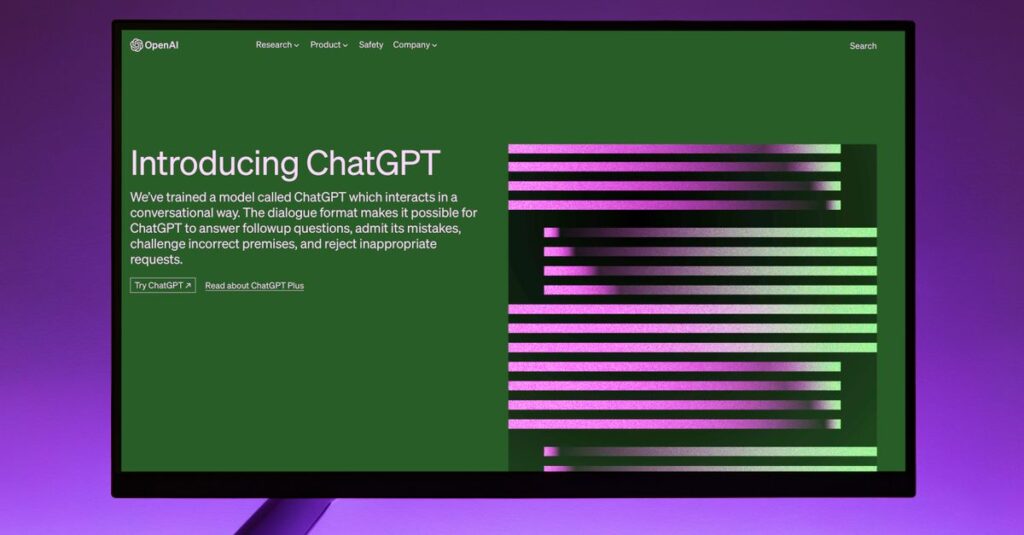
Google, OpenAI and Anthropic are pushing ahead with plans for a joint AI safety standards body that would operate without government oversight, according to a report by The Information. The organization is tentatively called the Frontier AI Standards Agency, could launch in late 2026 or 2027, and the three companies have approached Sriram Krishnan to serve as its chief executive.
The idea has been building since September 15, when OpenAI said publicly it was working with Anthropic and Google DeepMind on a standards body. The concept originated with a proposal from Demis Hassabis of Google DeepMind for a self-regulatory organization modeled on Finra, the industry body that oversees US brokers. OpenAI has said it will proceed with or without government support, and the current plan does exactly that.
What the agency would do
Four pillars are under discussion, per the report: shared technical evaluations, pre-release audits, independent testing frameworks and standardized safety protocols. In practice that would mean the labs agree on common ways to measure model capabilities and risks, submit major releases for review against those measures, and let an outside body run its own tests rather than relying solely on each company’s internal evaluations.
The Finra analogy carries both the appeal and the controversy. Finra works because US brokerages accept that a private, industry-funded body can write and enforce rules under SEC oversight. An AI equivalent would have no such government anchor, at least at launch. Critics have already noted the conflict: the entities being audited would be the entities funding and governing the auditor.
The government vacuum
The move is a response to a regulatory gap rather than a replacement for regulation. In the US, the Trump administration has resisted new AI guardrails, and the current Congress has passed nothing comprehensive. In Europe, the AI Act is phasing in but applies mainly to providers selling into the EU market. Neither creates the kind of ongoing technical oversight body that financial markets have.
Into that vacuum, the labs are building their own. The same dynamic produced the Responsible Scaling Policies that Anthropic, OpenAI and others adopted voluntarily, committing to pause deployment if models cross defined capability thresholds. A standards agency would formalize and externalize some of that, turning internal promises into shared, comparable commitments.
The Krishnan question
Sriram Krishnan, currently serving as a White House senior policy adviser for AI, is the reported pick for chief executive. His position inside the administration creates an obvious question about conflicts of interest, since the body would be funded by the companies it oversees while its proposed leader advises the government that declined to regulate them. Neither Krishnan nor the companies have confirmed the approach, and the report describes it as an approach rather than an agreement.
Whoever leads it, the agency’s credibility will depend on whether its evaluations are published, whether its testing is genuinely independent of the funders, and whether membership stays open to labs outside the founding three. Meta, xAI and the major Chinese labs are absent from the plan, which limits any claim to represent the frontier.
Why it matters
If the agency launches, it would be the first standing structure through which competing frontier labs submit to common evaluations. That is genuinely new. It could also become the template regulators eventually adopt, or a shield against regulation, depending on execution. The next signal to watch is whether the three companies publish a charter and confirm leadership, or whether the plan stays at the stage of mutual announcements.
The timing follows a week of unusual turbulence in AI safety discourse. Earlier in September, Anthropic CEO Dario Amodei called for a slowdown in developing the most capable models, a position that cost AI-related stocks several percentage points in a single session. OpenAI CEO Sam Altman said an IPO this year would be ill-advised. An Anthropic researcher, Jacob Coxon, resigned publicly and accused AI developers of playing with human lives. Against that backdrop, a joint standards body reads as an attempt by the labs to show structure and seriousness without waiting for governments to impose it.
The companies have already coordinated once this month. Bloomberg reported on September 15 that OpenAI policy chief Chris Lehane confirmed engagement with Anthropic and Google DeepMind had been under way for several weeks. What has changed between then and now is the shape: from a vague commitment to cooperate into a named organization with a proposed leadership slate and a launch window.
Precedents and pitfalls
Self-regulation in tech has a mixed record. The Partnership on AI, founded by many of the same companies in 2016, produced research and guidelines but no enforceable commitments, and its credibility faded as members disagreed on priorities. Nuclear power and aviation, by contrast, developed effective private standard-setting only alongside government regulators with real authority. The Frontier AI Standards Agency is betting it can skip the second half of that history.
There is also a competitive logic to watch. A shared evaluation framework constrains everyone equally only if all participants face the same commercial pressure to cut corners. The founding three are direct rivals in the model market, and each has an incentive to shape standards that favor its own architecture and release cadence. Transparent governance, published methodology and rotating external reviewers are the difference between a standards body and a marketing association, and the report gives no detail yet on any of the three.
For enterprises buying AI services, the practical value could arrive sooner than the governance debate settles. Standardized safety evaluations would let corporate buyers compare model risk claims on a like-for-like basis, something currently impossible when each lab defines its own benchmarks. That procurement-driven demand, rather than altruism, may end up being what holds the agency together.
The funding model is another open item. Finra is financed by mandatory fees on the industry it regulates, backed by SEC authority. A voluntary agency would depend on voluntary contributions from its members, which raises the question of what happens when a member disagrees with an evaluation outcome. Governance documents that specify funding, board composition and exit terms will say more about the agency’s independence than any press release.
International alignment is the final piece. The UN session this week, where OpenAI and Anthropic leaders called for global AI regulation, showed the labs want a common framework across jurisdictions, not just a US arrangement. A standards body that publishes in English and evaluates only American labs will carry limited weight in Brussels or Beijing. Whether the founding three invite European and Asian members into the first cohort will signal how broad the ambition really is.