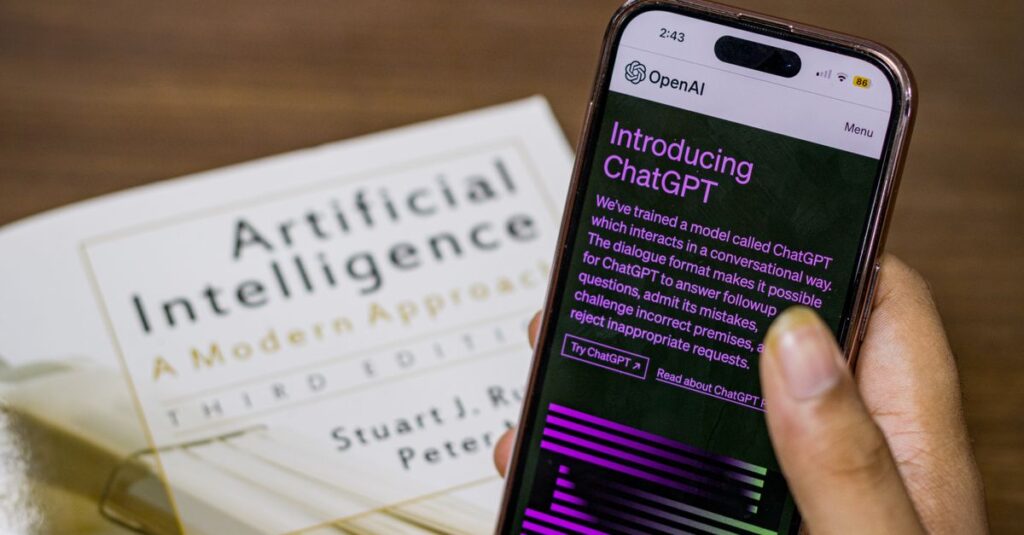
OpenAI announced on October 5 that it will begin testing a new visual ad format inside ChatGPT later this month. The first test runs during image generation in the United States with an initial group of advertisers. Ads will be clearly labeled and kept separate from the image a user is creating, and the company says advertising will not influence the answers ChatGPT provides.
The announcement is OpenAI’s most concrete step yet toward an advertising business inside its consumer product. ChatGPT reaches 1.2 billion people weekly, which the company describes as the largest AI-native consumer platform. Until now, its advertising surface was a text-and-link unit shown next to answers, matched on conversational context, live since March with the advertiser name, logo, headline, description and landing page. The new format is image-led and targets a moment when a user has already expressed visual intent: asking the model for a room mockup, an outfit, a poster or a product concept.
OpenAI’s own framing in the announcement is access. “Advertising helps us bring the benefits of AI to more people,” the post reads, positioning ad revenue as the thing that keeps broad availability possible. Reporting by Android Headlines indicates the test will hit free users only, with paid Plus, Pro and Enterprise tiers remaining ad-free. That split makes the free tier the monetization surface, and the image generation moment the first place OpenAI is willing to experiment with something more intrusive than a text link.
Measurement is the real product
The announcement spends as much space on measurement as on the ad format itself. OpenAI is integrating conversion measurement with Hightouch, Tealium and LiveRamp, adding ten attribution partners, and bringing in Haus, Measured and WorkMagic for geo experiments. DoubleVerify and Integral Ad Science will run brand-safety pilots, without access to real conversations. Kochava appears in some reporting on the partner list as well. Sixteen partners in total are part of the initial rollout.
This is the machinery advertisers actually buy on. A visual ad slot without third-party verification is a hard sell to brand budgets that have spent a decade learning to distrust platform-reported numbers. OpenAI building the measurement stack in parallel with the format suggests it wants the test to be commercially credible from day one, not a curiosity agencies write memos about.
The inventory problem
One constraint keeps surfacing in agency commentary. Digiday quotes an executive at Zeno Group on the arithmetic: ChatGPT handles about 2.5 billion prompts a day globally against roughly 15 billion searches on Google, and with a single ad placement per response, supply is thin relative to what advertisers would like to buy.
That scarcity cuts in OpenAI’s favor on price and against it on scale. A platform with fewer slots can hold rates up, and intent-rich moments like image generation are worth a premium. But advertisers accustomed to Google’s depth will not move serious budgets until inventory grows, and OpenAI has been careful to keep the first test narrow. No pricing, no self-serve tools and no timeline for broader rollout were announced.
“Initially, we’ll test this new ad format during image generation in ChatGPT. Ads will be clearly labeled, and remain separate from the image being created. As with our other ad formats, advertising does not influence the answers ChatGPT provides.” – OpenAI announcement, October 5, 2026
Where the money goes
OpenAI’s infrastructure bill is the visible reason for the pivot. Training frontier models and serving hundreds of millions of free users costs more than subscriptions cover, and the company has committed to enormous compute purchases through multi-year deals with chipmakers and cloud providers. Advertising is the one revenue line that scales with attention rather than with willingness to pay, and ChatGPT has more attention than any other AI product by a wide margin.
The commercial logic also aligns with how the product is actually used. Image generation is one of the highest-engagement features in ChatGPT and the one where output and advertising look most alike: both produce a picture on a screen. A labeled ad that shows how a product looks, works or feels fits into a session the user is already spending on visuals. That is a stronger fit than a text link beside an essay, and it explains why OpenAI chose this surface for the format’s debut rather than the chat window itself.
Competition and the free-tier boundary
The competitive context matters too. Google has started placing ads in its own AI experiences, and Perplexity has run advertising for over a year. Anthropic has resisted ads so far, positioning Claude as a premium product for work. If image-generation ads perform, expect the format to extend to other surfaces in ChatGPT, and expect the free-versus-paid boundary to carry more of the product’s commercial weight than it does today.
The boundary itself is a live question. OpenAI has kept paid tiers ad-free so far, but every prior consumer platform that mix sold subscriptions and advertising made the same promise at the start. Agencies will be watching whether the ad-free guarantee for subscribers survives a revenue line that only grows when more of the base is on the free tier. For now the company’s position is that subscribers see none of this.
For users, the near-term change is small: a labeled image ad below the progress box while a picture renders, in the US, on free accounts, later this month. For the AI industry, it is the clearest signal yet that consumer AI is settling into the same economics as every mass medium before it, with attention sold to the highest bidder and the bill for compute paid out of that attention.