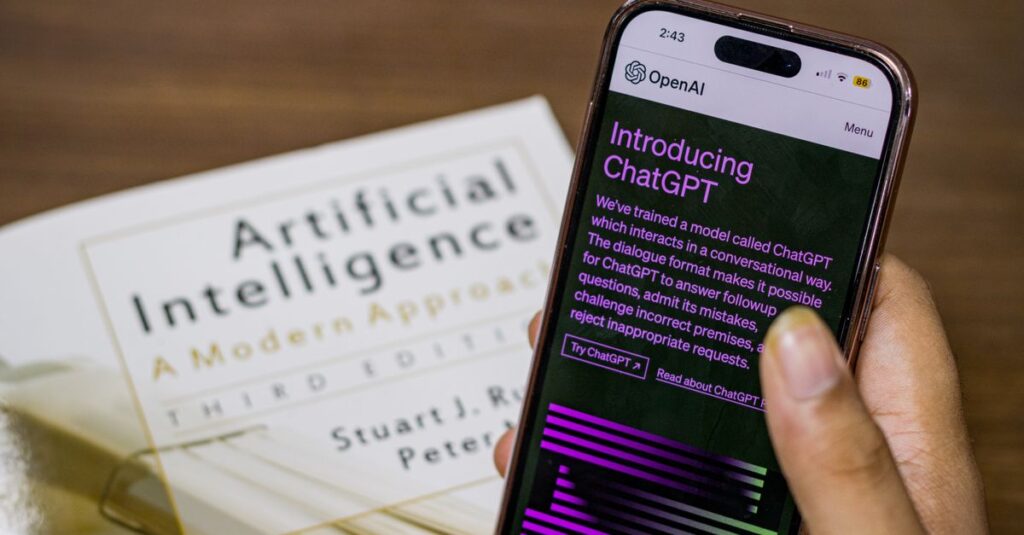
OpenAI will test a new visual ad format inside ChatGPT’s image generation flow later this month, showing labeled ads beside pictures users ask the tool to create, the company’s first ad placement outside the sponsored card under answers.
The announcement, made October 5, covers only Free and Go plan users in the United States, and starts with an initial group of advertisers. Plus, Pro, Business and Enterprise subscribers get no ads. OpenAI says ads will be “clearly labeled” and “remain separate from the image being created,” with no influence on ChatGPT’s answers. The company has not said whether ads appear while an image is generating, after it completes, or elsewhere in that workflow, nor whether the ads are produced on the spot by ChatGPT or drawn from materials advertisers supply.
OpenAI frames the format as a way to show “product inspiration, product usage, or the experiences they make possible,” giving advertisers a more visual storytelling option than the text cards that have appeared below answers since February, when US testing began at a $60 CPM.
Measurement is the real story
The image ads grab attention, but most of the announcement concerns measurement plumbing. OpenAI added conversion-data integrations with Hightouch, Tealium and LiveRamp, named ten attribution partners including AppsFlyer, Triple Whale and DV Rockerbox, and started early-stage geo-lift work with Haus, Measured and WorkMagic plus brand-lift tests with Kantar and Cint. DoubleVerify and Integral Ad Science will run separate brand-suitability pilots, judging how OpenAI applies its safety rules in a controlled environment without access to private conversations.
This answers a specific complaint. Agencies have kept ChatGPT ad budgets at test level because they could not prove results, as Digiday reported earlier this month. The new integrations let advertisers judge placements with tools they already pay for rather than taking OpenAI’s word for what happened after a click.
Early numbers come from OpenAI’s own selection of partners, each reported by the vendor that measured it. WeightWatchers paid 15.3 percent less per acquired customer on ChatGPT Ads than in its blended paid-search benchmark, according to DV Rockerbox. WorkMagic reports 67 percent of Dose’s incremental purchases came from net-new customers, with 2.3 times more incremental orders than last-click attribution captured. Triple Whale puts Portland Leather at 93 percent new visitors from the channel. None of the figures come with public methodology, so they read as best cases rather than averages.
The commercial intent problem
Analysts question whether the moment matters commercially. Mobile marketing analyst Eric Seufert wrote that the placement likely reaches people with “little to no commercial intent,” since generating artwork is rarely a shopping activity. Billo CEO Donatas Smailys advised brands to start with modest budgets and benchmark results specific to this format rather than assuming performance from existing ChatGPT placements would carry over.
The conversational context cuts both ways. Someone generating a product mockup or an event poster sits closer to a purchase decision than someone making a cat picture, so performance may swing more by prompt category than on almost any other ad channel.OpenAI has published no targeting rules, no pricing and no advertiser list for the test, and says the format does not yet appear in the Atlas browser.
Placement control is one open question the announcement leaves unresolved. The Cool Down noted, via The Register, that OpenAI has not said when in the workflow an ad surfaces, whether the ad is generated by ChatGPT itself or supplied by the advertiser, or how targeting will work inside image sessions, all of which affect how the format feels to users.
Platform scale behind the test
The business underneath the experiment has grown fast in eight months. ChatGPT Ads passed $100 million in annualized revenue within six weeks of the February launch and reported a $1 billion annualized run rate by August 31, reached after CPMs fell from $60 at launch to as low as $25 by April and a self-serve Ads Manager opened in May. The platform now spans more than 60 countries, with recent expansions into the UK, Mexico, Brazil, Japan, South Korea and Southeast Asia, and September brought a Sponsored Agents test plus HubSpot and Shopify integrations.
OpenAI cites 1.2 billion weekly ChatGPT users, up from 900 million earlier in the year, though only Free and Go accounts are ad-eligible, a subset below that total. Go costs $8 a month in the US and carries ads by design, which is how OpenAI monetizes its cheapest tier while keeping Plus and above clean.
Rules carve out who sees what. Ads stay away from conversations about health, mental health and politics, skip accounts OpenAI identifies as under 18, and adjust their targeting for anyone who declined personalized advertising. Advertisers never see chats, chat history or memories, only aggregate views and clicks, according to OpenAI’s privacy documentation.
Europe adds one more layer. The European Commission designated ChatGPT a very large online search engine under the Digital Services Act on August 31, and designated services must keep a public, searchable archive of every ad they show EU users by January 2027, including who paid, what the ad contained and what regions it targeted. The visual format is a US test for now, but any EU rollout would land inside that archive, giving regulators and researchers a level of transparency the US market does not get.
The test begins later in October with a small advertiser group. Whether it graduates into a real budget line depends less on how the images look and more on whether advertisers can verify incremental sales with their own measurement stacks, something the platform has so far made them take partly on faith.