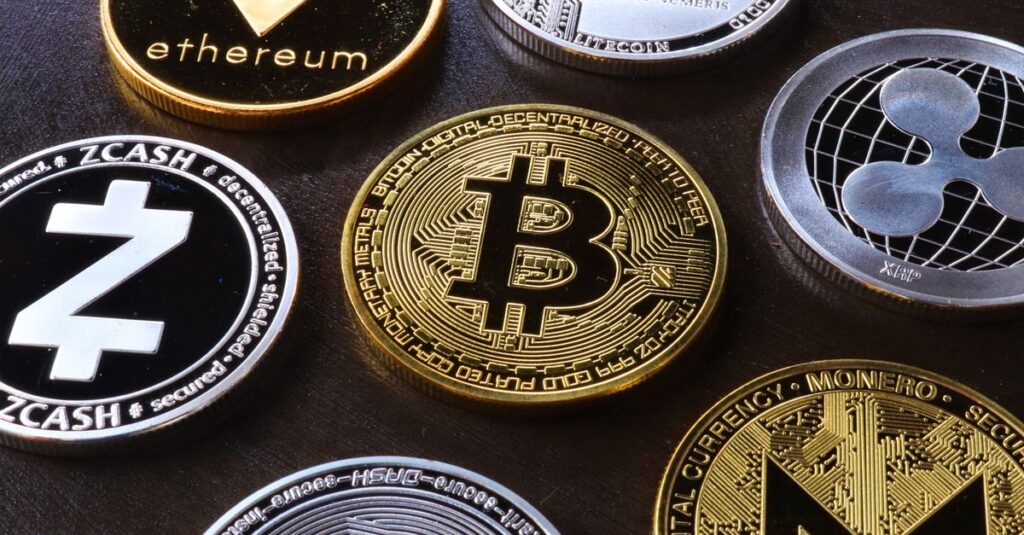
Privacy coins have quietly become the strongest trade in crypto this year, and almost nobody outside the sector saw it coming. A market-cap weighted basket of privacy tokens is up 213% over the past year, according to Glassnode data cited by industry outlets, while bitcoin trades roughly a third below the all-time high it set last October.
Zcash led the charge. The token crossed $1,000 for the first time in years earlier in September, touched $1,388 on September 15 in a single-session gain of 15%, and has since pulled back to trade near $1,000. Monero, the sector’s other flagship, doubled in value over the past year and broke above $600 for the first time in a long while before easing back to around $540 on Tuesday. These are not memecoin numbers attached to memecoin names. They are two of the oldest surviving projects in crypto, both written off repeatedly since 2018, both suddenly the best performing assets in the market.
A sector move, not a single-coin squeeze
What separates this rally from earlier altcoin bursts is its breadth. Glassnode’s basket of privacy coins excluding ZEC is up about 85% year on year and 56% since bitcoin peaked in October 2025. Of the eight privacy coins with at least one year of price history, every single one is up. Dash gained 71% earlier in 2026, and Horizen and Decred have both beaten bitcoin over the past 90 days.
A single coin can spike on an exchange listing or a short squeeze. A whole sector rising together usually means capital is rotating in and staying. Traders who spent the summer churned out of memecoins have been hunting for narratives with actual staying power, and privacy has delivered the best returns of any corner of the market this quarter.
| Asset or basket | Recent level | Notable move |
|---|---|---|
| Zcash (ZEC) | near $1,000 | Crossed $1,000 in September, touched $1,388 on Sept 15 |
| Monero (XMR) | around $540 | Doubled over the past year, broke $600 |
| Dash | n/a | Up 71% earlier in 2026 |
| Privacy basket ex-ZEC | n/a | Up 85% year on year, up 56% since Oct 2025 peak |
| Full privacy basket | n/a | Up 213% over the past year |
Sources for the table: Glassnode data cited by Analytics Insight and the Bitcoin Foundation newsroom, plus live ticker data from Cointelegraph.
Bitcoin’s stall pushed money sideways
The timing is not a coincidence. Bitcoin ran to $87,373 overnight Monday, clearing major resistance on the back of a record $999 million day for US spot ETF inflows, then spent Tuesday easing back toward $80,000 to $81,000. That is still roughly 36% below the $126,080 all-time high from October 2025. When the largest asset stalls after a strong run, money rarely sits in cash. It looks sideways.
Privacy has been the destination. The sector jumped 7% in a single session on September 15 while the broader $2.7 trillion crypto economy managed 1.3%. Days like that compound. The rotation has also survived several bitcoin wobbles this month, including a dip below $79,000 in early September, which suggests the position is being actively managed rather than bought and forgotten.
There is a darker reading of the same setup, and it is worth saying out loud. Privacy narratives tend to strengthen when people feel watched. Governments spent 2026 expanding digital ID schemes, stablecoin monitoring rules and transaction reporting thresholds. Whether or not any of that is justified, it feeds the story that onchain activity needs a blind spot, and traders buy stories.
The ETF bid is real
The clearest institutional signal is the Grayscale Zcash ETF. The fund, which launched in August, held 596,268 ZEC as of Tuesday, about 3.52% of total supply, and its holdings have grown 28.4% since inception, per figures reported by Coincu and other outlets. A 3-for-1 share split lands September 28, a move funds typically make to lower the per-share entry price for smaller buyers.
That a US ETF exists at all is the part worth dwelling on. American listed funds cannot easily hold assets their custodians cannot audit, which is exactly why Monero, whose transactions are opaque by default, has no American fund. Zcash takes a different route. Shielded transactions are optional, and the protocol supports selective disclosure, letting a user reveal transaction details to an exchange or auditor on request. That middle ground is what let ZEC into a regulated wrapper. The wrapper is now feeding demand back into the token, a loop that did not exist for this sector a year ago.
Derivatives added fuel on top. Open interest in ZEC futures has pushed past $2 billion, a large figure for an asset of Zcash’s size, per market data cited by crypto outlets. Leverage of that scale cuts both ways. It amplifies rallies, and it accelerates unwinds the moment the price turns.
Two privacy models, two fates
The sector’s internal split matters more than usual right now. Monero hides sender, receiver and amount on every transaction by default. That design made it the currency of ransomware crews and a permanent target for enforcement. Exchanges in Japan have delisted it, most European venues dropped it under MiCA-adjacent pressure, and South Korea’s major exchanges removed privacy coins years ago. Monero survives on peer-to-peer volume and its community, which is loyal but closed to institutions.
Zcash bet that optional privacy with an audit trail would be enough to stay inside the system. For years that bet looked like a losing one, since ZEC badly underperformed XMR through the last cycle. In 2026 it looks like the winning one, because the ETF exists and the ETF is buying. Compliance-friendly privacy got the regulated bid. Default privacy got delisted. The market has now priced that difference explicitly.
The compliance question will not go away
Regulators have never liked this sector, and the feeling is about to get renewed attention. A 213% annual gain guarantees headlines, and headlines guarantee questions on Capitol Hill and in Brussels about whether US markets are now offering a wrapper around an anonymity tool. Grayscale’s compliance filings will get reread. The selective disclosure argument will get tested by people who do not currently accept it.
The industry’s defense is straightforward: Zcash’s shielded pool is a minority of activity, analytics firms claim partial visibility into it, and the same argument for financial privacy applies to cash. Whether that satisfies supervisors is an open question. Nothing attracts regulatory attention like outperformance, and this sector just delivered the best performance in crypto.
What could end the run
Momentum trades die in familiar ways. A delisting wave at major venues, a cold enforcement action against the ETF’s underlying asset, or simply bitcoin resuming its uptrend and pulling capital back into large caps would each drain the trade. The size of the move invites mean reversion too. Baskets that outrun the market by 200 points in a year rarely repeat the feat the following year, and late arrivals are buying after the easy part of the move.
For now the rotation is live and the infrastructure around it keeps growing. Grayscale’s fund is adding coins weekly, futures desks are quoting deep books, and traders who missed bitcoin’s run from $60,000 to $126,000 treat privacy as their second chance at a trend trade. The bet only pays if the sector’s privacy guarantees keep clearing the compliance bar. That is the part nobody can price, and it is the part that will decide whether this ends as a re-rating or a round trip.