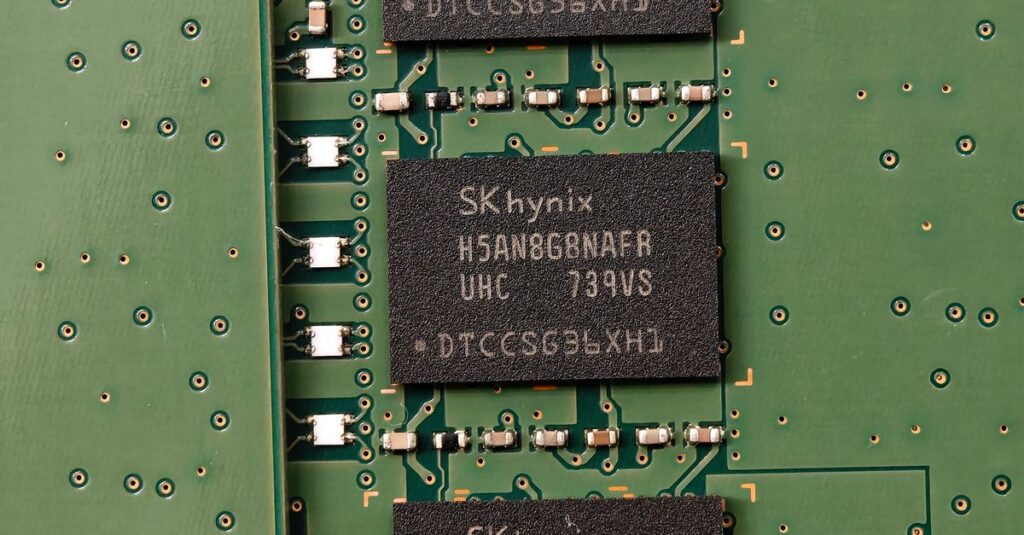
Memory prices keep climbing as AI data centers absorb the worlds DRAM supply, and the bill is landing on laptops, phones, consoles and almost every consumer device with a chip inside.
The numbers from market researchers are stark. Sigmaintell reported that consumer LPDDR5X 12GB, the memory used in flagship phones and increasingly in server GPUs, rose 89 percent quarter over quarter in the second quarter of 2026, from about $77 per unit to nearly $146. LPDDR4X 4GB climbed 75 percent. SSD prices based on 512GB drives rose 54 percent in the same period. TrendForce earlier put PC DDR5 contract price gains at 43 to 48 percent for the quarter, on top of increases of more than 100 percent in the first quarter.
The cause is allocation, not scarcity of raw material. Memory makers Samsung, SK Hynix and Micron are prioritizing high-bandwidth memory and server DRAM, which sell under multi-year contracts to AI customers at far better margins than consumer parts. Wafer capacity that once fed the consumer market now feeds Nvidia racks and the data centers behind them. Whatever capacity is left over gets sold to phone and PC makers at whatever price they will pay.
Prices on the shelf
The effects are visible in stores. Dell raised prices on Pro and Pro Max notebooks and desktops with 32GB of memory by $130 to $230. The Surface Pro 13-inch moved from a $999 starting price to $1,499. Sony raised the PS5 by 90 pounds in April and is reportedly considering delaying its successor. Meta added 30 pounds to the Quest 3S. Framework raised prices three times between December and February, and its Laptop 13 Pro that cost $900 with 16GB last year now costs $950 with half the memory.
Lenovo told Reuters that PC unit sales would face pressure. Intel chief executive Lip-Bu Tan said there would be no relief until 2028. At an industry conference, a Lenovo executive described the shortage as the new normal, saying it will never be like it was last year. Apple flagged memory costs as a headwind to its famously high gross margins and raised MacBook Air entry prices while doubling minimum storage.
The budget tier is disappearing
The sharpest effect is at the bottom of the market. Gartner analyst Ranjit Atwal said the price surge removes the ability of vendors to absorb costs, making low-margin entry-level laptops non-viable, and predicted the sub-$500 PC segment will disappear by 2028. Memory accounts for roughly 30 percent of the cost of a budget smartphone and 23 percent of an entry-level laptop, so percentage increases of that size break the economics of the cheapest models outright.
TrendForce forecasts global notebook shipments will decline 13.5 percent this year as chip-driven inflation feeds into finished products. The International Data Corporation expects the supply pressure to persist well into 2027. SK Hynix executives have talked about the tightness lasting through the decade, which turns a temporary squeeze into a structural repricing of consumer electronics.
Downstream ripples
Graphics cards are caught twice over. GDDR6 and GDDR7 video memory costs have more than tripled per gigabit in six months, and the factories that would build new consumer GPUs are busy printing AI chips instead. Nvidia revived the five-year-old RTX 3060 this month because there is nothing new to sell at mainstream prices. The RTX 50 Super refresh has slipped toward 2027, and the next AMD RDNA 5 generation is not expected before late 2027 at the earliest. Analysts describe 2026 as one of the thinnest years ever for genuinely new desktop graphics hardware.
Even components upstream feel it. Glass cloth, a substrate material for circuit boards, comes mostly from a single Japanese manufacturer that cannot keep up with demand. Qualcomm told customers that Snapdragon prices rise by double digits for anything shipped after September 1, citing memory costs it can no longer absorb. TSMC is raising wafer prices across leading-edge nodes, which pushes costs into every chip that touches a consumer device.
Phone makers face the same math. Samsung raised prices on some models by 50 pounds, and multiple manufacturers have warned of increases through the year. Memory-heavy flagships absorb the cost better than midrange devices, so the market is splitting into expensive premium phones and thin, short-lifespan budget models, with the comfortable middle shrinking.
A hardening cycle, not a spike
There is a modest silver lining in the data. Sigmaintell notes the pace of DRAM increases could moderate in the second half as smartphone and PC brands cut order volumes, and demand for memory in lower-end devices is weakening faster than in premium segments. Moderation is not relief. It means the shortage is pricing demand out of the market rather than being solved by new supply.
New capacity takes years. A memory fab costs tens of billions of dollars and takes two to three years from groundbreaking to output, and none of the big three has announced consumer-focused capacity that would arrive before the AI buildout absorbs even more supply. Datacenter builders have signed multi-year agreements with suppliers that lock in allocation through the end of the decade.
For buyers, the advice circulating in the industry is blunt. Buy memory-heavy devices now, or wait for a cycle that analysts do not expect to arrive before 2027 at the earliest, and in some forecasts not before 2028. For the industry, the era of bargain-priced electronics is ending, and no one in the supply chain is promising to bring it back.