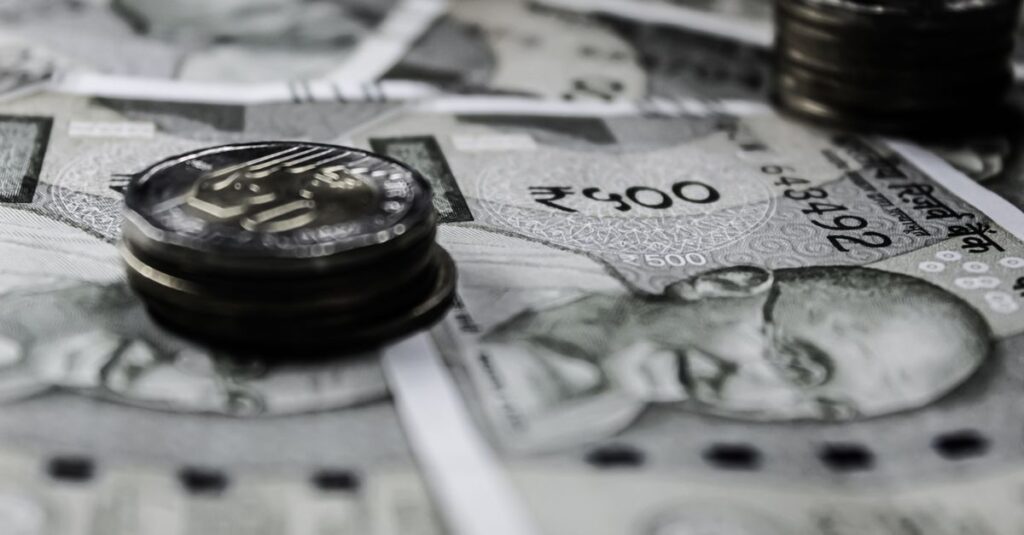
MUMBAI. India’s central bank opens its October policy meeting today with markets and most economists expecting the same thing: the first repo rate increase since February 2023. The six-member Monetary Policy Committee meets October 5 to 7 and announces its decision on Wednesday at 10am local time, with a 25 basis point move to 5.50 percent the near-universal base case. The RBI has held the repo rate at 5.25 percent through four consecutive reviews, after cutting a cumulative 125 basis points in 2025. That patience now looks expensive. Retail inflation climbed to 4.82 percent in August, above the bank’s 4 percent medium-term target for a third straight month, and expectations are it peaks through the festive quarter. Crude oil stays above $100 a barrel. The rupee has weakened past 96 to the dollar. The Federal Reserve raised its own benchmark rate in September, its first hike since 2023, which narrowed the interest-rate gap between the two countries and added pressure to the currency.
What the economists say
The polling is lopsided. A Business Standard survey of ten economists put eight of them on a hike. Reuters asked 61 economists between September 18 and 28 and found roughly 60 percent expecting the same 25 basis point move, with a majority also seeing another hike in December. Money markets have gone further and priced the increase in almost entirely. Brickwork Ratings’ head of research, Rajeev Sharan, called a hike to 5.50 percent a realistic possibility and pointed to food and energy costs as the drivers. Other houses go longer: a Union Bank of India report this week modelled the repo rate climbing toward 5.75 to 6 percent through the next fiscal year if the tightening cycle extends, a trajectory that would also push benchmark ten-year government bond yields higher. That would be a real reversal from 2025, when the same committee was cutting to support growth, and bond desks have started positioning for it. Governor Sanjay Malhotra has kept some distance from the hawkish turn in public comments, stressing growth even while acknowledging the inflation print. The committee votes as individuals though, and five of the six members have already signalled discomfort with price pressure in minutes from the August meeting. Whether the shift comes with a change in stance is the more interesting question. A hold on the neutral wording would mean one hike and done. A move to calibrated tightening, as some analysts have started calling it, would signal a cycle.
| Item | Current | Expected |
|---|---|---|
| Repo rate | 5.25% | 5.50% |
| Retail inflation, August | 4.82% | Above target into festive quarter |
| Crude oil | Above $100 | Still elevated |
| INR/USD | Above 96 | Under pressure |
| Decision date | October 7, 10am IST | MPC meets October 5 to 7 |
India is not alone
What makes the meeting worth watching from outside India is the pattern behind it. The Federal Reserve lifted its benchmark rate to a 3.75 to 4 percent range on September 16, its first increase since 2023, done unanimously, and CME FedWatch now shows roughly a 64 percent probability of another quarter point in late October. The European Central Bank has been tightening into a bond market that does not trust it: France’s spread over German Bunds hit 130 basis points this week, the widest since 2012, and French ten-year borrowing costs touched 4.9 percent despite a €43 billion austerity budget. Japan’s policy path is the third data point. Governor Kazuo Ueda has signalled openness to further hikes as wage growth holds, a shift that would push Japanese yields higher and pull capital home from the carry trades that funded everything from Mexican bonds to Nasdaq futures. India’s tightening comes with plausible deniability, since oil, food and a weak currency all give the committee cover no matter which way it votes. Two Asian central banks tightening while the Fed itself stays hawkish is not a 2019-style easing cycle. It is a synchronized tilt, and it changes the arithmetic for every levered trade on the planet.
Why this one matters globally
History is not encouraging for risk assets when central banks turn together. The 2022 hiking cycle, the last time the Fed and its peers moved in step, stripped more than $2 trillion from global equity value and pushed bitcoin down 65 percent from its November 2021 peak to under $16,000 within a year. Rate expectations now show up in the crypto market directly. Bitcoin trades around $85,000, up 44 percent over ninety days but still 34 percent below its all-time high of $126,080 set a year ago this week, and down 3.8 percent for 2026. ETF inflows, which powered the spring rally, have cooled sharply, from nearly $1 billion a day at peak to $134 million in recent sessions. With the 10-year Treasury yielding 5.17 percent, cash and short-duration bonds now compete with crypto for the same risk-adjusted dollar, and an Economist cover from last month put the point bluntly: the price of money is going up everywhere at once. Asian equities this morning split along the same line, with Japan up and Hong Kong flat as bond markets did the talking. India’s move is modest in isolation. Combined with the Fed in September, French yields at twelve-year highs, and Japan flirting with another hike, it reads as confirmation that the easy-money window that opened in late 2025 has closed. Traders will watch Wednesday’s statement for one phrase above all: whether the committee keeps its neutral stance or shifts to calibrated tightening, because that single adjective sets the market’s rate path for the next quarter.