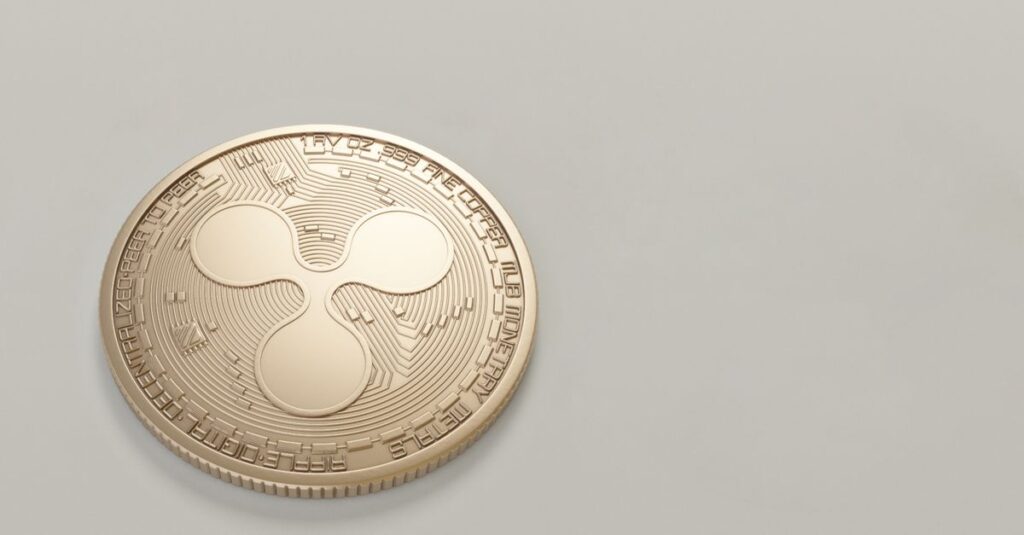
Ripple used its XRP Seoul conference on Friday to launch XRP Asia, a new independent entity charged with expanding the XRP Ledger across the Asia-Pacific region. The announcement came from the “What’s Coming Next for the XRP Ecosystem in Asia” session at the Grand Hyatt Seoul, closing out weeks of speculation about the special announcement Ripple had teased in the event program ahead of Friday.
XRP Asia will be led by Sabrina Tachdjian, who takes the president title after serving as a vice president at the Hedera Foundation, one of the better-known ecosystem roles in enterprise distributed ledger work. The organization operates independently but draws strategic backing from Ripple, the XRPL Foundation and XRPL Commons. That structure follows the model of XRPL Commons in Europe, which coordinates developer and ecosystem work on the ledger for that region, so Ripple is effectively replicating a formula that already exists on one continent and porting it to another.
Banks on the agenda
The launch slot sat immediately after a panel on cross-border payments and tokenized deposits that included representatives from Ripple, K Bank, Kyobo Securities, Woori Bank and JB Bank. Earlier in the day, Ripple President Monica Long delivered a keynote on XRP’s role in institutional finance. No bank deployment was announced on Friday. The program listing of the banks did not amount to a stated partnership, pilot or commercial commitment with XRP Asia, a distinction local outlet TokenPost was quick to note once the agenda went live.
Long pointed to tokenized real-world assets as the ledger’s main institutional target. In her keynote she described a market projected to grow from roughly $6 billion today to about $30 billion, a fivefold expansion XRPL wants a piece of. She also flagged AI agent transactions as a coming volume driver: from around 10 million today to a projected 100 million, a figure that assumes software agents, not just people, start moving value on-chain. Ripple has staked much of its recent institutional pitch on programmable settlement, and both numbers trade in the same territory: fewer intermediaries, more automation, compliance rails that regulators can inspect.
What the ledger gains this month
The entity arrives as the XRP Ledger itself lines up protocol changes. Version 3.3.0 proposed features include batching up to eight transactions into one and delegating certain account permissions to other parties. Developer trackers show the Batch amendment, its fixBatchV1_2 follow-up and permission delegation scheduled across October, with community commentary describing the changes as aimed at reducing costs for high-frequency users and letting accounts authorize limited actions without handing over full key control. Ripple’s own Swell conference follows October 27 to 29, giving the regional push a second stage before the month ends.
Korea is a natural base for the project. The country has a heavy retail trading presence in XRP through domestic exchanges, and Korean financial institutions have run XRPL pilots for bond settlement in recent years. Woori Bank and Kakao Bank have both shown public interest in on-chain settlement products. Hosting the announcement during Korea Blockchain Week, at a conference organized by XRPL Korea with Ripple as title sponsor and side events joined by Kyobo Securities and SBI Holdings, put the message in front of both camps Korean traders have historically favored: retail exchanges and bank innovation teams.
Price did the opposite
Traders treated the news as a sell-the-event moment. XRP slid through the morning, falling about 3 percent over 24 hours to roughly $1.46 at one point, with liquidation feeds showing around $11 million in long positions flushed on major exchanges within a few hours. The token had run up in the two days before the conference and had briefly touched $1.64 before the Seoul sessions began, so Friday’s dip took back part of that gain without breaking the week’s overall direction. Bitcoin held near $86,000 in the same window, keeping broader market pressure light.
A $2.2 billion whale purchase recorded on Friday slowed the slide into the afternoon, according to on-chain trackers. Order book data from Korean retail platforms still showed buyers as the dominant side despite the price drop, and analytics trackers put typical XRP holding periods at weeks rather than days, which suggests much of the sell flow was event-driven profit-taking rather than a change in positioning. Analysts on crypto X pointed to the $1.60 level as the line bulls want to hold into the Evernorth Nasdaq listing next week.
Open questions
XRP Asia starts with a leadership name, a mandate and backing from three ecosystem groups, but Friday brought no staffing plan, no budget and no named first market. Whether it can convert the region’s bank interest into XRPL deployments will read in what the group announces through the rest of the year. The separation from the XRPL Foundation matters too: Europe keeps XRPL Commons, APAC now has XRP Asia, and the original foundation retains global coordination, so overlapping jurisdictions remain a source of confusion until responsibilities are spelled out.
For Ripple the stakes are straightforward. Its Asia push so far leaned on bilateral partnerships such as the long-running one with Japan’s SBI Holdings, and loose regional coordination made follow-through hard to track from the outside. Friday’s session, co-presented by Ripple ecosystem development executive Tatsuya Kohrogi, frames XRP Asia as a long-term vehicle rather than a one-off product launch. XRP traders will want to see Korean and Southeast Asian institutional use cases materialize on-chain; Ripple wants a regional structure that survives beyond its own conference calendar and puts a named local executive in front of regulators and banks. The next checkpoint is Swell in late October, followed by the Evernorth SPAC close that puts an XRP treasury company on Nasdaq from October 8.