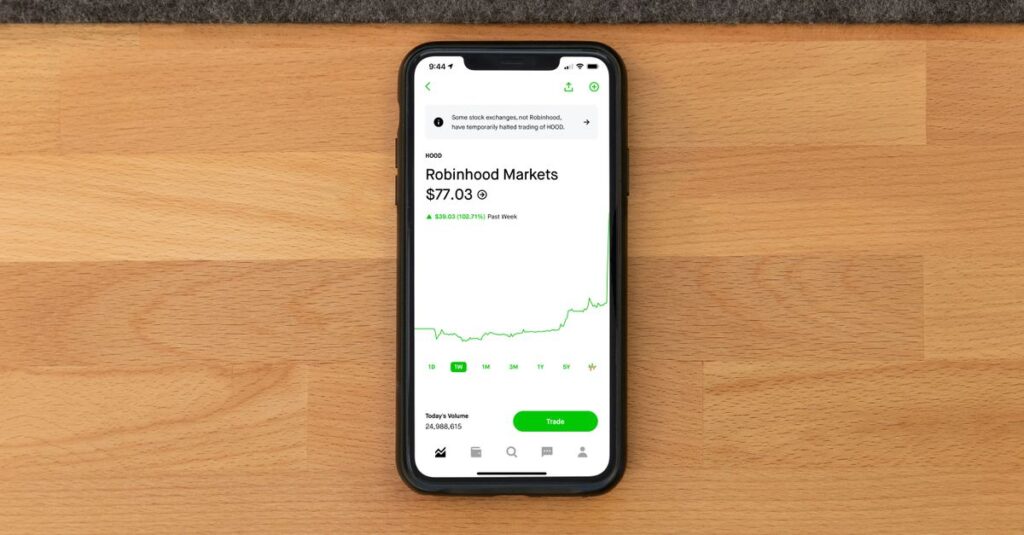
Robinhood Wallet has integrated Arcus as a routing provider for stock token swaps, giving eligible users access to the request-for-quote venue built by the team behind dYdX. Arcus confirms the move in a statement shared with The Block on October 1. The deal puts a professional market maker quoting layer directly inside a retail consumer product for stock tokens.
The integration covers spot swaps on more than 190 stock tokens. Arcus first launched on Robinhood Chain in July with about 90 tokens and has roughly doubled that listing count since. Its perpetual futures markets are still in beta.
How the RFQ model differs from pool-based swaps
Arcus skips the single liquidity pool structure most decentralized exchanges use. Its request-for-quote system asks professional market makers to compete on price for each individual swap, which is much closer to how transfers between venues happen in institutional markets. For retail-sized orders the model tends to produce tighter spreads and less slippage than an equivalent AMM pool, particularly on tokens that do not sit deep in any one pool.
Robinhood Wallet can route a given swap to whichever provider quotes best, Arcus being one of several options rather than an exclusive. Users who route through Arcus may earn Arcus Points, the venue’s loyalty mechanism, and limit orders will be available through the wallet’s dapp browser rather than a native order form inside the main interface.
| Arcus metric | Value |
|---|---|
| Stock tokens listed | 190+ (up from ~90 in July) |
| Cumulative trading volume | $5 billion+ |
| Unique traders | 15,000+ |
| Total value locked | $28 million+ |
“The early traction reinforces what we believed from the beginning: traders want markets that are global, accessible, and always on,” said Arcus CEO Eddie Zhang in the statement.
Where this fits in the tokenized stock push
The integration lands inside a fast-moving month for tokenized equities. The SEC opened an Innovation Exemption route earlier this week letting approved venues trade on-chain versions of listed US stocks through automated market makers, subject to caps and a five-year window. That gives regulated venues an official lane to run stock tokens under securities oversight rather than waiting on a bespoke approval process.
Arcus and competitors sit in parallel, running as crypto-native infrastructure on Robinhood Chain with the RFQ model, which sidesteps the AMM structure entirely. These are different legal wrappers for the same underlying shares, and the SEC window does not directly govern either. Coinbase, Kraken and several global exchanges have all built or leased tokenized-equity products over the past year, and volume has concentrated where spreads are tightest and settlement is fastest.
Retail access is now layered: traditional brokered equities, exchange tokens inside brokerage accounts, and fully on-chain versions of the same underlying tickers. Each layer has a different custody model, different trading hours and different price. That is exactly why routing matters. Two venues can both quote a swap on the same underlying stock at materially different spreads depending on which liquidity they touch, and Robinhood Wallet’s job is to find the better quote rather than lock users into one.
CoinDesk published an editorial by Andrew Cuomo on October 1 arguing that synthetic tokenized stocks, the derivative-flavored versions rather than fully backed wrapped shares, are bad for American investors. That is one voice in the debate, but it captures the tension building around the sector. The same Apple or Nvidia stock now trades in at least three forms with different legal wrappers and different counterparty risk, and regulators are starting to pull at which of those forms deserves mainstream distribution.
Arcus’s approach, going to market makers for competitive quotes rather than routing through a shared pool, gives a retail price discovery process that does not depend on whether a pool holds the right inventory at the right moment. For thinly traded stock tokens, that difference is the whole product. It is also the harder technical build, because the venue needs standing relationships with market makers willing to quote around the clock on assets whose underlying market is only open six and a half hours a day.
Economics and reach
Arcus Points, awarded when a swap routes through the venue, echo the trading-incentive loops crypto derivatives venues trialed over the past two years. Whether that keeps traders routed through the venue after rewards taper is the practical test for Arcus. Robinhood’s broader wallet user base gives it reach it could not have earned organically in three months of growth, and putting the venue in front of someone else’s retail flow costs less than buying that flow directly.
Total value locked of $28 million against cumulative volume of $5 billion makes the usage pattern plain: users cycle through and out rather than parking capital. An RFQ venue does not need deep TVL the way a pool does, because inventory sits with the market makers who quote, not in a shared contract. That is a structural fit for Robinhood’s retail flow rather than an accident. The pool metric people use to rank DeFi venues simply does not apply here.
The SEC’s innovation window, Robinhood Chain’s token listing growth and Arcus’s routing integration all landed in the same six weeks. They are pointing at the same market from three directions, a regulated exchange wrapper, a chain purpose-built for stock tokens, and an RFQ execution layer. October will show which layer captures the retail order flow, and whether the venue that wins on spreads can hold its margins once regulators define the boundaries of the market.