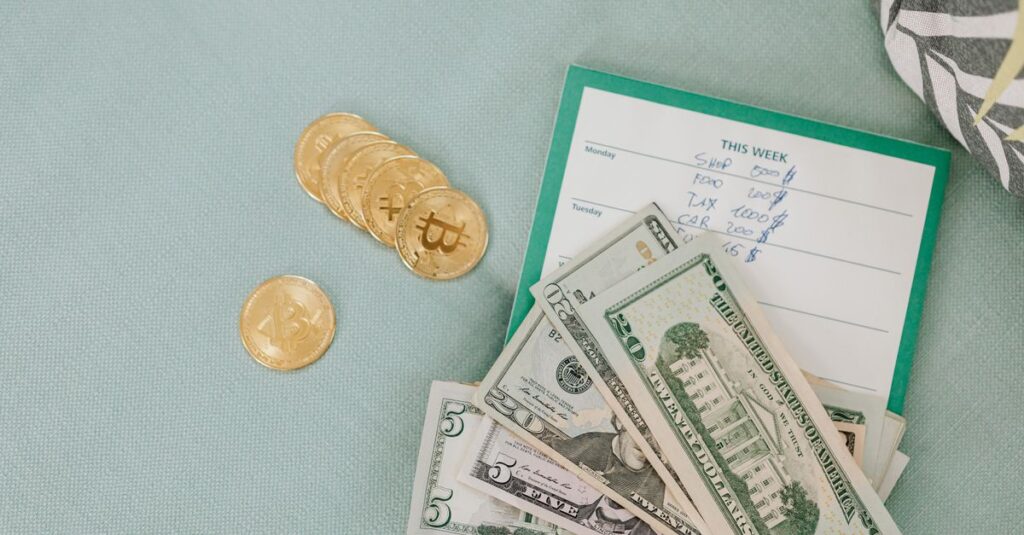
A senior South Korean lawmaker is pushing to delay the country’s 22 percent tax on digital asset income by two more years, to 2029. Kim Sang-hoon of the opposition People Power Party, who chairs the party’s special committee on stock and digital asset value-up, made the proposal in written remarks delivered at the Block Festa 2026 conference in Seoul this week.
What Kim is asking for
Seoul’s tax authorities already enacted the levy on digital asset income, which applies at a 22 percent rate once annual gains pass a 2.5 million won exemption, roughly $1,800. The tax has never actually taken effect. Implementation was pushed from 2023 to 2025 and again from 2025 to 2026 through successive acts of the National Assembly, each delay attributed to investor complaints and concerns about driving traders to offshore platforms that pay no tax to Seoul.
Kim’s argument follows the same line. He contends that taxing crypto income at 22 percent while domestic equity investors enjoy a different set of incentives and deferrals would hand Korean traders a standing reason to move their activity onto offshore exchanges. His committee has framed the wider value-up agenda as a way to keep capital inside Korean markets, and digital assets are being pulled into that same framework. In his written remarks he described the current schedule as putting Korean investors at a disadvantage against overseas competitors rather than protecting them.
The proposal sets up another round of the fight that has played out in the National Assembly every year since the law passed. Recurrent budget legislation has been the vehicle for the previous delays, meaning delay advocates only need to hold up one tax bill. Opponents, mostly from the ruling party’s fiscal committee, argue the country loses hundreds of billions of won in revenue per year of delay and that the capital flight argument applies less now that domestic crypto businesses have matured and registered with regulators.
The wider Korean context
Seoul’s hesitation on taxing crypto sits alongside a much broader ambivalence about the sector. The Financial Services Commission has been drafting secondary legislation under the Digital Asset Basic Act, the framework law passed in 2025 covering issuance, disclosure and stablecoin rules. Stablecoin issuance regulation in particular has been delayed repeatedly as the Bank of Korea and the FSC fight over who controls won-backed issuers, and a final draft has yet to reach the Assembly floor in full. Ministry officials have indicated a stablecoin bill may come this year but have made similar statements in each of the last two legislative sessions.
Korean markets remain among the largest retail crypto venues globally despite the tax uncertainty, with the won consistently ranking among the highest currencies for spot trading volumes on major exchanges. Upbit and Bithumb remain dominant, and the two platforms have spent 2026 arguing with regulators over real-name account requirements and listing review procedures. Each delay of the income tax is widely read as an acknowledgment by the government that the market rules are not complete, and that taxing gains before disclosure and custody standards settle would be premature.
Institutional voices are split. Local banks, led by several large commercial houses, have requested stablecoin issuance rights under any final law, and their lobbying has slowed the FSC draft. Consumer groups have pushed the other way, asking for stronger investor protections first. The last published draft would reserve issuance for licensed banks with 500 million won minimum capital, a structure designed to keep crypto-native issuers out rather than bring them in, which is one reason the legislation remains contested inside the ruling coalition.
The retail base is large enough that any tax timing decision is political by default. Industry surveys put the number of Korean digital asset holders at several million, skewed toward investors in their twenties and thirties who vote at lower rates than older cohorts but who organize effectively online. Party strategists on both sides read that bloc as worth chasing, and the tax delay fight is the area where it shows most plainly. Lawmakers who would never block a budget line over equities taxation have repeatedly relented on crypto taxation because the affected voters are concentrated and loud.
Whether it goes anywhere
The odds favor another delay. Every previous attempt to activate the tax came apart once the bill reached the subcommittee stage, and the global trend this year points the same way, with the US still finalizing its digital asset tax reporting framework and the UK pushing implementation of its own crypto reporting regime to 2027. No major developed market has moved in the opposite direction recently, which gives Seoul’s delay advocates a convenient talking point.
The counterweight is money. The National Assembly’s own budget office has put the annual cost of each year of delay in the hundreds of billions of won, and the government has leaned on that number in public statements defending the original schedule. Whether that figure ever overrides the political calculus will become clear when the next budget session opens, where a delay rider would have to attach. If it passes this year, the tax would take effect in 2029, and Seoul would enter its fourth consecutive year of legislating a tax it never collects.
There is also a regional angle. Japan taxed digital asset gains at a flat rate for years and only moved to soften the treatment once institutional adoption accelerated, and Tokyo’s experience is a common reference point in Assembly debates. Korean officials have watched won-backed stablecoin projects abroad, including in Hong Kong and Singapore, move faster than Seoul’s, and some in the value-up camp argue that a friendlier tax regime is the cheaper lever for keeping volume domestic than building out a full payments ecosystem from scratch.
For traders the practical advice has not changed since 2022: keep records, assume the tax arrives eventually, and treat every announced start date as provisional. Anyone who structured holdings around the 2025 start date and then the 2026 one has little reason to reshuffle positions on the strength of one opposition proposal before it reaches a committee.