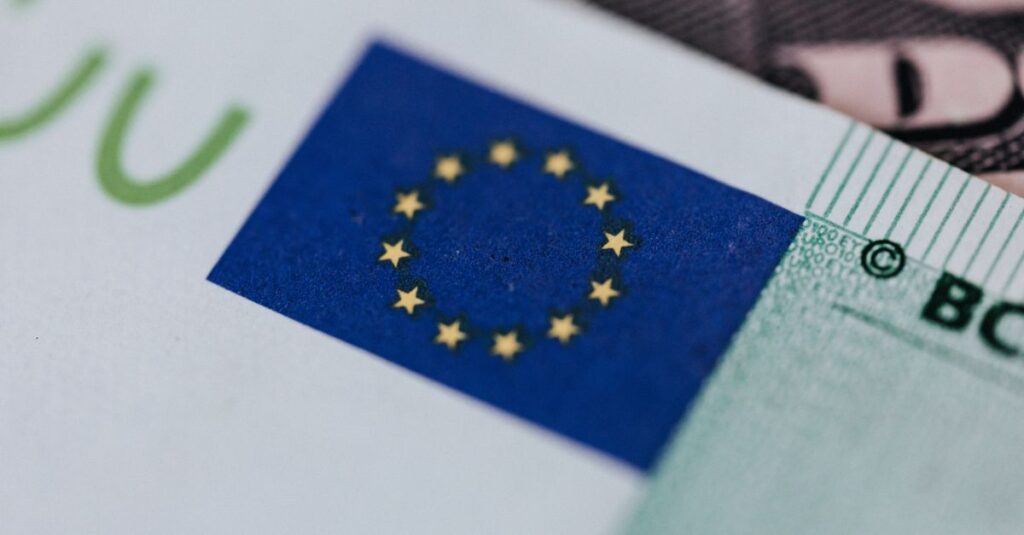
President Donald Trump threatened to impose serious tariffs on the European Union or cut trade with the bloc entirely if it goes ahead with a plan to make Canada its first associate member, calling the proposal laughable and a potential hostile act.
The threat came a day after European Commission President Ursula von der Leyen used her State of the Union address in Strasbourg to open the door to a new category of relationship with Canada, one that does not currently exist in EU law and would have to be built from scratch. Standing beside Prime Minister Mark Carney, who received a standing ovation in the chamber, she said Europe wants to take the relationship with Canada to the highest level possible and build on the existing CETA free trade agreement with a broader Alliance for the Future.
Trump, speaking to reporters in Charlotte, North Carolina, left no ambiguity about his view. Canada has been a terrible trade partner, he said, and the associate membership idea was laughable. If I think it’s at all a hostile act, I will put very serious tariffs or stop trading with Europe on many things, he added. He did leave one door open: if the arrangement were made with good intention, that would be fine. Bad intention would carry a price.
If they do that, if I think it’s at all a hostile act, I will put very serious tariffs or stop trading with Europe on many things.
Why Canada is looking east
The proposal did not come out of nowhere. Canada sends roughly 70% of its exports to the United States, which makes it acutely exposed to Washington’s tariff policy. Trade talks between Ottawa and Washington broke down last month, new tariffs on Canadian goods took effect days before the EU announcement, and additional measures targeting the auto industry are scheduled for the new year. Trump has also repeatedly floated making Canada the 51st state, language that has done lasting damage in Ottawa.
Carney has responded by seeking to diversify. He has called for a unique alliance with Europe while stopping short of fully endorsing associate membership, whose terms remain undefined. Addressing the European Parliament on Thursday, he said financial mechanisms have been used for coercion, supply chains constitute weak points to be exploited, and economic integration is being weaponized, a thinly veiled description of how he sees US behavior. Asked about Trump’s comments, he said Canadians were united that nobody is going to tell us what language we speak, or with whom we can strike agreements internationally.
Canada’s incoming ambassador to the EU, Jonathan Wilkinson, was more cautious, telling reporters in Strasbourg simply: we’re not there. What we’re focused on is actually driving results.
What associate membership would actually mean
Nothing in the EU treaties provides for associate membership. The category would need to be invented, and legal scholars note that anything short of full membership leaves unclear what Canada would actually get: access to the single market in some sectors, participation in certain programs, security cooperation, or something broader. Von der Leyen’s speech framed it as spanning trade, climate and AI cooperation, but the details are expected to be worked out at a summit Carney will host in Montreal on October 29 and 30.
The EU side has its own reasons to move. The bloc has been looking for partners outside Washington as transatlantic trade frictions grow, and Canada is a natural fit: a G7 economy, a CETA partner since 2017, and a country whose values language plays well in the European Parliament. Von der Leyen cast the relationship as rooted in shared democracy, telling Carney, above all, dear Mark, Europe and Canada believe in democracy.
| Element | Status |
|---|---|
| EU associate membership category | Does not exist, must be created |
| Existing trade framework | CETA, in force since 2017 |
| Next milestone | Montreal summit, Oct 29-30 |
| Canadian exports going to US | About 70% |
| US tariff threat | Serious tariffs or trade cutoff |
The economic stakes
The threat matters because Europe is already managing one trade confrontation with Washington. The EU accepted tariffs of up to 15% on most of its exports to the US earlier this year rather than retaliate, a decision that split opinion in Brussels. A second front opened over Canada would test whether that restraint holds.
For Canada, the calculus is different. Diversification away from the US market is a years-long project, and Europe cannot replace the US as a destination for Canadian energy, autos and raw materials in the near term. What the EU offer provides is leverage and optionality: a visible alternative that changes the negotiating dynamic with Washington even if the trade volumes never materialize at scale.
Markets have largely treated the exchange as political theater so far. The Canadian dollar and European equities moved little on the headlines. But the October summit will show whether the associate membership concept gets real legal architecture behind it, and Trump’s warning ensures that whatever emerges will be read in Washington as a choice about alignment, not just economics.
Carney, for his part, has embraced the proposal publicly while acknowledging its terms remain to be defined. The embrace itself is the message. A country that sent 70% of its exports to one buyer is now standing in the European Parliament being applauded for looking elsewhere, and the buyer has noticed.