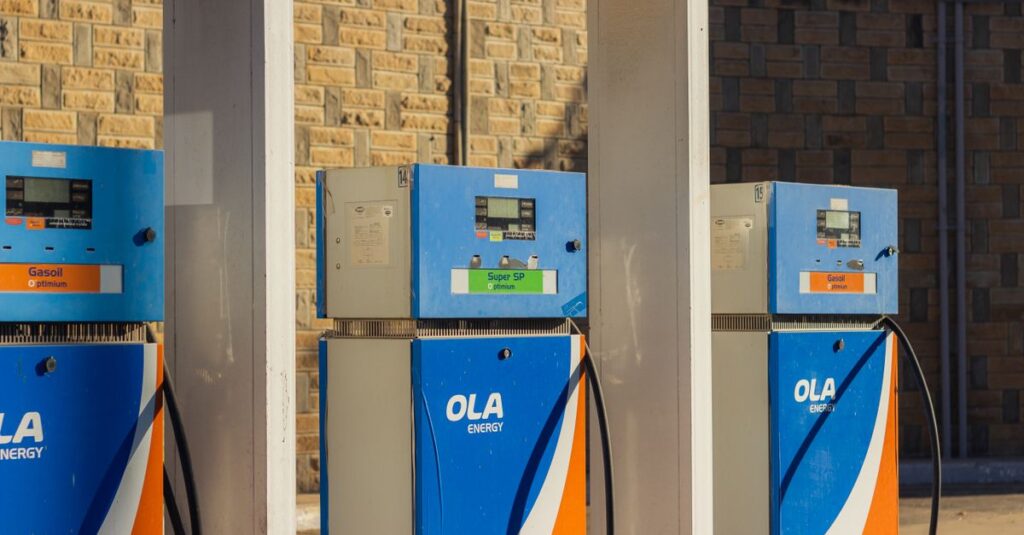
The United States has urged France and Germany to release emergency diesel stocks, warning that a potential US diesel export ban remains on the table if they refuse, according to sources close to the discussions. The demand adds a trade dimension to an energy crisis that has already pushed Brent crude back above $100 a barrel and set retail diesel prices on both sides of the Atlantic to records.
The state of play
President Trump has been weighing an export ban for weeks, calling diesel prices a political problem he wants solved quickly. Asked Wednesday whether Energy Secretary Chris Wright had advised against the move, Trump interjected: “No, I think it’s something that we think about and we talk about every day.” He also acknowledged a ban could have a “negative impact” on gasoline prices, an unusual admission for a policy being pitched as consumer relief.The White House previously denied a report that it was preparing a 90-day blanket ban, then Trump said Wednesday he was still discussing a possible restriction on US diesel exports. Prediction markets put a formal announcement by November 1 at roughly 11.5 percent odds, with October essentially priced out. Traders do not expect an imminent move, but they have stopped treating the ban as a bluff, and diesel crack spreads have widened on every fresh headline. Reports of the US demands on Paris and Berlin moved those odds up within hours of publication.
Why Europe is in the crosshairs
US refiners ship roughly 1.3 million barrels per day of diesel abroad, and the US Gulf Coast supplies about 90 percent of those exports. European buyers take a large share, particularly since the Iran war disrupted alternative supply routes and forced European buyers to lean harder on American product. The administration’s argument is straightforward: Europe can draw down its own emergency reserves instead of relying on American distillate, freeing US diesel for domestic consumers and easing prices at US truck stops and heating-oil customers.Paris and Berlin have resisted, arguing their strategic stocks exist for genuine emergencies and that releasing them now would leave them exposed if Gulf flows deteriorate again. The war has already reshaped flows for months. Middle East crude exports reached 16.328 million barrels per day in September, the highest since the conflict began in February, according to Kpler data, but that is still about 3.2 million bpd below pre-war levels. Saudi Arabia has resumed tanker loadings from its Red Sea port of Yanbu after restarting its East-West pipeline, a sign of improving logistics that has not yet translated into comfortable distillate supply.
“An immediate ban on diesel exports would eliminate outlets for approximately 1.3 million barrels-per-day of U.S. diesel and create a significant product containment challenge across the U.S. Gulf Coast,” a CITGO spokesperson said in a statement.
Refinery math does not cooperate
The industry’s objection is physical, not just commercial. Refineries are configured to make a slate of products together. If diesel has nowhere to go, units still have to run to supply gasoline and jet fuel, and the displaced diesel has to be stored. Gulf Coast tank capacity for distillates is limited, and a storage bind would force refiners to cut runs, which would reduce gasoline output too and push pump prices up, the opposite of the policy’s goal.Texas officials and industry groups have made exactly that argument this week. A report from Houston Public Media described the proposal as a threat to the Gulf Coast refinery cluster and the state’s economy, with operators warning that curtailed exports would force downsizing and weaker supply. Refinery workers and petrochemical customers would feel the cuts first, and the state collects significant revenue from the same operations.The last weekly inventory read underlined the split. US crude stocks rose 922,000 barrels, more than the 700,000-barrel draw analysts expected, while fuel inventories pointed to tightness. The crude side of the market is loosening just as the diesel side tightens, which is precisely the imbalance an export ban would amplify rather than fix.
| Indicator | Current reading |
|---|---|
| US diesel exports | About 1.3 million bpd |
| Gulf Coast share of exports | About 90 percent |
| Middle East crude exports, September | 16.328 million bpd |
| Gap to pre-war export levels | 3.2 million bpd |
| Polymarket odds of ban by Nov. 1 | 11.5 percent |
Market read
Brent held gains in Asian trading Thursday, with December futures near $98 after the front-month contract settled at $103.50 the prior session. Brent gained about 14 percent in September, its strongest month since July. Traders are weighing recovering Gulf exports against fuel-side tightness, and the diesel ban threat sits squarely on the tight side of that ledger. Any formal announcement would likely send distillate prices sharply higher in Europe, since European buyers would suddenly compete for Asian and Middle Eastern barrels that are already spoken for.The administration has floated a short window, two or three months at most, for any restriction. That framing suggests the White House wants leverage over European reserves and domestic prices rather than a structural trade shift. But leverage only works if the threat is credible, and the credible version of the threat is exactly the one that hurts US refiners and, through them, US gasoline prices. Trump’s own admission that a ban could backfire on gasoline suggests the White House knows this.Friday’s US jobs report and next week’s inventory data will move crude in the short run. The diesel file is the bigger swing factor, and it now runs through conversations between Washington, Paris and Berlin rather than through OPEC or the Strait of Hormuz. Diplomacy around Iran’s ceasefire proposal continues in parallel, and a durable de-escalation would do more for diesel prices than any export restriction.