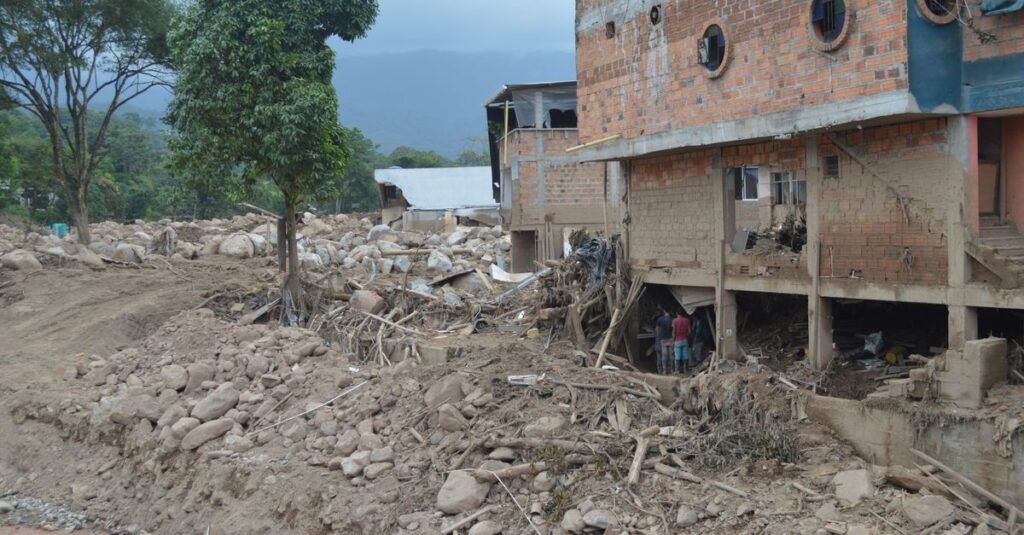
More than 5,000 people are confirmed dead and an estimated 6.76 million Venezuelans have been affected by twin earthquakes that struck the country’s north-central coast on June 24, as a United Nations-backed damage assessment pegs total reconstruction costs at $37 billion.
National Assembly President Jorge Rodriguez announced on July 20 that the death toll had risen to 5,208, with 16,740 people injured and nearly 18,000 left without housing. The citizen-run platform “Desaparecidos Terremoto Venezuela” has logged more than 30,000 reports of missing people, and search operations continue months after the initial disaster.
The Earthquake Doublet
The June 24 disaster was no ordinary seismic event. A magnitude 7.2 earthquake struck near San Felipe in Yaracuy state at 10:24 p.m., followed just 39 seconds later by a stronger 7.5 magnitude quake with an epicenter near Moran in Carabobo state, roughly 168 kilometers west of Caracas. Researchers classified the event as an “earthquake doublet” – in which the first quake triggered a neighboring fault already close to rupture, rather than a main shock followed by aftershocks.
The second quake was the strongest recorded in Venezuela or its nearby coastal region since 1900. It struck at a depth of just 10 kilometers, amplifying destruction across the densely populated coastal corridor from La Guaira to Valencia. Simón Bolívar International Airport in La Guaira was shut down, cutting off a major aid delivery route.
A UN-backed study by the Economic Commission for Latin America and the Caribbean (ECLAC) and Venezuela’s National Academy of Engineering (UNE) estimated the earthquakes damaged buildings and critical infrastructure worth $37 billion, equivalent to roughly 3.4 percent of the exposed physical assets in the affected region. The study’s authors warned that the total economic cost will almost certainly prove substantially higher once indirect losses and disrupted economic activity are tallied.
Reconstruction at Scale
Authorities report 890 aftershocks since the initial event, 885 buildings affected – including 189 that collapsed completely – and nearly 86,117 families assisted. Approximately 29,600 military, police and emergency personnel have been deployed alongside 3,305 international aid workers.
Acting President Delcy Rodriguez declared a state of emergency on the night of the quake and announced a $200 million reconstruction fund, a figure that observers note covers less than one percent of the estimated damage. The International Organization for Migration estimates that 6.76 million people may have been affected by disruption to housing, transportation, public services and economic activity across the region.
The earthquake compounded Venezuela’s pre-existing crisis, where annual inflation reached 576 percent and state pensions for the elderly total roughly 30 cents per month. Hospitals in the affected zone had already been operating with chronic shortages before the disaster destroyed or damaged medical infrastructure.
International rescue teams from multiple countries joined the response, though access has been complicated by the country’s political isolation and the closure of key transportation infrastructure. The disaster remains one of the costliest natural catastrophes in the Western Hemisphere’s recent history, surpassing the 2010 Haiti earthquake’s damage estimates when adjusted for the relative size of the economies involved.