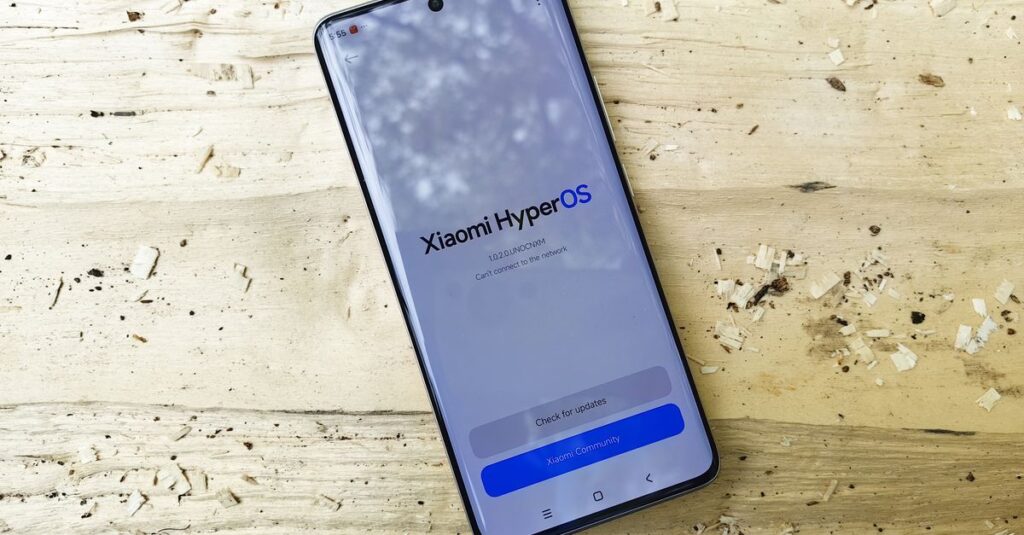
Xiaomi launched the Xiaomi 18 Pro and 18 Pro Max in China on Tuesday, the first phones to carry Qualcomm’s new 2nm Snapdragon 8 Elite Gen 6 chips. The Pro Max pairs the top-tier Extreme variant with an 8,500mAh battery, the largest in the company’s bar-style flagships, and both models add a hardware-level privacy display and a secondary rear screen.
The 18 Pro starts at CNY 5,999, roughly $840, and the 18 Pro Max at CNY 6,999, about $980. Both went on sale in China immediately after the autumn launch event, held at 7pm local time on September 23. A global launch has been confirmed but dates and pricing for other markets have not been announced.
Two chips, small differences
Qualcomm announced the Snapdragon 8 Elite Gen 6 and 8 Elite Extreme Gen 6 on Monday, its first 2nm smartphone silicon. The two chips share most of their specification: the same modems, display support, security features, GPS and memory support, with two large CPU cores reaching up to 5GHz and six performance cores at up to 4GHz. Qualcomm no longer publishes detailed core breakdowns, but describes the Extreme as having slightly better CPU, GPU and NPU performance.
The clearer gaps are in media and AI. The Extreme chip drives 8K video at 60fps and 4K at 240fps, supports the Advanced Professional Video codec, and carries a larger shared memory pool for the NPU plus AI-dedicated matrix cores in the GPU. The Verge’s coverage of the announcement notes the differences are minor enough that spotting them in daily use will be hard, which makes each maker’s chip choice more about positioning than capability.
Xiaomi took the standard chip for the 18 Pro and the Extreme for the 18 Pro Max. Motorola confirmed the Extreme for its Signature 27 flagship, and Honor’s Magic9 Pro Max follows on September 28. Vivo, Oppo, iQOO, Nubia, OnePlus, Redmi, Redmagic and ZTE are all lined up for the Gen 6 family. The 2nm node puts Qualcomm alongside Apple’s A20 Pro and MediaTek’s Dimensity 9600 in this generation’s leading edge.
| Model | Chip | Battery | Starting price |
|---|---|---|---|
| Xiaomi 18 Pro | Snapdragon 8 Elite Gen 6 | 7,000mAh | CNY 5,999 (about $840) |
| Xiaomi 18 Pro Max | Snapdragon 8 Elite Extreme Gen 6 | 8,500mAh | CNY 6,999 (about $980) |
Cameras, screens and privacy hardware
Both phones carry dual 200MP Leica cameras, a configuration Xiaomi has been pushing through its flagship line. The 18 Pro uses a 6.4-inch screen with a triple-lens Leica rear array. Peak brightness reaches 4,000 nits, bezels measure 0.99mm, and a secondary rear display handles AI-powered mini apps, extending the rear-screen idea Xiaomi introduced on earlier models.
The privacy display works at the hardware level, restricting what is visible from side angles, a feature aimed at users handling sensitive content in public. Both models run HyperOS 4, which Xiaomi has been rolling out in global beta to the 17T series since mid-September. The company has positioned AI features as a core selling point, with the rear display acting as a surface for agent-driven mini apps rather than a simple notification mirror.
Battery capacity is the headline number. An 8,500mAh cell in a bar-style flagship is well above the 5,000 to 5,500mAh that defined the category for years, and it reflects the silicon efficiency gains and silicon-carbon battery chemistry Chinese makers have adopted at scale. Xiaomi’s own foldables and midrange lines have already crossed 6,000mAh, and the 18 Pro Max pushes the bar further. The trade-off, as with any high-capacity cell, is weight and thickness, details Xiaomi has not emphasized in the launch materials. International buyers should also note that global variants of recent Xiaomi flagships have shipped with smaller batteries and slower charging than the Chinese versions, a pattern the company has repeated across generations.
What it means for the market
The launch lands in a bruising phone market where Chinese makers are competing on hardware extremes while Apple and Samsung hold the premium tier. Xiaomi’s play is straightforward: first-mover rights on Qualcomm’s newest chip, the biggest battery in the segment, and camera hardware co-branded with Leica, all at prices well below flagship iPhones. The 18 Fold, launched earlier this month on Xiaomi’s in-house XRING O3 chip, showed the company hedging its dependence on Qualcomm with its own silicon for some segments.
Memory prices complicate the economics. Chip shortages have driven component costs up across the industry, with Apple raising MacBook and iPad prices this month in part because of memory costs, and analysts expect phone makers to face similar pressure through the year. South Korean and Chinese memory makers have raised prices as AI data center demand soaks up supply, and smartphone bill-of-materials costs are rising with them. Whether Xiaomi holds its launch pricing in global markets will be one of the more watched details when the international rollout is announced.
For Qualcomm, the Gen 6 launch is a chance to reassert an advantage over MediaTek at the very top of the market. The Extreme variant gives brands a second SKU to differentiate Pro Max-tier devices, a structure that mirrors how chipmakers segment laptops. The next test is real-world performance and battery life, which reviewers will publish once units ship in volume. Geekbench listings that surfaced before launch showed the 18 Pro paired with an Adreno 845 GPU, consistent with the 2nm platform’s expected graphics leap.
For consumers outside China, the wait continues. Xiaomi’s global launch events typically follow the Chinese debut by weeks, and the company has confirmed the 18 Pro series will reach international markets, though whether the 8,500mAh battery survives the trip is the question that matters most to buyers watching from abroad.