
Chile, Argentina, Bolivia and Peru signed a joint declaration on Friday in Santiago, creating the first ministerial-level bloc uniting the world’s top two copper producers with the largest lithium brine economies in a coordinated push to dominate critical mineral supply chains.
The declaration was signed by Chile’s Biminister of Economy and Mining Daniel Mas, Argentina’s Mining Secretary Luis Lucero, Bolivia’s Vice Minister of Mining Policy Walter Landivar, and Peru’s Minister of Energy and Mines Guillermo Shinno. The four officials described the meeting as the first concrete step toward a permanent regional alliance on strategic minerals.
“Our goal is to establish the Southern Cone as the most reliable, sustainable and competitive supplier of strategic minerals in the world,” Mas said at the signing ceremony in Santiago.
Three Pillars of Cooperation
The declaration rests on three main pillars. First, shared development frameworks covering geological information exchange, mining policies, and regulatory standards. Second, joint pursuit of technical and financial support from multilateral development banks, which already have active projects in three of the four signatory countries. Third, public-private innovation partnerships targeting direct lithium extraction, low-carbon copper processing, and sustainable mining practices.
The pact also calls for the creation of standing working groups to advance regulatory harmonization across the four jurisdictions. If permitting standards and environmental oversight can be aligned, analysts said the reduction in cross-border regulatory uncertainty could materially improve project economics for mining companies operating across multiple Andean nations.
Peru’s Shinno emphasized the value-addition dimension, saying the four countries aim to move beyond raw mineral exports toward processing and refining on the continent. Less than 10% of copper mined across Latin America is currently processed locally into semi-finished or finished goods, a statistic the OECD has flagged as a structural weakness for the region.
Scale of the Prize
The combined mineral wealth of the four signatories is staggering. Chile and Peru together supply close to 40% of the world’s copper. Argentina and Bolivia form the core of the Lithium Triangle, the vast brine deposits stretching across the high Andes that hold a dominant share of global lithium reserves.
Global demand for critical minerals is projected to grow 400 to 600% over the next decade, driven by electric vehicle batteries, renewable energy storage, and defense applications. The lithium project pipeline across Chile, Argentina, and Peru already represented $29.6 billion in committed and planned capital before the Santiago declaration, making the pact’s regulatory harmonization agenda consequential for projects already in advanced development stages.
For multilateral lenders like the Inter-American Development Bank and the World Bank, the coordinated bloc approach could unlock financing for cross-border infrastructure and research initiatives that individual countries might struggle to secure alone.
Mexico Left Out
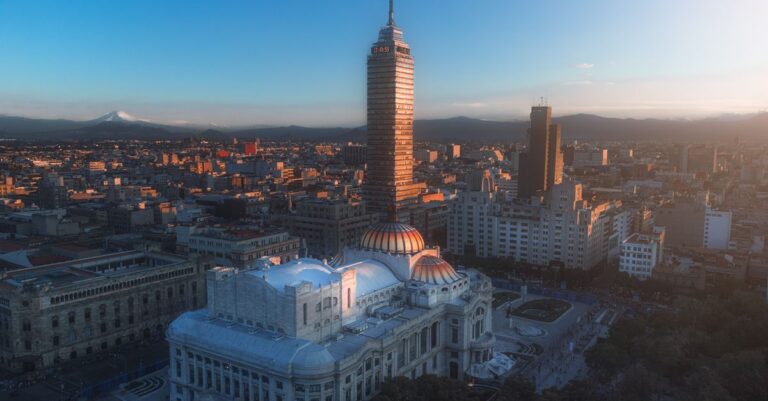
Notably absent from the declaration is Mexico, which holds proven reserves or development potential across at least 13 critical minerals, including lithium, copper, graphite, rare earths, and fluorite. Restrictive state control of lithium and an underdeveloped investment framework have pushed foreign capital toward Argentina and Brazil instead.
Mexico has pursued its critical minerals strategy largely through a bilateral US-Mexico Action Plan on Critical Minerals signed in February, which named copper, silver, lithium, graphite, and zinc as priorities. However, that framework carries no binding obligations and no attached capital, and Mexico was left out of a separate $3 billion package Washington committed to minerals partners elsewhere.
The Santiago declaration gives Chile, Argentina, Bolivia and Peru more negotiating weight when dealing with multilateral institutions and private investors than each country would carry alone. Governments across the Americas are increasingly treating mineral supply chains as instruments of geopolitical leverage, and the four nations appear to be betting that a shared regional voice will carry more influence than fragmented bilateral negotiations.
Risks remain significant. Bolivia’s state-centric mining model sits far from Chile’s market-aligned framework. Argentina’s shifting policy environment on investor protections and permitting continues to concern foreign miners. And the declaration itself contains no binding implementation timeline, leaving the working groups to prove whether the pact hardens into institutional reality or remains aspirational.
Final details on joint investment calls and multilateral financing proposals are expected in the coming months as the working groups convene for the first time.
discussion