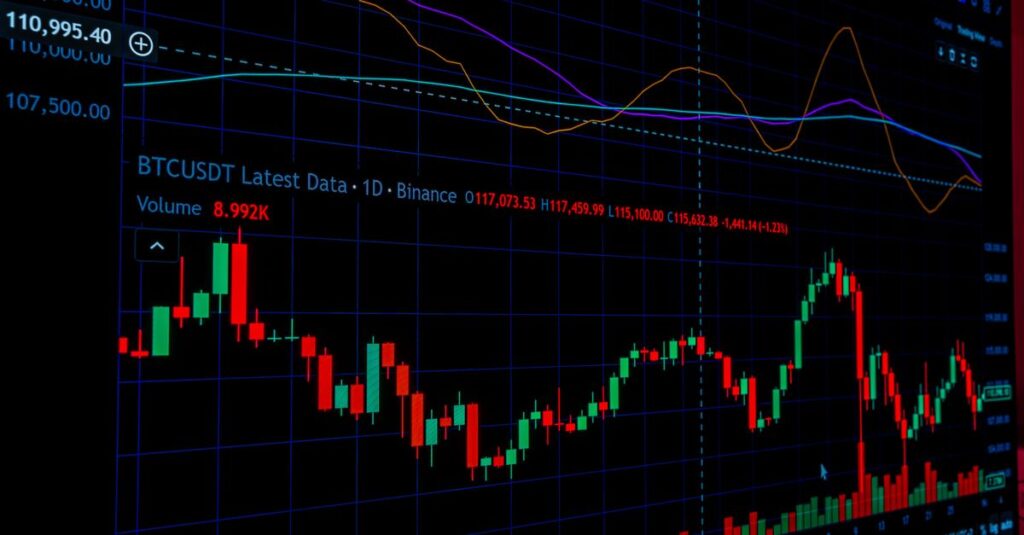
Binance will delist several spot margin trading pairs at 06:00 UTC on September 18, the exchange said in a Monday announcement, the latest sign that trading desks across the industry are cutting back as volumes slide. The affected pairs lose margin availability on that date, and any open margin positions in them must be closed by users before the deadline.
The announcement, first reported by FX News Group, did not list every affected pair in the summary notice, but Binance margin delistings of this kind typically follow a standard script. Borrowing and lending for the affected assets on margin stops first, then open positions are force-settled, and the pairs disappear from the margin interface. Users who hold the underlying spot assets are not affected; only margin trading in the specific pairs ends. Spot balances stay in place and can be withdrawn or traded on the regular books as usual.
Why exchanges delist margin pairs
Margin pairs are expensive to maintain. Each one requires liquidity provision, risk monitoring, and collateral machinery, and a pair with thin volume generates spread and borrow income that does not cover the operational load. Delisting low-activity pairs is routine housekeeping for any large exchange, and Binance does it in batches several times a year. The risk team also watches for pairs where collateral quality has degraded, where a lender of last resort function would be tested in a crash, and where funding imbalances have built up on one side of the book.
The timing matters, though. It lands in the middle of what industry observers describe as a year-long slump in crypto trading volumes, a slump that has already pushed one established exchange out of business entirely. CoinEx, a nine-year-old venue, announced its permanent shutdown this week with a December 22 deadline, and CoinShares posted a $23.9 million net loss for the first half of 2026. Pruning unprofitable pairs is the smaller version of the same pressure.
| Recent exchange cutbacks | Detail |
|---|---|
| Binance margin delisting | Several pairs removed September 18, 06:00 UTC |
| CoinEx shutdown | Wind-down underway, permanent closure December 22 |
| CoinShares H1 2026 | $23.9 million net loss on weak volumes |
| Binance network support cuts | Deposits and withdrawals of AVA, GNS, TOWNS ended on select networks September 14 |
| Orionx closure | Tether-backed Chilean exchange shutting after audit found $7 million custody gap |
The volume problem behind the pruning
Crypto spot volumes have been drifting down through 2026 even as prices recovered from their summer lows. Bitcoin trades above $81,000 after Monday’s bounce on Fed commentary, and ether sits near $2,500, but the rally has not brought back the churn that exchanges live on. Derivatives activity is stronger than spot, which favors the largest venues with deep futures books and squeezes smaller spot-focused platforms hardest.
The macro backdrop explains part of the caution. The Federal Reserve meets September 15 and 16 with markets split between a hold and a hike, the 10-year Treasury yield touched 5.02 percent on Monday, its highest since 2007, and Brent crude near $108 is rebuilding inflation pressure after strikes on Saudi infrastructure. Wall Street banks flipped to forecasting hikes this week, Citi and Goldman did the same for the Bank of England, and none of that is an environment where leveraged traders pile into thin altcoin pairs.
For Binance, the calculation is straightforward. The exchange still commands the largest share of global spot volume, and margin is a smaller, higher-touch product line. Removing pairs that no longer pay for themselves has almost no revenue cost and reduces risk exposure in assets with thin books, where a violent move can leave the platform holding bad collateral and an insurance fund claim.
For traders, the practical effect is narrow but real. Leveraged positions in the delisted pairs must be unwound manually or they will be settled at market, which can be costly in an illiquid asset. The standard advice applies: check the margin wallet before September 18, close what needs closing, and do not assume the spot market for the same assets is going anywhere. Historically, assets delisted from margin often keep active spot markets for years.
A sector trimming down
The broader picture is an industry consolidating around the survivors. CoinEx’s shutdown after nine years removed a mid-sized venue that never regained its footing after a 2023 hack, and its exit follows a pattern: exchanges that lean on retail spot flow are hurting most, while venues with institutional derivatives business or diversified revenue hold up better. Orionx, a Tether-backed Chilean exchange, began shutting down the same week after a forensic audit found more than $7 million in customer assets had left its custody between 2018 and 2021, a reminder that some exits are about integrity rather than market conditions.
Binance’s own cutbacks are part of the same trimming. Earlier this month the exchange ended support for deposits and withdrawals of AVA, GNS, and TOWNS on selected networks, another batch removal of long-tail assets. None of these moves is dramatic on its own. Together they sketch an exchange sector that is managing for margin rather than growth, at least until volumes return.
Whether that happens soon depends on the same macro forces driving everything else this week. A hawkish Fed outcome would extend the volume drought. A dovish surprise, or even a clear hold with dovish language, is the kind of catalyst that historically brings trading desks back to life. Bitcoin’s jump from below $77,000 to above $81,000 after Governor Christopher Waller backed a hold shows how rate-sensitive the market has become.
Until then, expect more delistings across the industry. Exchanges have learned from past cycles that the cheapest response to a volume slump is to shrink the product surface, protect the core books, and wait for the cycle to turn.