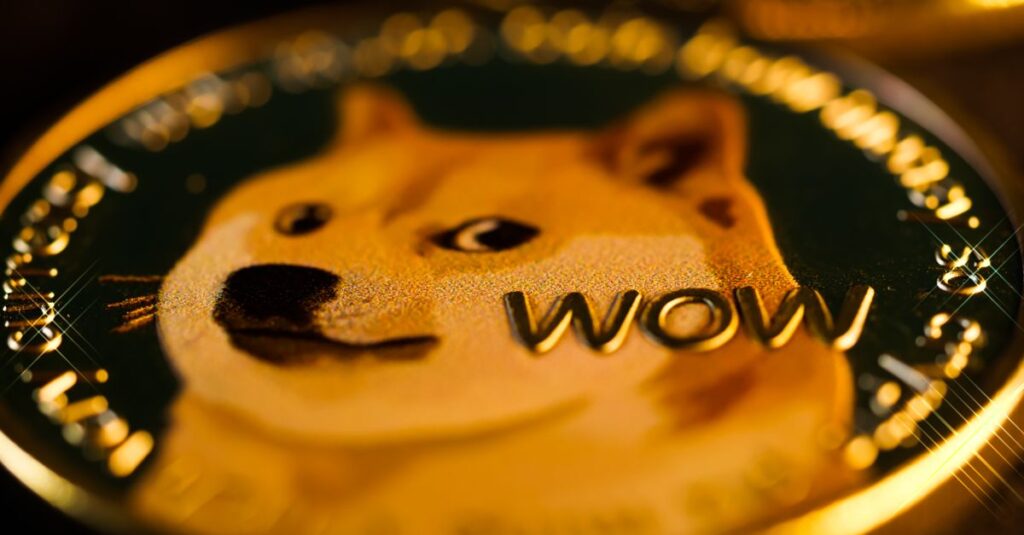
Bitwise is shutting down its Dogecoin ETF after investors largely bypassed the fund in favor of rival products. The Bitwise Dogecoin ETF, ticker BWOW, will stop trading on NYSE Arca on Oct. 14 and be liquidated the following week, less than 11 months after launch.
In a Sept. 10 announcement, the San Francisco asset manager said the closure is part of an effort to optimize its product range as investor needs evolve. Share creation stops before the market opens on Oct. 15. Remaining holders should receive cash based on the fund’s Oct. 21 net asset value around Oct. 22.
The numbers behind the decision are stark. BWOW held roughly $700,000 in assets and recorded about $1.23 million in cumulative net outflows, according to CryptoSlate, which cited SoSoValue data. The entire US Dogecoin ETF category has attracted only about $12 million since launch and manages roughly $11.83 million in total.
Fees did not save it. Bitwise charged an expense ratio of 0.34 percent, slightly below Grayscale’s 0.35 percent sponsor fee on GDOG and well below the 0.50 percent management fee on 21Shares’ TDOG. Price, in this particular market, was not the deciding factor.
Grayscale entered the race with a structural edge. Its Dogecoin trust had operated privately since January 2025 and held about $2.09 million in assets by late October, several weeks before shares began trading publicly. GDOG debuted on NYSE Arca on Nov. 24, one day before BWOW, giving it an existing investor base and first-mover position.
The 21Shares comparison is harder for Bitwise to explain away. TDOG launched Jan. 22, nearly two months after BWOW, and charges a higher fee. Even with that later start, the fund accumulated roughly $1.63 million of net inflows and built an asset base several times larger than Bitwise’s.
Grayscale’s GDOG remains the category leader, holding the largest share of the roughly $12 million that has entered Dogecoin ETFs in total. That is a small number by ETF standards. For comparison, US spot bitcoin ETFs took in $1.92 billion in a single week earlier this year, their strongest pace of 2026, and logged another $1.16 billion during a seven-day streak this month.
| Fund | Ticker | Fee | US launch | Cumulative net flows |
|---|---|---|---|---|
| Grayscale | GDOG | 0.35% | Nov. 24, 2025 | Category leader |
| Bitwise | BWOW | 0.34% | Nov. 25, 2025 | -$1.23 million |
| 21Shares | TDOG | 0.50% | Jan. 22, 2026 | +$1.63 million |
Where Bitwise put its money instead
Bitwise is not retreating from crypto. Arkham Intelligence data shows the firm bought $107.4 million of Solana over 20 trading sessions, lifting its holdings above 9.03 million SOL, worth roughly $918 million at about $101 per token. The same week it announced the Dogecoin closure, its Solana position kept growing.
The split tells its own story. Solana products are drawing sustained institutional demand while memecoin funds scramble for assets. Dogecoin remains the 11th-largest cryptocurrency at about $13 billion in market value, and DOGE traded around $0.085 on Friday, but ETF investors have treated it as a curiosity rather than a core allocation.
“Bitwise has determined to liquidate the Fund as it continues to optimize its product range to meet evolving investor needs,” the company said in the Sept. 10 statement.
The closure lands in a mixed market for altcoin ETFs. Bitcoin funds have wobbled in recent weeks, with three straight outflow days in early September that still left the five-day net positive at $456 million, while Zcash and Solana products keep pulling money. Funds tied to assets with a clear institutional narrative are surviving. Products that launched on memecoin enthusiasm alone are finding the floor quickly.
For Bitwise, the math was simple. A fund with seven figures in assets cannot cover its own operating costs at standard fee levels, and every month it traded, the sponsor paid the difference. Cutting losers early is standard practice among ETF issuers, even when it reads as an admission. The industry closes dozens of products every year for the same reason, and most closures draw no attention at all.
What makes this one notable is what it says about the altcoin ETF market more broadly. Regulators cleared a wave of single-asset funds this year on the theory that investor demand would follow approval. In Dogecoin’s case, the demand never showed up in size. Approval was the easy part. Distribution, marketing budgets and existing shareholder bases did the rest, and Bitwise had less of each than its rivals on this particular asset.
The timing also matters. DOGE has been under pressure alongside the broader market, with bitcoin hovering near $77,000 and down about 3 percent over the past week as bond yields climbed and spot ETF outflows continued. A liquidation announced into a weak tape rarely finds buyers for the underlying asset, though at $700,000 the market impact here is negligible.
Shareholders can sell in the secondary market through the close of trading on Oct. 14. After that, the fund ceases operations, and cash distributions follow within about a week. Anyone still holding on Oct. 22 gets the net asset value price, minus standard costs. Bitwise has set a phone line for holder questions and posted the prospectus on the fund’s website.
The lesson for issuers is uncomfortable. In a market where Grayscale can convert an old trust into a day-one lead, being the cheapest product is worth little. Distribution, timing and incumbent relationships decided this race long before fees entered it. A later entrant with a higher fee still beat the cheap fund on flows, which is the part that should worry every issuer planning to launch the next single-asset product.