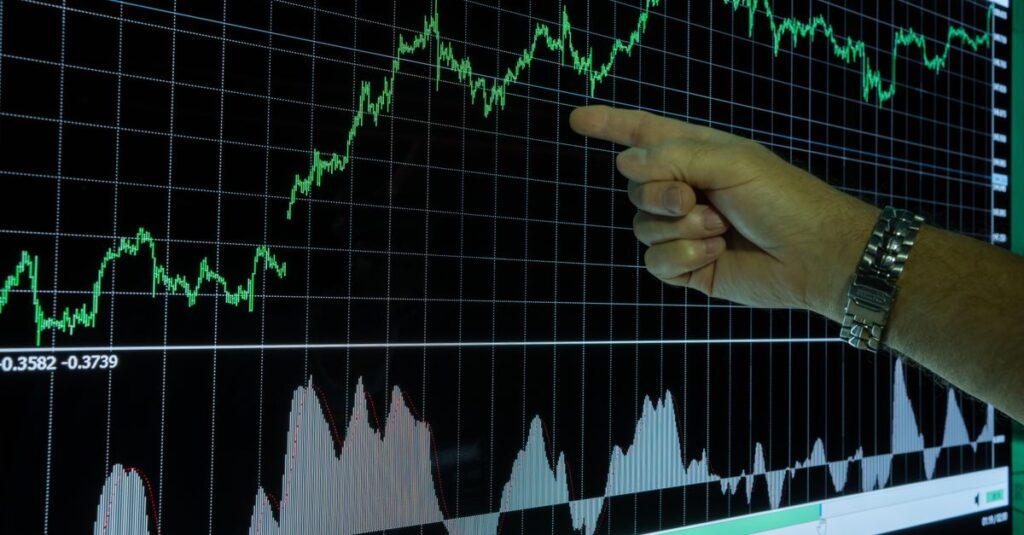
Bitcoin traders follow the moves of large holders far faster than Ethereum traders do, according to researchers at the Federal Reserve Bank of Philadelphia, and in both markets the whales tend to win while small investors lose.
The working paper, “Beneath the Crypto Currents: The Hidden Effect of Crypto Whales,” was first published in August 2024 and revised in December 2025. Economists Alan Chernoff and Julapa Jagtiani analyzed transaction-level data and millions of social media messages to map how large holders, so-called whales, shape price action in the two biggest crypto markets.
Their central finding is uncomfortable for anyone trading on their own account. Large Ethereum holders tend to increase their positions before a price rise, while small holders tend to reduce theirs ahead of the same move. Returns, in other words, move in the direction that benefits whales and hurts minnows.
The volatility story is the reverse. It is the small retail investors, not the whales, who drive most of the swings in Ethereum’s returns. The large holders barely adjust their positions during market turmoil. Retail churns, whales collect.
The authors also looked at trader behavior after the Terra/LUNA collapse and the FTX bankruptcy, two of the most damaging events in crypto history. Their conclusion: the decentralized finance ecosystem, for all its transparency, reproduces many of the vulnerabilities of traditional finance, where sophisticated players profit at the expense of less informed ones.
The scale of the problem is large. Based on more than 50 million messages from nearly 7 million users on Twitter, Telegram and Discord, the researchers identified widespread pump-and-dump schemes and other deceptive strategies. They estimate about 93 percent of abnormal trading volumes in the millions of dollars reflected large wealth transfers from small investors to whales.
A new summary of the research published this week by CryptoSlate added a behavioral twist: Bitcoin traders appear to react to whale wallet movements within roughly 15 minutes, while Ethereum traders respond far more slowly. Faster copying means the front-running window in Bitcoin is shorter, and the edge from watching whale wallets decays quicker.
What the data actually shows
The study separates two effects that often get blurred together in crypto commentary. The first is information advantage: whales buy before prices rise, which suggests either better information or the market power to move price in their direction. The second is volatility generation: small traders, reacting to headlines and social signals, create the swings that whales exploit.
| Behavior | Whales | Retail |
|---|---|---|
| Position before price rise | Increase holdings | Reduce holdings |
| Volatility driver | Passive during turmoil | Primary source |
| Reaction to whale moves | Originators | Fast in BTC, slow in ETH |
Neither finding is unique to crypto in principle. Order-flow research in equities has long shown informed traders profit from less informed ones. What is different here is the degree. The authors state the divergence between large and small investors in Ethereum is more pronounced than in conventional assets, and they attribute part of it to thin regulation and the absence of the disclosure rules that govern institutional trading in stocks and bonds.
Manipulation is the other half of the picture. The paper notes crypto markets are often characterized by manipulation or, at minimum, a sharp divide between sophisticated and retail participants. The social-media analysis found bots and coordinated groups running pump schemes at scale, with the volume concentrated in moments when retail attention peaked. The researchers built their own bot-detection tooling to separate genuine retail activity from automated amplification, which matters because a good deal of what looks like crowd sentiment on X or Telegram is manufactured.
The timing of the original publication is worth noting. The paper landed in August 2024, months after the Terra/LUNA collapse had already wiped out tens of billions in retail wealth, and its revision came after the 2025 cycle had run its course. The whale dynamics it describes persisted across both regimes, which suggests they are structural rather than a feature of one particular market phase.
Why it matters for anyone holding coins
For retail traders, the practical implications are blunt. Copying whale wallets is a popular strategy on-chain analytics platforms actively market. The Philadelphia Fed data suggests it can work, but only for the fastest followers, and the Bitcoin evidence shows that window is measured in minutes. By the time a whale move is visible in a retail dashboard, most of the tradable signal has already been consumed.
For regulators, the paper adds academic weight to an ongoing debate. The EU’s MiCA framework and various US proposals have debated whether on-chain markets need explicit anti-manipulation rules. The authors’ evidence, that returns systematically favor large holders at retail expense, is the kind of finding regulators cite when justifying intervention. It is also the kind of finding the industry tends to dispute, on the grounds that on-chain data is public and anyone can act on it.
That counterargument has a flaw the paper exposes. Public visibility is not the same as equal access. Whales run their own nodes, pay for private analytics, and in many cases control the narratives that retail traders read on social media before they check the chain. The retail trader sees the whale’s move after it happens. The whale often sees retail’s reaction coming before it does.
For the industry, the awkward part is that the same transparency which makes whale-watching possible also makes whale exploitation measurable. Every wallet is public. The question the paper raises is whether public visibility protects small traders or simply tells them, with perfect precision, how they are being outmaneuvered.
The revised working paper, WP 24-14/R, is available directly from the Philadelphia Fed’s website. The authors note their findings cover the Ethereum transaction record and social data through the FTX aftermath, and they call for further work on whether newer market structures, including spot ETFs and regulated custody, have changed the dynamics. Early evidence is mixed. ETF flows have institutionalized some demand, but on-chain whale concentration remains high in both major assets.