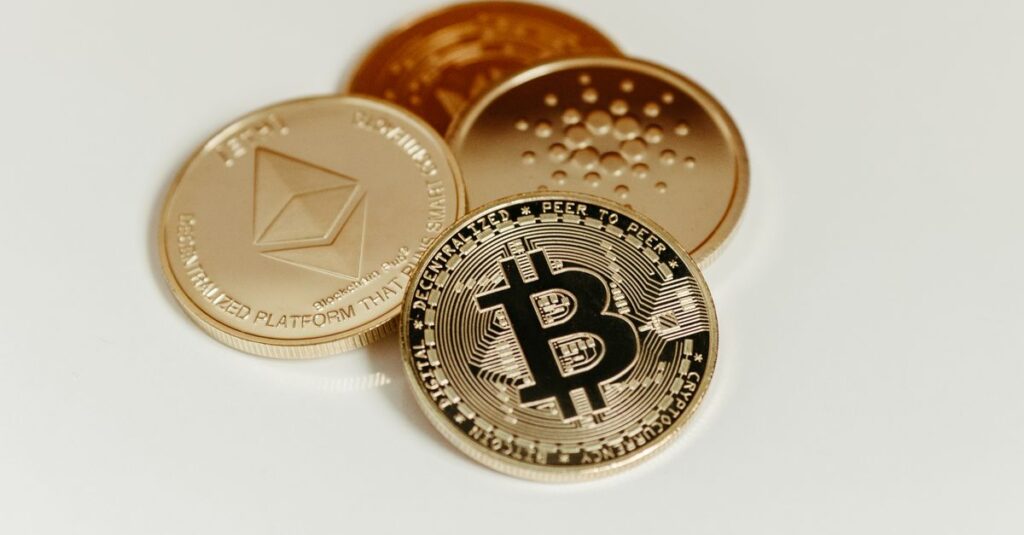
Cardano got its first native stablecoin platform on Wednesday. RealFi went live on the mainnet on October 1, launching the dollar token USDr and a yield-bearing companion asset sUSDr that pays returns from a portfolio of real-world assets. The launch had been scheduled for weeks, and ADA climbed about 15 percent in the week before it arrived.
RealFi’s pitch is to channel capital parked on Cardano into conventional bond and credit markets. USDr is pegged to the dollar and backed by real-world assets, with yield generated from money market funds and floating-rate corporate bonds. sUSDr is the staked version of the token, designed to pass that yield on to holders. The team says the architecture combines reserve-backed yield generation with Cardano-native staking mechanics and a stability design meant to reduce dependence on volatile DeFi market conditions.
Charles Hoskinson, who founded Input Output Global, the company behind Cardano, has publicly tied the launch to expectations that capital held on the chain will rise. Cardano’s total value locked has lagged far behind Ethereum, Solana and even newer chains, and a native yield-bearing dollar token is the most direct attempt yet to change that.
John O’Connor, the head of RealFi, argued in the launch announcement that capital sitting in stablecoins has so far remained economically unproductive. The up to 9 percent headline yield on sUSDr depends on the performance of the underlying bond portfolio, and the team has not published a full breakdown of reserve composition at launch.
Testnet run and rollout
The mainnet launch followed a public testnet phase the team called Pioneer Season. More than 3,600 users ran about 40,000 quest actions on the testnet, according to the project’s own figures. RealFi launched its public testnet for USDr in July, with an Ethereum deployment planned shortly after the Cardano rollout. The platform integrates with the Lace wallet, Cardano’s light client wallet from IOG.
The launch lands in a crowded stablecoin market. Allium’s stablecoins dataset put on-chain circulating supply at $334 billion as of early September, led by USDT at $192.9 billion and USDC at $77.9 billion. Newcomers are differentiating on yield, payments integration or regional focus. SoFi started settling card payments through its own SoFiUSD token on Mastercard’s network in late September, and Revolut launched a euro stablecoin in August, starting in Denmark, Poland and Portugal.
Cardano’s own token has been one of the stronger performers in a recovering market. ADA traded at $0.2622 on September 26, up 5.1 percent in 24 hours and 14.67 percent on the week, according to CoinGecko data cited by CryptoTicker. No single catalyst drove the move, but the launch date was the most concrete event on the calendar. ADA has since traded near $0.26, holding most of the weekly gain through the launch itself.
How USDr differs from USDT and USDC
The biggest USDT and USDC holders earn nothing directly. Those tokens are payment instruments, and issuers keep the return on reserves. Yield-bearing designs flip that arrangement by passing coupon income to holders, which makes them closer to tokenized money market funds than to cash equivalents. That difference drives both the appeal and the regulatory exposure.
Tokenized treasury products on Ethereum have grown into a multibillion-dollar sector for exactly this reason. Holders want the dollar peg and the coupon. RealFi is betting Cardano users want the same thing, and that the chain’s low fees make smaller deposits economical in a way they are not on Ethereum mainnet.
The design also carries real risks. A peg backed by bonds and money market funds moves with credit markets, and a sharp rise in rates or a wave of redemptions can stress the reserve portfolio in ways a short-duration T-bill book does not. The team’s stability mechanisms have not been tested under market stress, and early depositors are effectively beta testers for that machinery.
Competition adds another layer of difficulty. Cardano users who want dollar exposure can already bridge USDC or USDT from other chains, and bridged tokens usually carry deeper liquidity than any native newcomer. RealFi’s advantage is native integration and yield, but it starts from zero on both liquidity depth and trust.
The regulatory question
Yield-bearing stablecoins sit in a grey zone in most jurisdictions. In the United States, the GENIUS Act framework for payment stablecoins does not clearly cover tokens that pass investment returns to holders, and the Federal Reserve opened a 60-day comment period on proposed backing and redemption rules on September 24, with responses due October 19. In Europe, MiCA treats asset-referenced tokens differently from e-money tokens, and yield features can push a token toward securities treatment.
RealFi has not said which jurisdictions USDr will be restricted in, or whether sUSDr will be offered to retail users in regulated markets. The project’s documentation describes the tokens as permissionless, which puts the compliance burden on frontends and distribution partners rather than the protocol itself.
For Cardano, the launch is a test of whether real-world asset yield can attract deposits the way it has on Ethereum, where tokenized treasury products have grown into a multibillion-dollar sector. The chain’s DeFi TVL has stayed under $300 million through most of 2026, a fraction of what Ethereum and Solana carry. If USDr draws meaningful supply, Cardano gets a liquid dollar asset for the first time since an earlier wave of stablecoin attempts faded.
If it does not, the project becomes another entry in a long list of chains whose stablecoin plans never found users. The first weeks of deposit data will settle the question faster than any roadmap.