
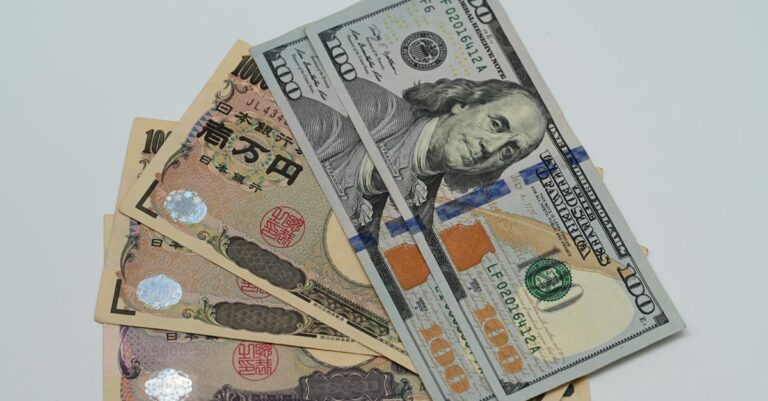
The US dollar index climbed to 99.157 on Friday after strong US employment data pushed Treasury yields higher, squeezing emerging market currencies and sending stocks lower across major indices in a broad risk-off move.
The 10-year Treasury yield rose to 4.789%, its highest level in weeks, as traders raised expectations for a Federal Reserve rate hike at the September 15-16 policy meeting. The move followed the Bureau of Labor Statistics report showing US nonfarm payrolls rose by 162,000 in August, more than three times the 53,000 economists had expected. The July figure was also revised upward, from a 23,000 decline to a 21,000 increase, further strengthening the case for tighter monetary policy.
The stronger dollar and higher yields rippled through global markets. The S&P 500 fell 0.38% to 7,719, while the Dow Jones Industrial Average dropped 0.51% to 53,414. Blue chips led the pullback as investors rotated out of equities and into higher-yielding bonds. The Nasdaq 100 bucked the trend slightly, gaining 0.93% to 29,799, buoyed by tech stocks that benefit from a stronger domestic economy and AI-driven earnings growth.
Emerging Markets Under Pressure
The dollar’s rise hit emerging markets particularly hard. The DXY’s climb to 99.157, up 0.25% on the day, made it more expensive for countries and companies in the developing world to service dollar-denominated debt. Latin American currencies bore the brunt of the move, with the Brazilian real slipping to 5.16 per dollar and the Mexican peso easing to 16.88.
The pressure was uneven across the region. Some currencies held up better than others. The Chilean peso traded flat at 933.68 per dollar, while the Peruvian sol dipped just 0.01% to 3.35. The Colombian peso actually gained 0.88% against the dollar, one of the few emerging market currencies to improve on the day, supported by rising commodity export revenues and a relatively tight monetary policy stance from the central bank.
For Brazil, the dollar’s rise compounds existing concerns about fiscal policy and interest rates. The Ibovespa index fell 0.02% to 185,147, a modest decline that masked sharper drops in individual stocks. Banking stocks were among the biggest losers, with Itaú Unibanco down 1.03%, while commodity-linked names like Vale gained 0.83% on higher iron ore and copper prices. Brazil’s Independence Day holiday on Monday means no local trading, leaving investors to digest the dollar move over a long weekend.
Gold and Safe Havens
Gold fell 1.14% to $4,429 per ounce, its lowest level in several sessions. Higher US bond yields make non-interest-bearing gold less attractive to hold, and the stronger dollar further undermines the metal’s appeal to international buyers who must convert their local currencies to purchase it. Silver also declined, falling 1.26% to $65.59. The sell-off in precious metals extended to mining stocks, with several major gold producers trading lower on the day.
The VIX, Wall Street’s main fear gauge, rose modestly from 14.32 to 14.53, pointing to caution rather than panic. The relatively contained VIX reading suggests that while investors are adjusting positions in response to the jobs data, they are not fleeing risk assets entirely. The calm VIX reading stands in contrast to the sharper moves in individual sectors and currencies, suggesting the market is absorbing the data without systemic stress.
Oil and Commodities
Oil prices held relatively steady despite the broader market turbulence. Brent crude traded at $88.88, down just 0.03%, while WTI sat at $83.11, down 0.11%. The stability reflected a tug-of-war between supply concerns from the ongoing US-Iran conflict and demand worries from the stronger dollar making oil more expensive for buyers using other currencies. Energy traders were also positioning ahead of Saturday’s OPEC+ meeting on output levels.
Agricultural commodities showed mixed performance. Corn surged 10.02% to $480.50 on supply concerns related to weather disruptions in the US Midwest, while wheat gained 3.93% to $655 on similar worries about harvest conditions. Coffee dropped 5.51% to $317.25, one of the biggest commodity moves of the day, as favorable growing conditions in Brazil eased supply fears. Soy gained 3.20% to $1,184, supported by strong demand from Chinese importers.
What Comes Next
The key test for markets comes next week with the release of the US Consumer Price Index report. Inflation data will determine whether the Fed proceeds with a rate hike at its September meeting or pauses to assess the impact of the Iran conflict on energy prices and supply chains. A hotter-than-expected CPI print would likely cement the case for a hike, while a cooler number could give the Fed room to wait.
Traders were pricing in roughly a 60% probability of a rate hike following the jobs report, according to CME FedWatch data. Fed Chairman Kevin Warsh’s relatively hawkish tone at the Jackson Hole Economic Symposium last month had already shifted expectations toward tighter policy, and the strong employment numbers reinforced that direction. The bond market is now pricing in sustained higher rates well into 2027.
For emerging markets, the combination of a strong dollar, rising Treasury yields, and ongoing geopolitical uncertainty creates a challenging environment. Countries with large dollar-denominated debt and current account deficits face the most pressure, while commodity exporters may benefit from elevated energy and agricultural prices that offset some of the currency headwinds.
OPEC+ meets on Saturday to discuss output levels, and any surprise on production could move oil prices and add another layer of uncertainty to the outlook for emerging market energy stocks and currencies heading into next week’s trading sessions.


discussion