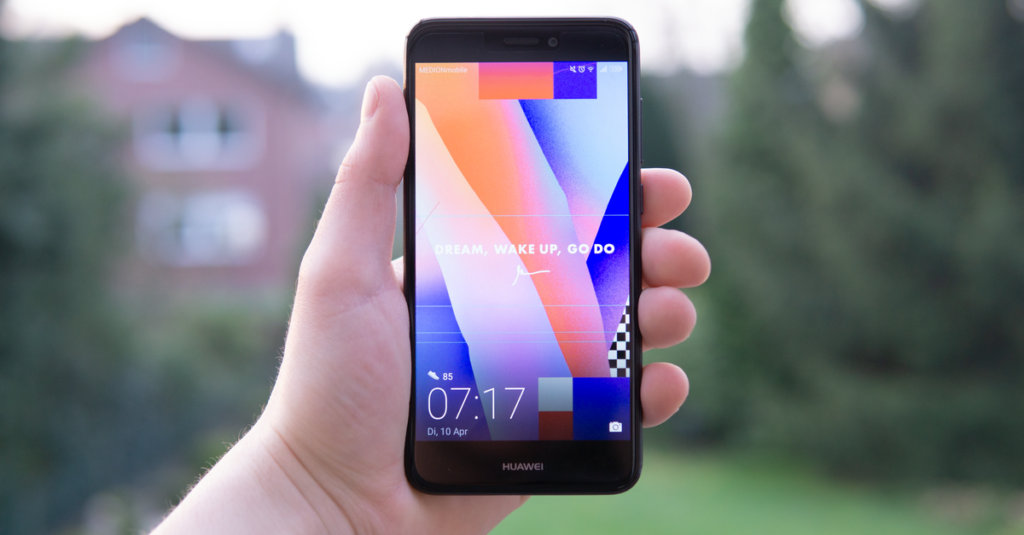
Huawei’s Mate XT 2 tri-fold ships with the Kirin 9050 Pro, the first flagship mobile chip built on the company’s LogicFolding architecture, and the Mate 90 series is set to follow on September 23.
The chip is Huawei’s first new flagship Kirin processor in six years, a gap that began when US sanctions cut the company off from TSMC and advanced chip design tools in 2020. The Kirin 9050 Pro was unveiled at a launch event in Guangzhou on September 7 alongside the tri-fold phone.
Huawei says the Mate XT 2 delivers 42 percent higher overall performance than its predecessor through a combination of the new chip and software tuning across hardware, cloud, and the HarmonyOS 7 operating system.
What LogicFolding does
The Kirin 9050 Pro stacks logic units in layers within a single chip, with vertical interconnects connecting them. Huawei compares the design to converting a single-story building into a duplex with elevators: signal paths get shorter, latency drops, and performance rises without relying on smaller transistors.
The numbers back the framing. Transistor density increased from about 155 million to 238 million transistors per square millimeter, roughly 55 percent more than the previous Kirin 9030 Pro. At comparable performance levels, Huawei says NPU power consumption fell 66 percent, GPU power fell 58 percent, and CPU performance-core power fell 41 percent.
The chip’s Linxi CPU delivers 24 percent more single-core and 52 percent more multi-core performance, according to Huawei Central. A new Maleoon GPU with hardware-accelerated ray tracing and doubled cache pushes rendering performance up 142 percent. The Da Vinci NPU supports on-device multimodal models with 30 billion parameters. A new Balong modem integrates satellite and ground communications.
Why the architecture matters
The LogicFolding approach reflects Huawei’s Tau Scaling Law, a design principle the company introduced in May as an alternative to shrinking transistors. Rather than chasing smaller nanometer processes, the law focuses on shortening signal paths and reducing latency through packaging and architecture.
Liu Wei, director of the human-machine interaction lab at the Beijing University of Posts and Telecommunications, called the Kirin 9050 Pro the first mass-produced flagship system-on-chip to fully integrate logic folding and validate the Tau Scaling Law in a terminal product. Liu Shaoshan of the Shenzhen Institute of Artificial Intelligence and Robotics said the approach “heralds an important technological path in the post-Moore Era,” a stage where shrinking transistors has become increasingly difficult.
Analyst Ma Jihua told the Global Times the chip’s performance could match the top three flagship mobile chips: Apple’s A-series, Qualcomm’s Snapdragon 8 Gen series, and MediaTek’s Dimensity lineup. Independent benchmarks have not yet confirmed that claim.
Context: sanctions and a slow rebuild
Huawei spent the years after 2020 using up its Kirin inventory, then pivoting to 4G devices while working with Chinese chipmakers such as SMIC. The Mate 60 series in 2023 marked the return of 5G-capable Kirin chips, built on older processes but functional.
The company’s research spending hit a record 121.38 billion yuan, about $17.9 billion, in the first half of 2026, more than a quarter of revenue. According to IDC data, Huawei’s smartphone shipments grew 19.4 percent year-on-year in the second quarter, giving it 22.6 percent market share and the top position in China.
A paper published September 4 by He Tingbo, head of Huawei’s semiconductor division, presented measurements showing transistor density gains and power reductions across key computing units, offering outside researchers a look at the chip’s real performance rather than marketing claims.
The sanctions backdrop remains. Huawei still cannot access TSMC’s leading-edge processes or the American design software that Western chipmakers use. The LogicFolding approach is, in part, a response to that constraint: if you cannot shrink transistors further, you have to find performance elsewhere. Whether that trade-off holds up against 2nm chips from Apple and Qualcomm is the question the Mate 90 launch will put to the test.
Chinese state media have framed the launch as proof that domestic chipmakers can compete despite export controls. That framing carries weight with domestic buyers, who have kept Huawei’s share growing even as its chips lag Western flagships on raw benchmarks. The Kirin 9050 Pro narrows that gap on paper, and real-world testing over the coming weeks will show how much.
Huawei’s HarmonyOS 7 ships with the new phones, tuned specifically for the Kirin 9050 Pro’s scheduler and NPU. The company has positioned the combination as a single system rather than separate components, an approach that mirrors Apple’s vertical integration between its A-series chips and iOS. That tight coupling is where Huawei claims much of the 42 percent system-level gain comes from, not the silicon alone.
Export markets remain a question mark. Huawei phones are absent from the US and restricted in several European countries, so the Mate 90 series will sell mostly in China, Southeast Asia, the Middle East, and parts of Latin America. That is still a large market, and IDC’s Q2 figures show the strategy working at home, but it caps the addressable audience for a flagship that cost billions to develop.
Competitors are not standing still. Xiaomi’s XRING O3, built on TSMC’s 3nm process, entered mass production last month and will power the Xiaomi 18 Pro Max. Qualcomm’s Snapdragon 8 Elite Gen 6 moves to 2nm with a 5 GHz peak clock. Huawei’s bet is that architecture and integration can close a full process node of difference, a claim that will be tested in published benchmarks rather than launch-stage presentations.
What comes next
The Mate 90 series launches September 23 at Shenzhen World Exhibition and Convention Center, according to a listing on a Chinese government events site. The lineup includes four models: Mate 90, Mate 90 Pro, Mate 90 Pro Max, and Mate 90 RS Ultimate. Leaks suggest the top variants use the Kirin 9050 Pro while standard models get a slightly lower bin.
Huawei’s dual-launch strategy in September, tri-fold first and flagship phones later, puts its releases within weeks of Apple’s iPhone 18 event. The company is betting that homegrown silicon, rather than process-node parity with TSMC, is enough to compete at the top of the market. Whether Chinese consumers and export markets agree will show in the Mate 90’s first-quarter sales.