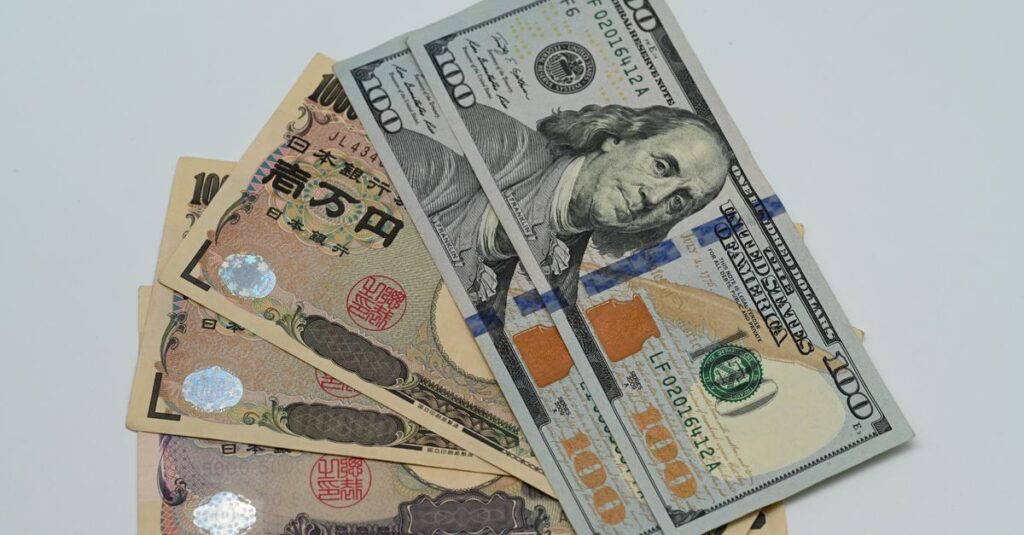
Japan likely sold a portion of its US Treasury holdings and other foreign securities to finance its record currency intervention over the past month, according to Ministry of Finance data and reporting by Bloomberg and The Japan Times. Tokyo’s holdings of foreign securities fell by $87.8 billion at the end of August from a month earlier, a drop close to the scale of the recent intervention to support the yen.
The record intervention
Japan spent a record $96.4 billion over the past month to support the yen after it tumbled to a four-decade low near 160 to the dollar, the Ministry of Finance confirmed. The operation ran through late August and into September, and it marks the third major intervention episode since 2024. The ministry spent a record 11.73 trillion yen, about $73.4 billion, in the month through May 27 alone, according to WSJ reporting of official data.
The yen’s slide had alarmed Tokyo for months. Rising import costs squeezed households and businesses, and the weak currency fed imported inflation just as global energy prices were climbing. The Ministry of Finance had warned repeatedly that it would act against excessive moves, and markets had long treated 160 as the line that would trigger intervention. When the dollar pushed past that level toward levels last seen in 1986, the ministry moved, and it kept moving for weeks.
Why Treasuries matter
Intervention of this scale needs dollars, and Japan’s foreign reserves are held largely in US government debt. Selling Treasuries is the fastest way to raise the dollars needed to buy yen. The Federal Reserve’s custody data offers a window into the practice: in earlier episodes, the Fed’s holdings of Treasuries for foreign official accounts slipped by $8.7 billion in a single week when Japan was intervening, a pattern consistent with Japanese selling. The Fed holds about $2.7 trillion in securities for foreign official accounts, so shifts of this size stand out.
The concern in Washington is straightforward. The Treasury market is already strained, with 10-year yields near 5 percent and the 30-year at its highest since 2007 as inflation fears from the oil shock build. Large sales by a foreign government add supply pressure at the worst possible time. Treasury Secretary Scott Bessent has been vocal about Japan’s need to act on the yen, and any sign that Tokyo’s defense is destabilizing the Treasury market creates friction between the two governments. Barron’s noted that Japan’s latest intervention alone triggered a spike in Treasury yields as the market priced in the selling.
The yen has turned
The intervention, combined with a shift in rate expectations, has worked so far. The yen strengthened from around 160 to below 153 in less than a week, taking traders by surprise. It rose as much as 1.4 percent to 154.06 at one point, its highest since February, as bets on Bank of Japan rate hikes fueled a sharp reversal in sentiment. Analysts at Japan Times sources caution that a falling currency is not automatically good for Tokyo stocks if rates climb alongside it.
The United States joined Japan in the effort in early August, in what the AFR described as one of the most coordinated currency operations in decades. At the close of New York trading on the day of that operation, the yen stood at 157.40, its strongest since early May, just two days after flirting with 1986 lows. Coordination of that kind is rare, and it signaled that Washington saw disorderly yen weakness as a shared problem rather than a Japanese one.
The Bank of Japan is now expected to raise rates at its September 18 meeting. Governor comments and market pricing both point to a move, which would extend the normalization cycle that has already lifted Japan’s 10-year government bond yield to 3 percent, a 30-year high. US Treasury officials have noted that rising Japanese yields are already affecting US markets, since Japanese investors are a major buyer of American debt and higher domestic yields pull that money home.
What it costs Japan
The intervention has a price beyond the foreign exchange itself. Selling Treasuries forgoes the interest on those bonds, and if yields keep rising, Japan sells into a falling market. The May intervention was followed by a $76 billion drop in foreign securities holdings, and the August round looks larger. The Government Pension Investment Fund, which oversees about 318 trillion yen, has so far said it sees no need to change its asset allocation, but a sustained rise in domestic yields would eventually force the question.
There is also a signaling cost. Markets now know Tokyo will defend the yen with record sums, which cuts both ways: it deters speculative attacks, but it also puts a floor under expectations for future action, and each round gets more expensive. The carry trade that funded much of the yen weakness has been unwinding, with traders closing short yen positions at a pace that itself moves the currency. That unwind helped the rally but also shows how crowded the bet against the yen had become.
For global markets, the episode is a reminder that the world’s largest creditor nation defending its currency is not a free lunch. The dollars come from somewhere, and in this case they came from the same Treasury market that the United States needs to absorb record issuance while the Fed is shrinking its own balance sheet. The September 18 Bank of Japan decision will show whether rate hikes can take over the job from intervention, which would be the cheaper path for everyone involved. Until then, watch the custody data.