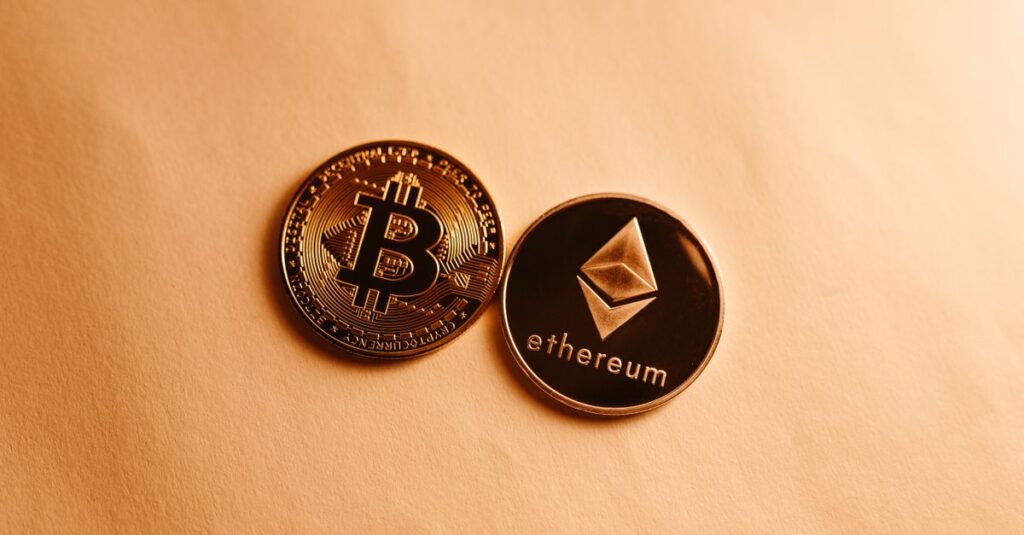
An unidentified whale has converted 1,308 BTC, worth about $104 million, into 40,670 ETH over the past six days and staked the entire amount, according to Lookonchain. The latest leg came Tuesday, when the address swapped another 200.71 BTC, roughly $17.2 million, for 6,247 ETH. Every coin from the rotation has gone into Ethereum staking rather than sitting on an exchange or in cold storage.
The pace stands out. Most large bitcoin holders who rotate into ether do it in one or two blocks. This address has drip-fed the trade across six days, a pattern that limits market impact on each fill and suggests the holder cares about execution price. The daily clips of 200 to 300 BTC land quietly, but the running total has become one of the larger single-address rotations of the month.
Where the coins came from
The address has been accumulating for weeks. On-chain analyst Ai Yue traced a related pattern in early August: the same cluster of wallets had withdrawn 74,265 ETH and 1,400 WBTC from exchanges since July, at average costs of about $1,770 and $63,887 respectively, alongside repeated 200 BTC withdrawals from Binance. The buying started when ether traded at a fraction of its current price, which means the rotation is being funded from a position already deep in profit. Unrealized gains on the July-accumulated stack were pegged at $3.8 million even before the latest leg up.
Staking the full balance adds a second signal. Coins locked in the Ethereum deposit contract cannot be sold quickly, so the move reads as a multi-month or multi-year position rather than a fast trade. It also reduces liquid ether supply at a time when ETF demand is pulling from the same pool.
The rotation trade in context
Bitcoin has led the recovery, gaining more than 6 percent on Monday alone to trade near $87,373 overnight before easing back. Ether followed with a gain of nearly 5 percent to break above $2,770, and altcoins have broadened the move. Traders on X and Binance Square have been calling the turn of the altcoin cycle as bitcoin stalls near resistance, and this whale is acting on exactly that thesis with size.
ETH staking yields near 3 percent add a carry component that bitcoin does not offer. For a holder converting $104 million, the staking return alone is worth roughly $3 million a year at current rates, on top of any price appreciation. That carry, plus the ETH treasury trend among public companies, has been pulling large holders toward Ethereum all year.
The timing also lines up with institutional flows. US spot ether ETFs have posted inflows alongside the bitcoin funds, which took in about $999 million on Monday, the strongest single day of 2026. The BlackRock research note on bitcoin volatility halving as ETFs mature applies to ether’s fund complex too. When ETFs absorb float, on-chain accumulation by whales shows up more clearly in price, because the marginal buyer is not waiting for a dip.
There is a related flow in the other direction worth noting. A separate whale sold 1,107 BTC for $86.76 million over the weekend, then bought and staked 34,422 ETH, per CryptoFrontier tracking. Two large addresses making the same swap inside a week does not prove a wave, but it gives the trade a second data point, and the ETH-BTC ratio has spent most of 2026 in bitcoin’s favor, so mean-reversion traders have been hunting for the turn.
What it does and does not tell you
One address is not a trend, and rotation trades have a mixed record near cycle turns. Whales who swapped BTC for ETH before previous pullbacks watched both legs fall together. The identity of the holder is unknown, so the trade could be a fund restructuring, an OTC desk reshuffling inventory, or a single wealthy bet. None of those carry the same signal, and on-chain data cannot tell them apart.
Still, the on-chain community watches these moves closely because large staked positions are sticky. Once 40,670 ETH sits in the deposit contract, the holder cannot react quickly to a crash, which is usually a sign of conviction rather than speculation. The six-day execution pattern supports that read: nobody planning a fast exit spreads a $104 million swap across a week. Exit queues on the beacon chain add further friction, so a holder who wanted optionality would have kept at least a portion liquid.
The counter-argument is simpler. Bitcoin at $86,000 has momentum, ETF inflows and a House committee vote on a strategic reserve behind it. Rotating out of the leading asset into its largest rival mid-rally is the kind of trade that looks smart for a quarter and silly for a year, or the reverse. The whale is paying for the possibility that ether outperforms from here, and paying the staking yield for the privilege of waiting.
The ethereum treasury trend gives the trade one more tailwind. Public companies and funds have been adding ETH to balance sheets through 2026, following the bitcoin playbook, and each new treasury bid competes for the same liquid supply the whale just removed from circulation. DefiLlama’s gathering in Singapore this week, timed to Token2049, has kept institutional attention on ethereum’s yield products at exactly the moment this address chose to stake everything.
Watch the address over the coming days. If the rotation continues past 1,500 BTC, the trade becomes a real flow story for the ETH-BTC ratio. If it stops here, it was one whale’s portfolio decision. Either way, the coins are now locked, and that is the part the market cannot undo.