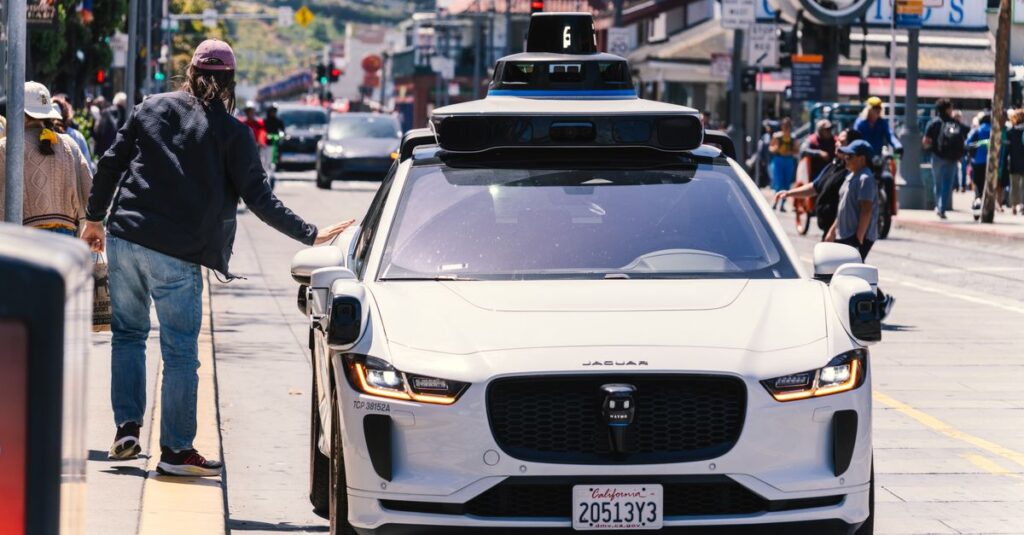
The Nevada Transportation Authority unanimously approved three permits Thursday allowing Tesla, Uber and Waymo to operate commercial robotaxi services in Clark County, home to Las Vegas, in what would be the largest simultaneous robotaxi deployment in U.S. history.
Tesla received permission to deploy up to 5,000 autonomous vehicles, Waymo was approved for 1,000, and Uber received a permit for 1,000 robotaxis to operate through its partnerships with Hyundai subsidiary Motional and Amazon-owned Zoox. Together the permits would allow up to 8,000 robotaxis across the county over the next 12 months.
Modest Realistic Goals
Whether the companies will hit those ceilings remains an open question. Eric Early, Tesla’s Cybercab chief engineer, told the authority during testimony that 5,000 vehicles represents a ceiling rather than a target.
I don’t think we’ll be in a position by this time next year to deploy 5,000 vehicles, and it’s not because of the technology. I think we would be extremely happy and satisfied if we could get ourselves up to 2,500, maybe a bit higher than that in the next year.
Even at half capacity, Clark County and Las Vegas specifically would become one of the most competitive robotaxi markets in the country, with three major operators fighting for the same pool of riders in one of America’s most visited cities.
Industry Pushback
Representatives from the Livery Operators Association and local taxi companies opposed the permits, arguing the approvals move too far and too fast. Kimberly Maxson-Rushton, a lawyer representing the association, raised concerns about oversaturation of the commercial transportation industry and overcrowding of roadways in the Golden Triangle area between the airport and Las Vegas Boulevard.
Uber has positioned itself as a middle ground in the debate, advocating for a hybrid approach in which ride-hailing networks would be made up of both humans and robotaxis. The company argued during the hearing that a hybrid model would allow cities to gradually integrate vehicles to meet peak demand rather than flooding the market all at once. That stance puts Uber at odds with both Waymo and Tesla, which favor dedicated autonomous networks.
TechCrunch first reported the approvals. The deployment is poised to reshape Las Vegas’s workforce, with supporters arguing it will create new maintenance, charging and cleaning roles while opponents warn it could eliminate thousands of human taxi and gig driver jobs.
The Nevada approvals come as the robotaxi industry accelerates nationwide, with California, Arizona and Texas also expanding their autonomous vehicle programs. Las Vegas, with its tourist-heavy economy and compact urban core, could serve as a proving ground for whether large-scale robotaxi deployment can work in a major U.S. city.