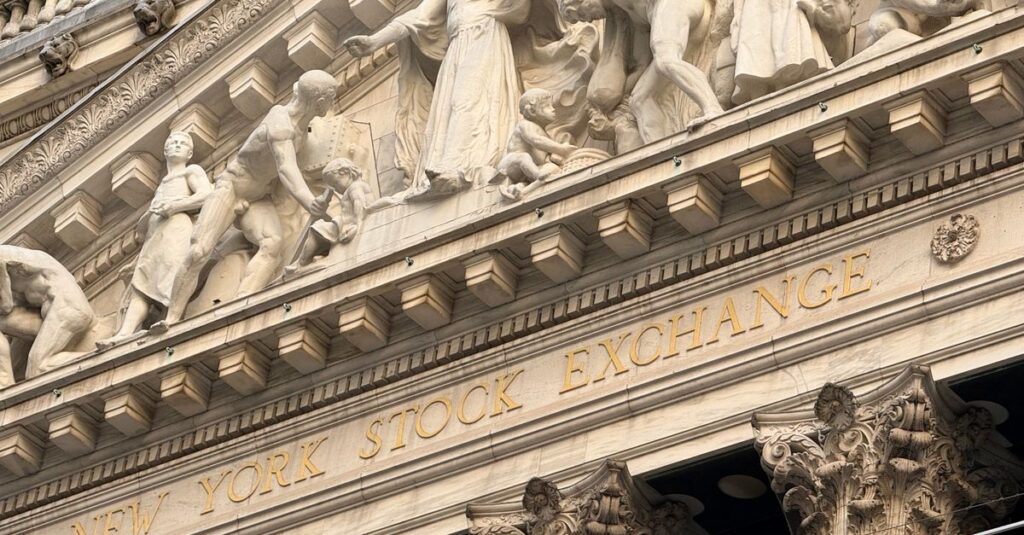
The New York Stock Exchange has spent roughly a year testing Avalanche technology as it develops infrastructure for tokenized securities, according to Ava Labs president Charley Cooper, though the exchange has not committed to any blockchain. Cooper disclosed the timeline in an interview at Avalanche Summit in New York on Thursday, describing what he called a close working relationship with NYSE parent Intercontinental Exchange.
“I leave it to the NYSE guys to talk publicly about where they are in the whole process,” Cooper said, stopping short of claiming a selection. The careful wording matters: Ava Labs gets to say the world’s largest stock exchange has stress-tested its rails for twelve months, while NYSE keeps its options open.
What ICE is actually building
NYSE announced in January that it was developing a platform for trading and onchain settlement of tokenized US securities. The proposed venue combines NYSE’s Pillar matching engine with blockchain-based post-trade infrastructure. Subject to regulatory approvals, it would support tokenized versions of existing securities alongside assets issued natively onchain.
Planned features include continuous trading, immediate settlement, fractional shares, dollar-denominated orders and stablecoin-based funding. Tokenized shareholders would keep the conventional rights attached to the underlying securities, including dividends and governance votes. ICE’s head of strategic initiatives, Michael Blaugrund, joined Cooper onstage at the summit and said the firm was “very engaged” with the Avalanche team as it evaluates blockchain platforms.
The Block reported that ICE has deliberately left the underlying blockchain question open. The platform’s post-trade architecture is designed to support several networks, leaving room for different chains to handle settlement and custody. That multi-chain posture is a warning against reading any vendor narrative as a done deal.
The architecture choice also reflects how settlement actually works inside a large exchange operator. Custody, clearing and collateral management sit with different parts of the organization, and each can plausibly end up on different infrastructure. A single-chain design would force one vendor to own all of it. ICE has apparently decided it would rather integrate than commit.
It is also worth remembering what NYSE’s core business looks like. The exchange handles billions in daily notional with error rates measured in basis points of basis points. Any blockchain component has to survive contact with that operational standard, which is why a year of testing before a public commitment is the conservative timeline, not a slow one.
The SEC just changed the math
The testing disclosure lands two days after the SEC approved a five-year innovation exemption for tokenized stock venues, with volume caps, issuer vetoes and a ban on synthetic tokens. The next day, the SEC gathered NYSE, Nasdaq, BlackRock and Robinhood to work through how US equities could trade around the clock. Cooper told The Block’s Gareth Jenkinson that he expects some trading venues to begin offering 24-hour weekday access within the next year, while declining to predict that major exchanges would move on the same timetable.
The pieces are lining up in one direction. ICE also agreed in August to bring tZERO in as a design partner for the planned NYSE-affiliated platform. Cooper noted that “a lot of smaller venues are making a very compelling case to the world to put liquidity on them,” his framing of the competitive pressure on incumbents to move fast rather than wait for a finished rulebook.
What NYSE pressed on
Cooper said NYSE spent much of the year probing economics as much as technology, testing whether Ava Labs understood the exchange’s broader business rather than just throughput benchmarks. That detail is easy to skip and worth not skipping. Traditional finance evaluations of blockchain vendors have repeatedly broken down over business-model misalignment rather than technical failure, and a year of diligence focused on economics suggests ICE is trying to avoid that failure mode.
Neither Ava Labs nor NYSE has announced a timeline for commercial deployment. The scope of the testing, whether it included simulated market conditions, stress tests or settlement scenarios, has not been disclosed. AVAX traded up about 5% after the interview, near $8.05, a modest move that reflects the hedged nature of the news: validation without a contract.
Why the caution is the story
The headline that writes itself is “NYSE picks Avalanche.” That is not what happened, and Cooper was explicit about it. What happened is narrower and arguably more informative: a year of integration work between a century-old exchange operator and a smart contract platform, with the exchange still hedging across networks.
For Avalanche, the year of testing is a reference asset for its institutional pitch regardless of the final choice. Enterprise sales teams in this space trade on named diligence processes, and few come with a bigger name than NYSE. For ICE, keeping the blockchain question open preserves leverage over vendors and flexibility if the SEC’s exemption framework shifts during the five-year window. For everyone else, the signal is that tokenized equities moved this week from concept to scheduled regulatory lane, and the infrastructure bake-off is now running in parallel rather than waiting for permission.
The next checkpoint is regulatory rather than technical. If the SEC starts approving venues under the innovation exemption, ICE will have to pick its settlement rails quickly, because first movers in tokenized equities will lock up issuer relationships the way early ETF sponsors locked up index providers. A year of testing means ICE can move when it decides to. It does not mean it will decide soon.