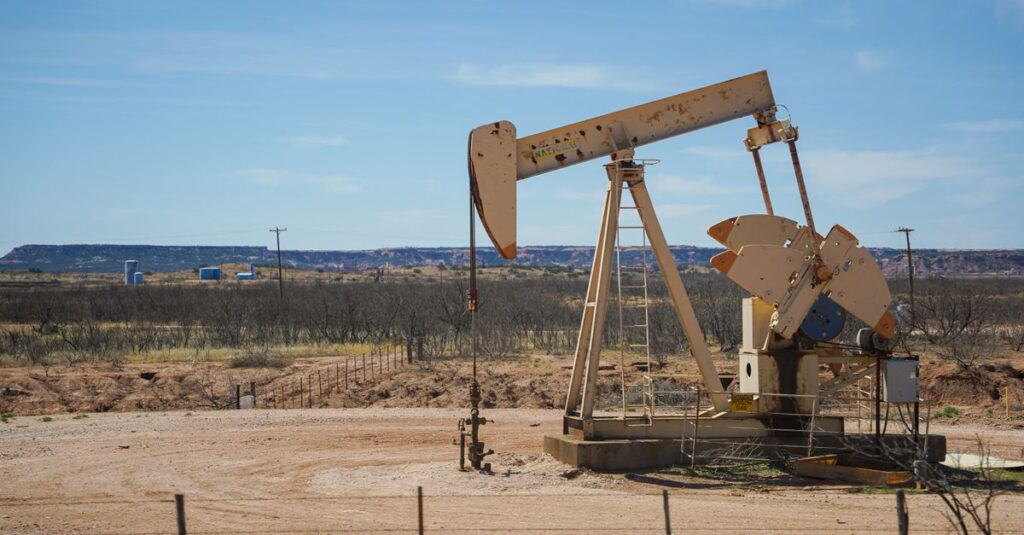
Oil prices retreated on Thursday after climbing nearly 4 percent in the previous session, as Iran said it remains open to diplomacy to end the seven-month war with the United States. Brent crude traded near 102 dollars a barrel, down about 0.8 percent, while US West Texas Intermediate sat at 91.43 dollars, according to FT market data. The pullback followed a volatile stretch that has seen Brent swing between the high 90s and well above 100 dollars within a single week.
The Reuters report from Singapore set the tone for the session: after Wednesday’s 4 percent rally on supply fears, Tehran’s diplomatic signal was enough to take the froth off. Traders have spent the week whipsawing between headlines about strikes and headlines about talks, and the price action reflects a market that believes neither side has fully committed to anything yet.
A war premium built over months
The US-Iran conflict has been running since early 2026, and the Strait of Hormuz, which carried about a fifth of global oil and LNG consumption before the war, has been its center of gravity. Iran effectively shut down shipping traffic through the strait after US strikes on its southern coast, and tanker attacks and sea mines have kept insurance costs and freight rates elevated ever since. Two tankers hit sea mines in a single attempt to transit earlier this month, according to Iran’s Revolutionary Guards, a reminder of how dangerous routine shipping has become in waters that once moved 20 million barrels a day.
Earlier this month Iran signaled willingness to reopen the strait within a week, contingent on the US easing military pressure and lifting its blockade of Iranian ports. Saudi Aramco restarted its East-West pipeline at a reduced rate around the same time, allowing some crude to bypass the strait entirely through the Red Sea port of Yanbu. Those supply-side workarounds pushed Brent below 100 dollars briefly before fighting resumed and prices recovered.
US officials have sent mixed signals on actual flows. Energy Secretary Chris Wright claimed earlier this month that 17 million barrels transited the strait on a single day, which he called the largest volume since the war began. Independent shipping data has been harder to verify, and Iranian authorities continue to list vessels they deem non-compliant, subject to fines, confiscation or detention. Iraq, for its part, boosted exports through southern routes in August to an average of 2.35 million barrels per day, with Iranian approval for its tankers to pass, showing that some Gulf supply is still reaching buyers despite the blockade rhetoric.
Where prices stand now
| Benchmark | Price | Move | Context |
|---|---|---|---|
| Brent crude | 102.27 dollars | -0.79% | 52-week range 58.72 to 126.41 |
| WTI crude | 91.43 dollars | -0.79% | 52-week range 54.98 to 119.48 |
| Wednesday session | both up about 4% | rally | supply fears after strikes |
| September trend | Brent up over 20% in a month | rally | Hormuz disruption premium |
Even after Thursday’s dip, Brent is up roughly 48 percent from a year ago and more than 20 percent in the past month. The war premium is now baked into every barrel, and it does not take much to move it. A single headline about mine strikes or diplomatic contact can swing the market by 2 to 4 dollars in a session, and options desks have been pricing that volatility at some of the highest levels since the war began.
The diplomatic track, such as it is
President Trump said this week he is willing to meet Iranian President Masoud Pezeshkian, who attended the UN General Assembly in New York, though Tehran has not reciprocated. Trump framed the options bluntly: destroy Iran militarily, isolate it economically, or reach a negotiated deal. Vice President JD Vance has said Washington will not hold talks until Iran stops attacking ships in Hormuz, which keeps the diplomatic bar high.
On the other side, Iran’s statement that it remains open to diplomacy is the softest signal from Tehran in weeks. European powers have formally joined the US-led sanctions campaign, and South Korea is weighing a military role in the coalition, which narrows Iran’s room to maneuver. Whether the openness is a genuine opening or a talking point aimed at splitting the coalition is the question traders cannot answer from headlines alone.
Watch also for OPEC+. The producer group meets Sunday and three sources close to the matter told Reuters it is likely to keep output policy unchanged for October, completing the unwind of one layer of production cuts and turning attention to 2027 quota negotiations. With a war raging on one of its members’ borders, the group has little appetite to add supply that would deflate the price its members are earning. US inventories give the group another reason to hold: crude stocks fell 4.5 million barrels last week, well beyond the 1.1 million-barrel draw analysts expected, per Energy Information Administration data.
What it means beyond oil
Energy-driven inflation has already forced policy responses. The Federal Reserve raised its benchmark rate to 3.75 to 4 percent as part of a broader tightening cycle among major central banks, and the 10-year Treasury yield has tested 5 percent, levels last seen in 2023. Wall Street ended Wednesday lower as oil prices and yields rose together, the combination equity investors like least, and European indices have underperformed their US peers for the same reason: the continent imports most of its energy.
Consumer-facing effects are starting to show. Heating oil and gasoline futures in the US are both up double digits over the past year, and freight and air-fuel costs are flowing into corporate earnings guidance. Central bankers who spent 2024 and 2025 cutting into soft inflation now face an energy shock they did not cause and cannot ignore, which is why the Fed’s September hike landed even as growth data softened.
For now the market is pricing a stalemate: war continues, Hormuz stays partially closed, diplomacy stays theoretical. The asymmetry is clear. A genuine ceasefire deal would probably knock 10 dollars or more off Brent quickly, while a fresh escalation, a major tanker sinking or a strike on Saudi infrastructure, would push prices toward the April high of 126 dollars. Thursday’s dip is noise within that wider standoff until one of those branches actually happens.