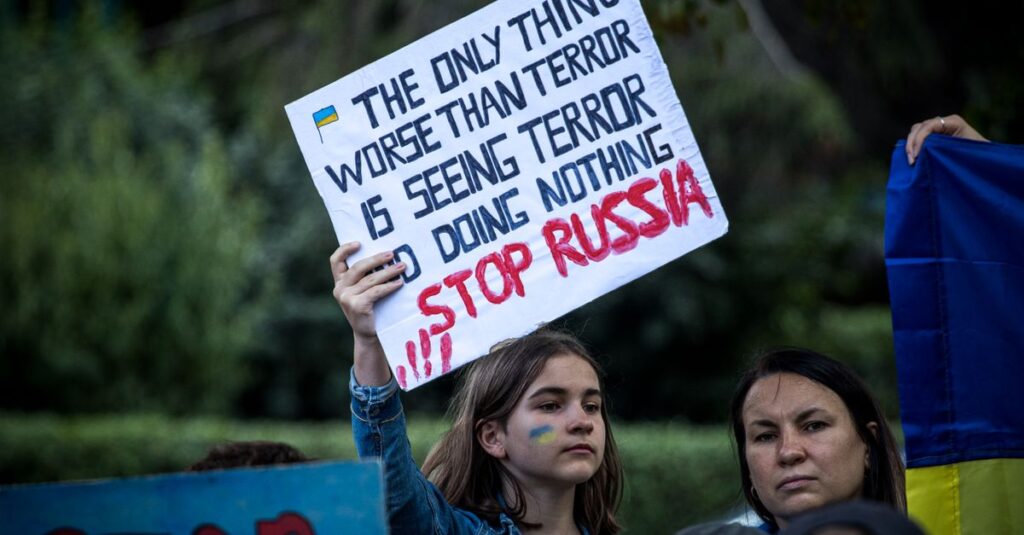
At least 33 people were killed and 18 wounded early Thursday when a Russian glide bomb struck two city buses in Kramatorsk, in Ukraine’s eastern Donetsk region, in what officials called the deadliest single strike of the year against one of the country’s most exposed cities. President Volodymyr Zelensky described the target as a bus stop on a morning route used by commuters and workers heading to jobs across the city.
Regional governor Vadym Filashkin said the strike hit at roughly 10 a.m. local time, on a street where the city’s police said two buses were operating. Photographs he posted on Telegram showed a burned-out bus and a second destroyed vehicle among debris and smoke. He said the toll rose through the morning as rescue teams worked the site, reaching 33 dead by early afternoon. “There is no military target here, only people going to work,” Filashkin wrote.
City near the front has come under daily attack
Kramatorsk, with a pre-war population over 140,000, serves as a logistics hub for the Ukrainian military and hosts the regional administration of Donetsk. It sits about 20 kilometres from the front line. Zelensky described the strike as deliberate: “This was a targeted strike on civilians, on buses, at a place where ordinary people were going about their morning. There is no other way to describe it than terror.” Moscow has not commented on the strike and has repeatedly said its forces do not target civilians.
The attack continued some of the heaviest losses of the war in recent days across Ukraine’s eastern and northern regions:
| City | Date | Killed | Wounded |
|---|---|---|---|
| Kramatorsk | October 8 | 33 | 18 |
| Pryluky | October 7 | 22 | 54 |
| Kyiv | October 7 | 4 | not stated |
| Oleksandria, Kremenchuk | October 7 | 6 | not stated |
Pryluky toll climbs a day after the missile strike
The Kramatorsk attack followed a Russian missile strike on a five-storey residential building in Pryluky, some 150 kilometres east of Kyiv, where the death toll rose to 22 on Thursday, including five children and three infants, according to Ukraine’s State Emergency Service. Rescuers pulled 15 survivors out of the collapsed sections, using ladders to reach upper floors as they worked down into the rubble, and continued searching on Thursday morning.
One local official described the scene:
“There’s a lot of destruction, especially in the town centre,” said Danylo Savenko, Pryluky’s deputy mayor, who said he ran to an air raid shelter with his wife as the missiles flew overhead.
Interior Minister Ivan Vyhivskyi put the country-wide toll at 28 by evening, a figure later revised upward as bodies were recovered from Pryluky and from an apartment block in the capital, where four people died.
Zelensky said the overnight barrage involved some 70 missiles, many of them high-speed ballistic weapons, plus dozens of Shahed drones. “The Russians wanted to strike painfully and demonstratively. This was one of the most vile strikes,” he wrote on social media. Energy infrastructure and industrial facilities were also damaged, along with residential buildings, and several towns in the central regions reported deaths from falling drone debris.
A tightening front line near the fortress belt
Kramatorsk and neighbouring Sloviansk form the last main Ukrainian defensive line in Donetsk, the belt of cities Kyiv calls its fortress belt. Moscow’s forces have stepped up strikes on both with jet-powered drones and guided bombs as Ukrainian positions thin closer to the city, local officials say.
The scale of Thursday’s strike stood out even against months of gradual escalation. Initial reports from Kyiv earlier in the morning put the Kramatorsk toll at 12 dead, before rescuers confirmed more dead at the site through the morning and early afternoon. Authorities said rescue work continues and the final count may change again.
Officials call for more air defence systems
Kyiv has asked Western partners for more air defence systems and longer-range strike weapons in response to the barrage, arguing that interceptors alone cannot cover the number of glide bombs Russia now launches each day. Officials in several European capitals have said additional deliveries are under discussion, without confirming details or timings. The European Union has said it is assessing new funding for repair of energy infrastructure damaged in the strikes, ahead of the winter heating season.
For residents of Kramatorsk, Thursday’s attack followed a pattern they have grown used to. The city’s buses run even during air raid alerts, because many residents have no cars and need to reach work, and shelters are often a few minutes’ walk from the main routes. Officials said Thursday’s route had run for months without incident. City transport was suspended after the strike while crews cleared debris and police investigated the site.
Search and rescue teams worked through the afternoon with search dogs and thermal cameras, digging through the wreckage of the two buses and nearby shopfronts damaged by the blast. Emergency services said thestrike count could change once heavy debris, including parts of buildings, is moved.
Sources: Reuters; AP; Al Jazeera; Kyiv Independent; The Independent (October 8, 2026); BBC News.
Brokered talks remain at a standstill
Diplomatic efforts to end the fighting have made little measurable progress this autumn. A planned meeting between President Zelensky and President Trump in Washington was postponed last month without a new date, and European officials have said they expect no breakthrough before year end. The United Nations has recorded thousands of civilian casualties across Ukraine this year, with Donetsk among the regions hit hardest.
The humanitarian situation in Kramatorsk has worsened as shelling has moved closer. Water and power supplies run on backup generators for part of each day, and the city’s largest employers, including several machine-building plants, have scaled back operations as workers have evacuated. Schools in the city operate remotely.
Monday marked one year since Russia launched its most recent sustained campaign against Ukrainian energy infrastructure, and Kyiv says damage this autumn is already close to the total recorded through the first half of the war. Repair crews, financed largely by European donors, work between waves of strikes. Officials warn that Thursday’s strike shows the campaign has not slowed.