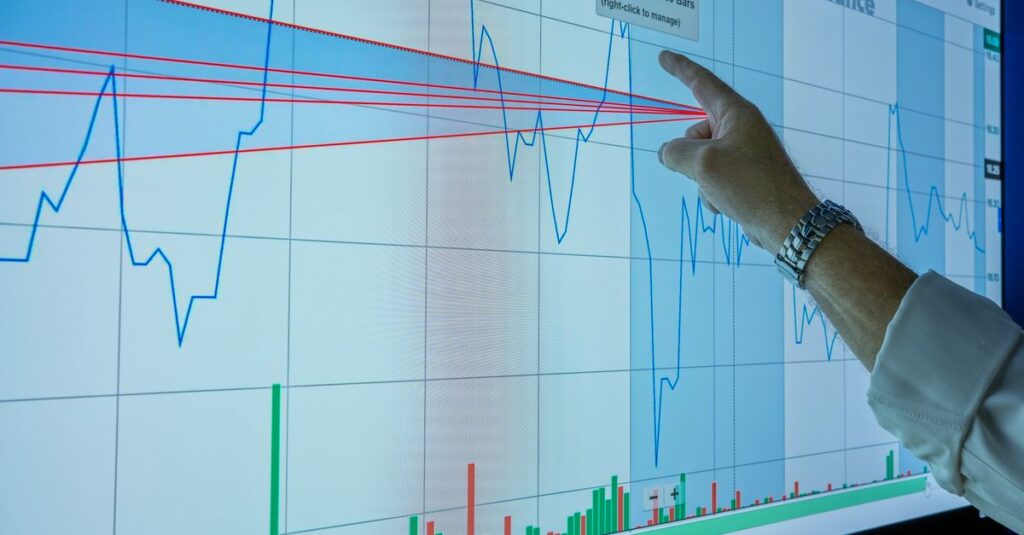
Oil prices swung back higher on September 30 after President Trump denied reports that he was prepared to ease sanctions on Iran, with Brent crude futures rising 1.11% to $103.73 a barrel. The move partly reversed the previous session’s sharp drop, when Saudi Arabia resumed Red Sea crude exports and WTI fell 3.48% to $89.38, its first close below $90 since August 31.
The reversal came after an Axios report cited US officials saying Trump was willing to provide Iran with sanctions relief and release frozen Iranian funds in exchange for concrete steps from Tehran on its nuclear program. Trump rejected the report on his Truth Social account.
“This is untrue. I offered them nothing,” Trump wrote.
Qatar has pushed for peace talks as the seven-month war between the US and Israel on one side and Iran on the other continues to distort global energy flows. The conflict began in late February, and Middle Eastern crude exports recovered to 16.328 million barrels per day in September, their highest level since the war started, helped by the Saudi pipeline restart.
The Saudi pipeline factor
Saudi Arabia resumed oil tanker loadings from its Red Sea port of Yanbu after restarting operations on the East-West Pipeline, the route that carries Saudi crude from eastern fields to the Red Sea coast without passing through the Strait of Hormuz. Riyadh had halted all east-west pipeline operations and Yanbu exports last November after a drone strike attributed to Iran-backed Iraqi militias.
Restoration work followed, and the pipeline resumed operation on September 22, with crude loading returning to normal this week. With an alternative shipping route reducing dependence on the Hormuz chokepoint, the geopolitical risk premium priced into global oil markets deflated quickly on Tuesday, sending November WTI futures down 3.48% and Brent down 2.56% to $102.59, the lowest Brent close since September 22.
Increased tanker movements through the Strait of Hormuz itself also helped ease immediate supply concerns, according to shipping data cited by Anadolu Agency. The combination of a bypass pipeline and steadier Hormuz traffic is what pulled the risk premium down in a single session, and what the denial of a sanctions deal pushed part of the way back up.
| Contract | Latest close | Move | Note |
|---|---|---|---|
| WTI November | $89.38 | -3.48% | First close below $90 since Aug. 31 |
| Brent November | $102.59 | -2.56% | Lowest since Sept. 22, then rebounded above $103 |
| Brent, month to date | – | about +14% | Biggest monthly rise since July |
| WTI, month to date | – | about +4% | Touched $106 earlier in September |
Banks have lost their baseline
The uncertainty has made the oil market hard to model. JPMorgan said it had lost visibility on the market and, for the first time since the Iran war began in February, no longer had a clear baseline scenario. “We simply don’t know how to model the endgame,” JPMorgan analysts wrote, noting that escalation thresholds the bank assumed at the start of the conflict had been crossed one after another while no clear exit strategy emerged.
Goldman Sachs is running both directions at once. Daan Struyven, co-head of global commodities research at the bank, said recent attacks showed disruptions to shipping could spread and become more severe. Goldman outlined a scenario in which oil could reach $120 a barrel if attacks on vessels in the Middle East intensify, while a return to normal exports would send prices back toward $80. Struyven told Bloomberg that shipping risks had become a key driver of oil prices, and that supply shocks in gas and refined products were larger than those in the crude market itself.
Rates and inflation in the background
The oil picture feeds directly into the bond market and the Federal Reserve. US consumer confidence dropped in September to its lowest level in more than 12 years, and the 10-year Treasury yield sat near 5.25%, its highest since mid-2007, with the 30-year touching levels last seen in June 2002. New York Fed President John Williams said Tuesday there was no urgency for further rate action after the Fed raised rates earlier this month for the first time since 2023, cooling near-term hike bets, though traders still price a possible October move depending on Wednesday’s PCE inflation print.
Chicago Fed President Austan Goolsbee took a harder line, saying that allowing inflation to stay above the Fed’s target for five and a half years is “playing with fire,” and that the Fed may need to respond to a supply shock with lasting effects. The split between the two presidents is the live debate inside the Fed: how much of this inflation is a temporary war premium and how much is now baked into expectations.
Australia’s central bank offered the international contrast, raising its cash rate 25 basis points to 4.60%, a 15-year high, in its fourth hike of the year, citing inflation stoked by the Middle East conflict. Equity markets took the higher-for-longer picture in stride on Tuesday, with the Dow down 0.26%, the S&P 500 down 0.17% and the Nasdaq off 0.08%, while investors waited for the PCE index due Wednesday and the monthly jobs report on Friday.
For oil traders, the next test is whether the Saudi export recovery holds through October and whether any US-Iran talks gain substance. Trump’s denial of the sanctions-relief report pushed the peace-trade narrative back, and Brent’s rebound above $103 shows how thin the market’s confidence in supply recovery remains. The spread between Goldman’s $80 and $120 scenarios is effectively the market’s current uncertainty, priced in barrels.