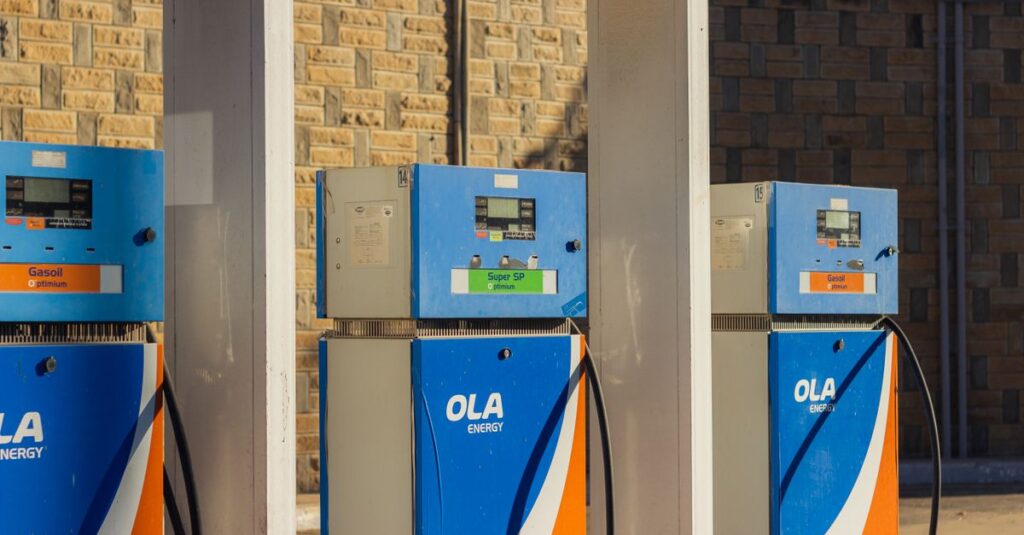
President Trump is considering a diesel export ban and other measures to curb record US fuel prices, the Financial Times reported Wednesday, as diesel costs climb past $6.50 a gallon and the issue moves to the center of his campaign ahead of the November midterms. A White House official told the paper Trump was evaluating options to lower fuel prices but had made no decision on exports.
US diesel prices hit $6.53 a gallon on September 22, a record, and have eased only slightly since, standing at $6.45 Monday per AAA data. That is more than 70 percent above prewar levels, according to the FT, and up roughly $2.80 from a year ago. The surge traces to the seven-month Iran war, which has knocked out Middle Eastern and Russian supply, including a Houthi drone strike that took out Saudi Arabia’s East-West pipeline and threatened up to 4 percent of global oil supply.
Trump told reporters Sunday the administration is “very seriously” considering a ban. He has backed the idea publicly since September 22, saying he had called for a ban “within my people” and that “the cost of diesel is just too damn high.” Republican candidates in tight November races, particularly in farm states where harvest demand is peaking, have pushed the measure as a way to bring prices down before voters go to the polls.
The administration is split
The idea has run into resistance inside the administration itself. Politico reported last week that the White House had been working on a 90-day diesel export ban before Energy Secretary Chris Wright pitched alternatives after heavy lobbying from the oil industry. Wright has said the administration is weighing restrictions rather than an outright ban, including voluntary export cuts and pushing fuel policy down to the state level.
The American Petroleum Institute opposed the ban immediately when Trump first floated it, and analysts have warned it could make things worse. The United States is the world’s largest diesel exporter, shipping out a net 1.5 million barrels a day, according to S&P Global Energy. Halting those exports would tighten supply in Europe, which is structurally short on diesel and relies heavily on American cargoes. European gas and diesel prices have already jumped as the Hormuz standoff drags on, and a US export halt would land on top of that.
What the banks say a ban would do
Goldman Sachs estimated a ban could cut diesel prices by about 25 cents a gallon while refiners have storage space for excess production. Once storage fills, each additional week of the ban could push gasoline prices up 30 cents a gallon, because diesel, gasoline and jet fuel are produced together in a refinery. Cutting diesel output means cutting gasoline output too.
“The longer a diesel export ban lasts, the more disruptive it would likely be by putting upward pressure on gasoline prices because diesel, gasoline and jet fuel are largely produced together,” Goldman Sachs analysts wrote.
Wood Mackenzie reached a similar conclusion, predicting sharply higher gasoline prices under a full ban. Energy Secretary Wright has warned a ban could raise fuel prices on the East and West Coasts, which import refined product from Gulf Coast refineries. Industry experts add that refiners would respond to a ban by cutting output, which shrinks gasoline supply regardless of the storage math.
The inflation machine keeps running
The fuel squeeze is feeding directly into the inflation picture that markets are trading. US diesel prices have gained roughly 60 percent since late February, and economists argue the cost is spreading slowly through the economy rather than all at once. “Energy inflation does not stay at the gas station,” economist Sung Won Sohn of SS Economics wrote last week. “It travels by truck, airplane and cargo ship into nearly every store in America.”
August PCE inflation data lands Wednesday at 8:30 a.m. ET, with headline inflation expected at 3.7 percent year on year against the Fed’s 2 percent target, and markets price about 70 percent odds of another Fed rate hike on October 28. The Fed raised rates by 25 basis points on September 16, its first hike in three years.
The 10-year Treasury yield hit 5.293 percent Tuesday, its highest since June 2007, and the 30-year touched 5.6206 percent, the highest since 2002. The Conference Board’s consumer confidence index fell to 81.9 in September, the weakest reading since 2014, with households citing higher gas prices and the war. Fed governor Michael Barr said more hikes are likely needed, while Chicago Fed president Austan Goolsbee said letting inflation stay above target for five and a half years is “playing with fire.” New York Fed president John Williams struck the one patient note, saying the central bank has time to weigh the data before deciding when to hike again.
The Strategic Petroleum Reserve is running out of cushion. The Energy Department offered up to 40 million barrels from the reserve this week, the last tranche of a 172-million-barrel release, pushing inventories toward their lowest level since 1982.
Trump has also pressed Ukrainian President Volodymyr Zelenskyy to stop targeting Russian oil refineries, saying the attacks are “hurting the world” as supply disruptions pile up. Brent crude steadied Wednesday above $103 after Trump denied reports of sanctions relief for Iran, erasing part of the previous session’s drop. With the war in its seventh month and no de-escalation in sight, the administration’s fuel-price problem has no obvious off-ramp, and the export ban question will keep coming back until prices do.