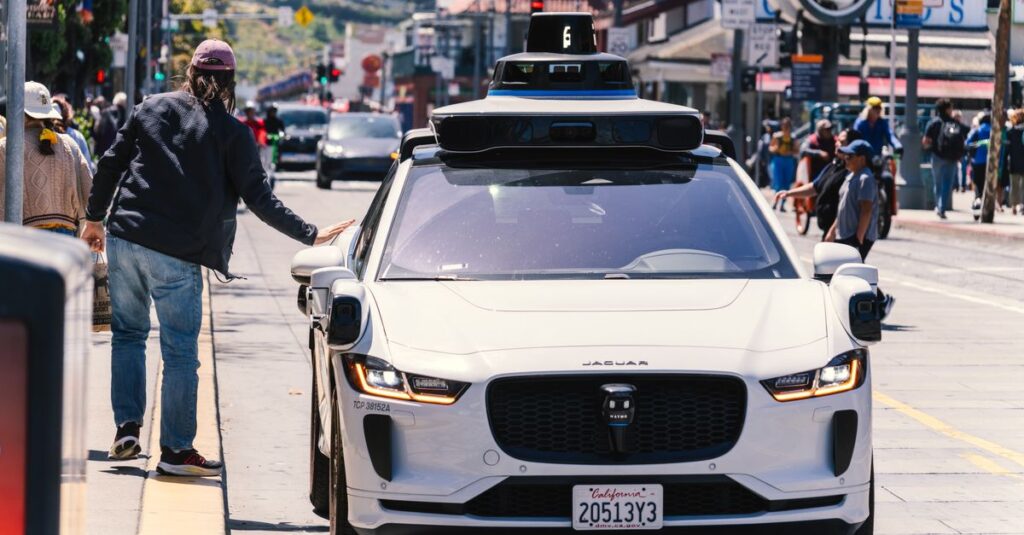
The Nevada Transportation Authority unanimously approved three permits on Thursday that will allow Tesla, Uber, and Waymo to operate commercial robotaxi services in Clark County, home to Las Vegas, with a combined ceiling of up to 8,000 vehicles over the next 12 months.
Tesla received the largest permit, authorizing deployment of up to 5,000 robotaxis. Waymo was approved for up to 1,000 autonomous vehicles, while Uber secured permission for another 1,000 robotaxis to be operated through its partnerships with Hyundai subsidiary Motional and Amazon-owned Zoox. Zoox already held a separate permit allowing 100 robotaxis in the state.
Realistic Deployments May Be Far Lower
Even with these generous ceilings, the companies indicated during testimony that actual deployments will fall well short of the maximum numbers. Eric Early, Tesla’s Cybercab chief engineer, told the authority that “the 5,000 has always been a ceiling for us” and that the company would be “extremely happy and satisfied” to reach 2,500 vehicles within a year.
The discrepancy between permitted capacity and operational reality underscores the manufacturing, software validation, and logistical challenges that still constrain large-scale autonomous vehicle rollouts, even as regulators open the door wider.
Competing Visions for Autonomous Ride-Hailing
The approvals set the stage for an unprecedented robotaxi competition in a single metropolitan area. Tesla, Waymo, and Uber will be fighting for the same riders in Clark County, each with a different business model. Tesla is pursuing a fully autonomous fleet with no human drivers. Waymo operates its own driverless ride-hailing network. Uber is advocating for a hybrid approach combining human drivers and robotaxis.
Representatives from the Livery Operators Association and local taxi companies opposed the permits, arguing the approvals move too far, too fast, with one lawyer warning of “oversaturation of the commercial transportation industry” and road overcrowding.
Uber has specifically lobbied for regulatory systems that would require robotaxis to operate on ride-hailing networks that also employ human drivers, a stance that serves as both a competitive hedge and a hedge against its own autonomous technology falling short of rivals’ capabilities.
Las Vegas Becomes a Robotaxi Battleground
Clark County’s Golden Triangle, the area between Harry Reid International Airport and the Las Vegas Strip, has been the primary testing ground for autonomous vehicles in the region. Motional is also testing in the downtown area and at the Town Square shopping district. With the new permits, commercial operations could begin expanding rapidly across the county.
The scale of deployment being contemplated, even at half the permitted levels, would make Las Vegas one of the largest robotaxi markets in the United States, rivaling Waymo’s operations in Phoenix and San Francisco. The concentration of tourists, nightlife traffic, and a 24-hour economy makes the city an attractive test bed for autonomous ride-hailing at scale.
For the broader autonomous vehicle industry, the Nevada approvals represent a significant regulatory milestone, demonstrating that states are willing to grant large-scale commercial permits even as the technology continues to mature and deployment timelines remain uncertain.