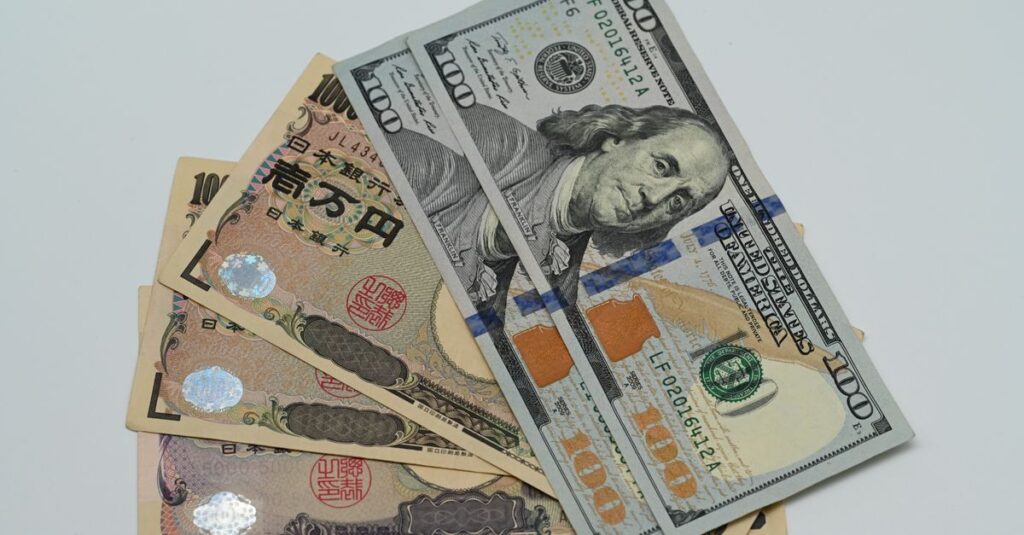
The yen sank to a two-week low against the dollar on Friday after the Bank of Japan raised interest rates to a 31-year high but failed to convince traders it will move again soon. The BOJ lifted its policy rate by 25 basis points to 1.25%, the highest level since 1995, in a 7-2 vote with board members Toichiro Asada and Ayano Sato dissenting, according to Reuters.
The dollar climbed 1% to 157.54 yen in London trading. The hike itself was fully priced: all 52 economists surveyed by Bloomberg between September 4 and 10 expected it. What the market wanted was a clear signal on the next move, and it did not get one.
A split vote muddies the message
The two dissents did the damage. Governor Kazuo Ueda told his press conference that underlying inflation is approaching 2% and that most board members still see policy as accommodative even after the hike, a formulation that leaves the door open to further tightening without committing to it. Traders read the split vote and the hedged language as a dovish tilt, and the yen sold off across the board, with strong moves in GBPJPY and AUDJPY as well as against the dollar.
“Will continue to raise interest rates in response to economic and price developments as well as financial conditions,” the BOJ statement said, in the bank’s standard formulation that promises nothing on timing.
The BOJ also flagged the risk of an inflation overshoot, a warning it first issued in July when fuel costs began feeding into wholesale prices. Import costs from the weak yen and strong demand linked to AI investment round out the inflation picture the bank is watching. Wholesale inflation has been running hot for months, and economists expect it to spill over into consumer prices if the currency keeps sliding.
US pressure in the background
The hike lands against an unusual backdrop: the United States has been pushing Japan to act on the yen’s weakness. The Japan Times notes the bank is under pressure from Washington to stop the yen from sliding while also weighing the state of the domestic economy. A widening US-Japan rate gap is the core problem. The Federal Reserve raised rates to 3.75-4.00% on Wednesday and a majority of Fed policymakers penciled in at least one more hike before the end of 2026, so the BOJ’s quarter point keeps Japan trailing rather than closing the gap. Fed Chair Kevin Warsh’s commentary after the meeting reinforced the view that the inflation fight is not a one-and-done rate-hike kind of thing, as Briefing.com put it, and the dollar advanced against the euro and other majors along with the yen.
September has seen the biggest rise in average interest rates across the G10 since July 2023, with four central banks raising rates and others signaling they may need to follow. The global tightening cycle that markets had assumed was over has restarted, driven by energy costs from the war in the Middle East, which is nearing the seven-month mark with oil still above $100 per barrel and fanning inflation fears worldwide.
Oil retreat helps stocks, not the yen
Brent crude fell as much as 2.8% to $101.92 after a Reuters report that China has asked Tehran to help rein in the Houthis following their military blitz over the past week. Hopes that Gulf exporters may find alternative shipping routes added to the relief, putting Brent on course for a 2% weekly drop. Physical market prices remain around $120, a reminder that paper and physical markets are diverging as the supply picture stays tense. Earlier in the week, a US industry report pointing to a pickup in stockpiles had already taken some heat out of the market, and talk that a key Saudi pipeline outage may be resolved within days did the rest.
Global shares and bonds still dipped on Friday. The oil retreat gave sentiment a floor but not a rally, and equities registered modest losses in Europe while Japan’s market took the yen weakness in stride. Export-heavy Japanese stocks tend to benefit from a cheaper yen, which is one reason the Nikkei held up despite the policy disappointment. US stock futures pointed higher ahead of the New York open after Wall Street’s initial post-Fed selloff faded.
| Move | Level | Change |
|---|---|---|
| USD/JPY | 157.54 | +1% on the day |
| BOJ policy rate | 1.25% | +25bp, 7-2 vote |
| Brent crude | $101.92 | -2.8% intraday |
| Fed funds target | 3.75-4.00% | +25bp on Wednesday |
What comes next
Ueda signaled the bank could tighten further, and the Bank of England’s decision on Thursday, expected to hold rates as weak UK growth offsets 3.1% August inflation, is the next major central bank event. For the yen, the path depends on whether the BOJ follows through before the Fed hikes again. If the gap widens further, pressure on the currency builds, and with it the imported inflation the BOJ says it is watching.
Markets will now watch Japanese wage data and the next US inflation print for evidence on whether the BOJ’s next move comes in October or slips further out. The two dissents suggest the board itself is not united on the pace, which historically means slower moves rather than faster ones. Ueda also mentioned the board is mulling membership changes for next year, another signal that the bank sees itself in a transition period rather than at the end of one.