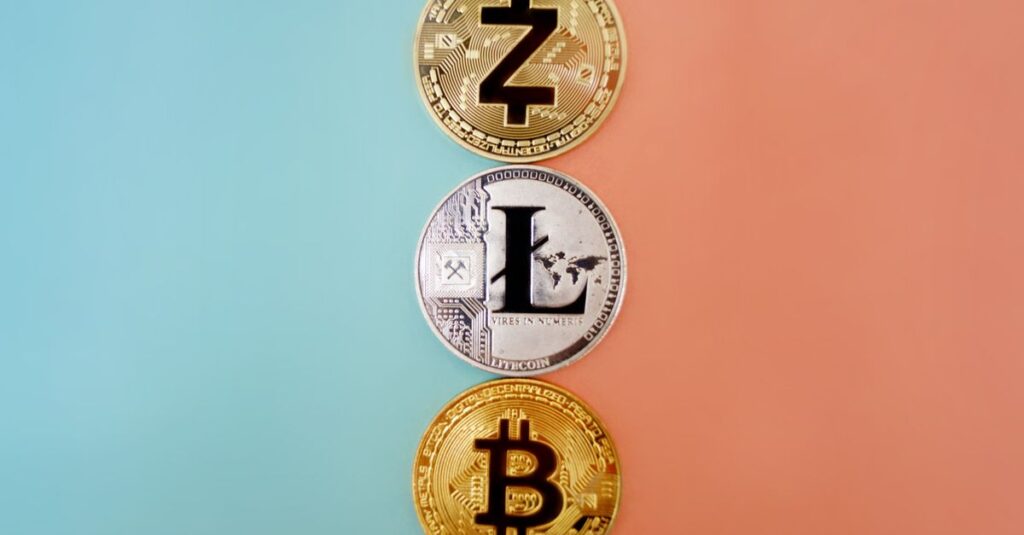
Zcash developers have set Nov. 5 as the target date for the NU7 network upgrade, which will cut block times from 75 seconds to 25 seconds and make shielded, private payments confirm roughly three times faster. The schedule was confirmed this week on the project’s community forum and picked up by CoinDesk and Decrypt on Friday. For a chain whose entire product is private payments, confirmation speed has been one of the last obvious gaps against ordinary card networks, and this upgrade is the most direct attempt yet to close it.
The change matters because Zcash is built around zero-knowledge proofs, the math that lets a user prove a payment is valid without revealing the sender, the recipient or the amount. Proof generation and verification sit on the critical path of every shielded transaction, so shorter blocks translate directly into faster confirmation for private payments. Decrypt noted the goal is to bring shielded confirmation times close to a card swipe. Today, a shielded payment can take several seconds from initiation to a confirmed block. After NU7, the same payment should clear in about a quarter of that window, assuming the network holds the new schedule under load.
The speedup also changes how the chain feels in wallets. A 75-second block interval means a user staring at a pending screen for over a minute on nearly every payment, which is an eternity at a checkout counter. At 25 seconds, the wait starts to resemble the confirmation experience on faster payment chains, without giving up the shielded pool that defines the network.
Keeping issuance flat
Faster blocks create an immediate problem: three times as many blocks per day would normally mean three times as many new coins minted, quietly changing the monetary schedule the project has defended for years. NU7 solves this with ZIP 218, a proposal that divides the reward paid per block by roughly the same factor as the block time reduction. Daily ZEC issuance stays unchanged. Decrypt reported that the companion rule was designed specifically so the speedup does not alter the emission curve.
The upgrade also directs at least 60% of transaction fees into a fund that supplements mining rewards starting in 2031. That gives miners a second income stream as block rewards shrink over time, a long-running concern for a chain with a fixed supply schedule and a mining community that has shrunk and recovered with the price more than once. Fee revenue alone has never covered security spending on any major proof-of-work chain, so the design is effectively a promise that usage will eventually pay for security.
Timeline and breaking changes
The rollout follows a tight schedule:
| Date | Milestone |
|---|---|
| Sept. 30 | Code for NU7 due to be complete |
| Oct. 6 | Upgrade reaches the Zcash test network |
| Oct. 20 | Final mainnet decision and activation height chosen |
| Nov. 5 | Targeted mainnet activation |
NU7 also disables version 4 transactions, which stops spending from legacy Sprout funds, the original shielded pool from the chain’s earliest days. That pool has been a standing compliance talking point for years, since old-style shielded coins are harder to audit than the modern Sapling and Orchard pools. Retiring the spend path removes a category of transactions that exchanges and regulators have repeatedly flagged. Developers say ordinary wallets should not need major changes, though full nodes and block explorers will have to update to follow the new block cadence.
Market context
ZEC has been one of the strongest performers in crypto this year. The price jumped above $1,400 after the community all but unanimously backed the shorter block times, an unusually clear signal of support for a consensus change, and demand has stayed elevated since. A separate driver is the Grayscale Zcash ETF, which pulled in $233 million in its first weeks after an Aug. 25 debut and this week announced a 3-for-1 share split as net assets approached $890 million. A regulated wrapper plus a faster chain is the combination that has historically drawn new buyers into a token.
The upgrade also lands amid broader momentum for privacy technology. Developers associated with the ecosystem have reported proof generation more than 14 times faster on mobile and 5 times faster on desktop after recent optimization work, cutting some private transaction times from over 3 seconds to under 200 milliseconds. NU7 would add faster confirmation on top of that, attacking wait time from the protocol side while the client-side work attacks it from the wallet side.
There is a regulatory angle too. Privacy coins spent years being delisted from major exchanges, and any sign that a privacy chain can grow inside regulated products rather than around them is being watched across the sector. Zcash’s ETF success and its disciplined upgrade process are the current test case for whether privacy technology can sit inside a compliance perimeter.
What could go wrong
A threefold cut in block time is a consensus change, not a software update, and it touches the economics of every miner on the network. Shorter blocks mean more orphaned blocks and more bandwidth for node operators, and the per-block reward cut means miners earn a third as much per block three times as often. The Oct. 20 decision point exists precisely to catch problems on testnet before they reach mainnet. If testnet review turns up instability, the Nov. 5 date slips, as has happened with previous Zcash network upgrades.
The fee-based miner supplement does not start until 2031, so miners face five years of smaller per-block rewards with only the issuance-neutral design as compensation. Whether that holds the mining community together is one of the open questions the testnet period will answer. Hash rate that leaves before activation does not come back quickly.
For users, the practical test is simple: whether a shielded payment can confirm in about the time it takes to tap a card. If NU7 lands on schedule, Zcash will be the first major privacy chain running 25-second blocks, and the November date gives exchanges, wallets and explorers just under seven weeks to prepare. The project has shipped harder upgrades before, but never one that changes the rhythm of the chain itself.