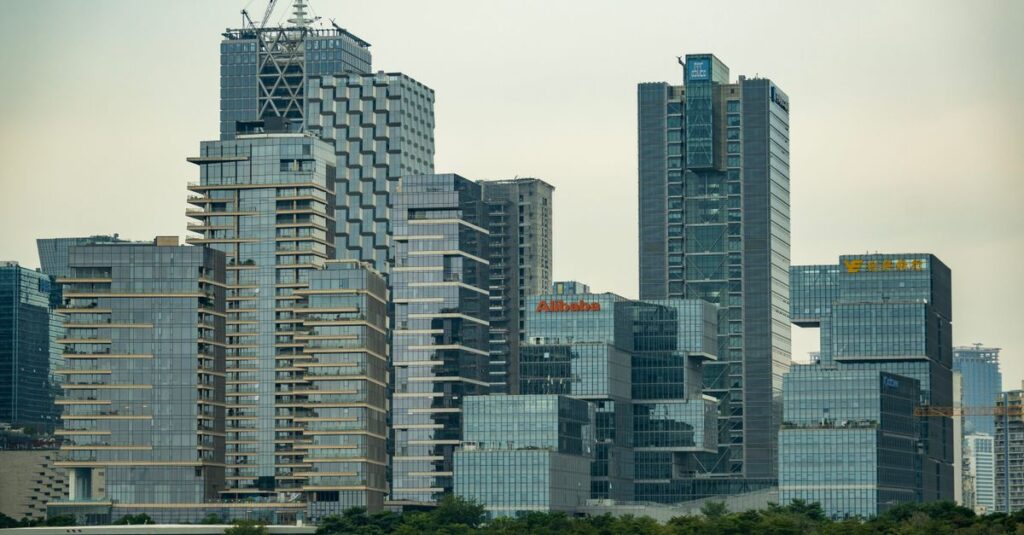
Alibaba Group launched a HK$80 billion ($10.2 billion) share placement on Sunday, marking the largest primary follow-on offering ever by a Hong Kong-listed company, with all proceeds earmarked for artificial intelligence development.
The Chinese e-commerce and cloud computing giant is issuing 710 million newly issued ordinary shares at HK$112.70 each, representing a 3.6% discount to the closing price of Alibaba’s American depositary receipts on Friday. The placement targets non-U.S. persons outside the United States, routing capital through Alibaba’s Hong Kong listing rather than its New York presence.
Deal Structure and Pricing
Alibaba trades on both the NYSE under ticker BABA and on the HKEX under counters 9988 and 89988, a dual-listing structure that gives it unusual flexibility in how it taps capital markets. The company said it intends to use 100% of the net proceeds to invest in full stack AI capabilities, a category that includes chips, infrastructure, and the development and deployment of AI models.
The deal comes as Alibaba ratchets up quarterly capital spending to almost $10 billion, aiming to safeguard its position in a fiercely competitive global AI arena. The company’s Qwen family of large language models has emerged as a leading open-weight contender, but maintaining that edge requires massive ongoing investment in compute infrastructure and chip development.
A Global Rank Among Follow-On Offerings
The placement ranks as the world’s third-largest primary follow-on share sale this year, after offerings from Alphabet and Intel. It echoes Alibaba’s 2019 secondary listing, which raised about HK$88 billion ($11.2 billion) and proved well-timed in hindsight. The move comes days after the company reported a 75% fall in quarterly net profit driven by heavy AI spending.
Routing the placement through Hong Kong rather than New York carries strategic weight beyond investor targeting. For Alibaba, leaning into its Hong Kong listing reduces dependency on U.S. capital markets at a time when geopolitical dynamics between Washington and Beijing remain complex.
The company noted in its filing that the capital increase is carried out with the aim of investing in full-stack AI capabilities, including the Qwen family of large language models and expanded infrastructure.
The deal remains contingent on market conditions. Pricing details will be the first real signal of institutional appetite – a modest discount would suggest strong demand, while a steeper cut would indicate Alibaba had to work harder to fill the book.