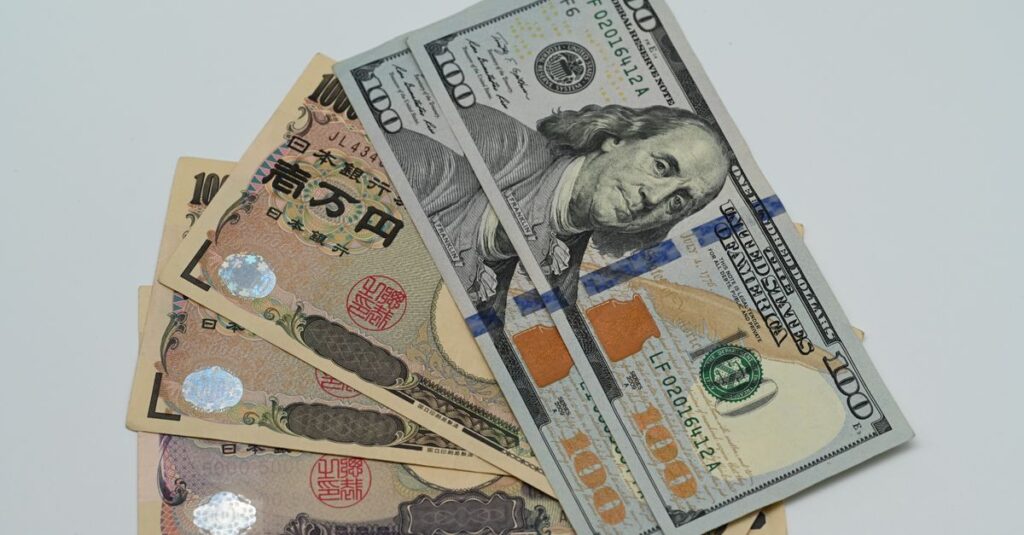
The Bank of Japan raised its benchmark interest rate to 1.25% on September 18, the highest level in 31 years, yet the yen fell toward 157 per dollar in the days that followed. The move, a quarter-point increase approved in a split board vote, was meant to contain inflation and support a currency that has spent most of the year under pressure. The reaction suggests markets are not convinced the central bank will keep tightening fast enough.
Governor Kazuo Ueda told reporters after the two-day meeting that monetary policy had entered a new phase at a time of growing upside inflation risks. The board shortened the interval since the last hike to three months, down from the roughly six-month cadence the bank kept after ending negative rates in March 2024. A Reuters survey of 68 economists before the decision found 66 expecting the move, and about 62% projected at least 1.75% by the end of Q2 2027.
The yen did not cooperate
Logic says a rate hike should strengthen a currency. The yen went the other way. After briefly touching 158 to the dollar on the decision, the currency stabilized in the 156 to 157 range, and the Bank of Japan conducted a rate check on Friday night, a procedural step widely read as a precursor to actual currency intervention. The check lifted the yen temporarily into the upper-156 range before it drifted back.
The paradox has an explanation. Markets had already priced an 83% probability of the hike, so the decision itself carried little surprise. What traders were really buying or selling was guidance on the pace of future increases, and Ueda’s press conference gave them less acceleration than the most bullish yen scenarios assumed. Swaps pricing still points to quarterly hikes ahead, but the yen has spent months disappointing optimists. It hit 152.89 per dollar on September 8 on exactly those expectations, then gave the gains straight back.
| Metric | Value |
|---|---|
| New policy rate | 1.25%, highest since 1995 |
| Previous rate | 1.00% (June 2026 hike) |
| USD/JPY after decision | Touched 158.05, then 156-157 range |
| Yen high this month | 152.89 per dollar (Sept 8) |
| Economists expecting 1.75%+ by mid-2027 | 62% of 68 surveyed by Reuters |
Carry trade risk hangs over the decision
The rate hike’s spillover channel runs through the yen carry trade, the practice of borrowing cheap yen to invest in overseas stocks and bonds. Rising Japanese rates reduce the appeal of that trade. If investors unwind positions by selling foreign assets and buying yen back, global markets feel it, as they did in August 2024 when a BOJ hike helped trigger a violent global sell-off that wiped out most of the Nikkei’s yearly gains in days. Analysts in Korean and Japanese market coverage this week flagged the same vulnerability, though several argued the impact would be limited this time because positioning is less crowded than it was two years ago.
Japan’s Ministry of Finance has its own lever. Officials have reaffirmed readiness to coordinate with the United States on currency markets, and the rate check on Friday was the clearest signal yet that intervention talk is live. A rare joint US-Japan intervention on July 31 last year failed to produce lasting support for the yen, which is one reason traders discount the threat until actual orders appear in the tape.
“Given the degree of pricing, the rate decision itself may have limited impact on the yen. Attention should fall on the forward swaps curve and the bank’s guidance around the pace of further tightening,” said Chris Weston, head of research at Pepperstone, before the decision.
Two central banks tightening at once
The BOJ is the last major central bank still tightening while the Federal Reserve has just resumed hikes under Chair Kevin Warsh, with futures pricing a 53% probability of another quarter-point move at the Fed’s October meeting, up from 27% a week earlier. Two tightening central banks at once pull global liquidity in the same direction, and the yen sits at the center of the leverage that connects them. A yen that keeps weakening despite higher Japanese rates means imported inflation, priced in dollars for energy and food, stays elevated. That forces the BOJ toward the further hikes markets doubt it will deliver, a loop that usually resolves with either faster tightening or a weaker economy.
There is also the question of what a 31-year-high Japanese rate does to the world’s largest creditor nation’s capital flows. Japanese institutions own trillions of dollars in foreign bonds. Every incremental hike raises the bar for those outflows to continue, and even a modest reallocation back into Japanese government bonds would push up yields in the US and Europe at a moment when the 10-year Treasury is already testing 5%, its highest level since 2007.
What to watch next
The market’s verdict so far is cautious. The yen trades near 157, the BOJ signaled more hikes without committing to a schedule, and the Ministry of Finance watches from the sidelines with its intervention toolkit half-visible. Three things could move the pair quickly: a real intervention print in Japanese banking hours, a hawkish surprise from the Fed in October, or Japanese inflation data that forces Ueda’s hand ahead of the scheduled quarterly hike. Until one of those lands, expect the 155 to 158 range to hold, with every rate check from the BOJ buying the yen a day or two of strength before the drift resumes.