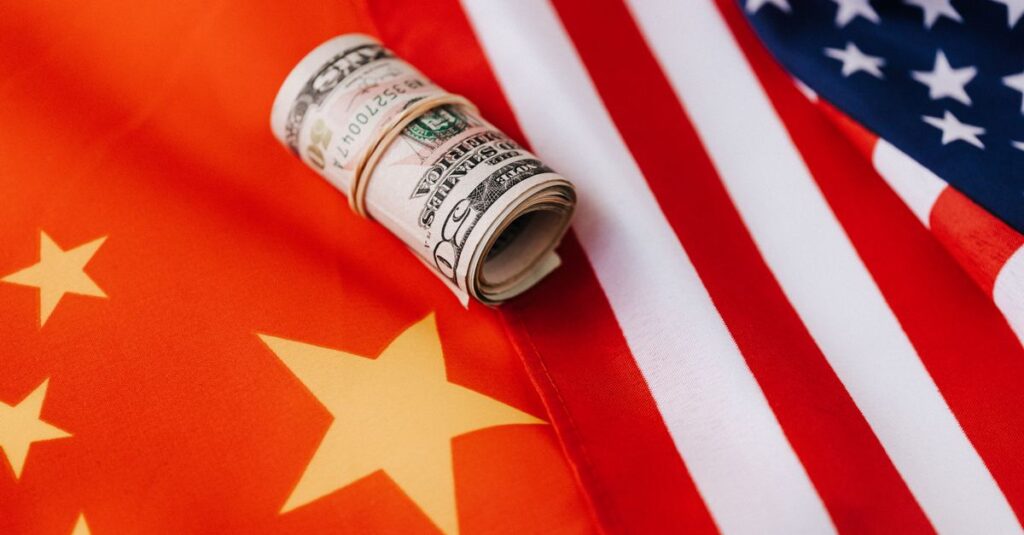
Top economic officials from the United States and China opened talks in New York on Sunday aimed at clearing the way for agreements on trade, artificial intelligence and critical minerals before President Donald Trump hosts Chinese leader Xi Jinping at the White House later this week.
Treasury Secretary Scott Bessent and Chinese Vice Premier He Lifeng began meeting at JPMorgan Chase’s Manhattan headquarters on Sunday morning, with US Trade Representative Jamieson Greer also at the table. The sessions continue a negotiating track that both sides want to wrap before the summit on September 24.
“I’m looking forward to having focused, fulsome and constructive talks today that will set the stage for our leaders’ meeting,” Bessent told reporters as he arrived.
At the top of the agenda is a trade truce reached in Busan, South Korea, last November, which caps US tariffs on Chinese goods at about 20 percent and expires on November 10. The truce followed a tit-for-tat fight that briefly pushed tariffs into the triple digits, and neither side has said publicly whether it wants an extension, a replacement or a lapse into higher rates.
Critical minerals are the other sore point. China promised to restore flows of rare-earth materials under last year’s truce, but a senior US official said on Friday that Beijing’s performance had “not been up to par”. Export volumes of rare-earth magnets have fallen short of what US manufacturers say they need, keeping supply chain worries alive across the auto and electronics industries.
AI enters the room
Artificial intelligence is on the agenda for a second round of talks, a relatively new issue in a relationship long dominated by tariffs. The discussions cover both open- and closed-weight AI models, and the US side proposed a notification mechanism between the two governments, according to officials quoted by Bloomberg.
Bessent described the Sunday session as a very successful engagement on trade and AI, and said the two sides agreed to meet again on an AI dialogue. China’s top trade negotiator, Li, called the talks “not bad” and said working groups would continue on Monday.
Greer said a joint Board of Trade has been made operational, with teams from both countries continuing to work on it. He said Chinese deliveries could include consumer goods and low-tech items, while US shipments could cover energy products, agricultural goods and possibly medical devices.
Chip export controls sit in the background of the AI track. The United States has spent three years tightening restrictions on advanced semiconductors sold to China, and Beijing has responded with its own export licensing on minerals and processing equipment. Any AI understanding reached this week would sit alongside, not replace, those controls.
Markets lean toward a deal
Asian stocks rose and US equity futures advanced on the news, with traders positioning for progress at the summit. Oil slipped, a sign markets do not expect a breakdown in talks that could disrupt supply chains. Sectors in focus include Chinese ADRs, semiconductors, industrials, agriculture and retail, all of which move on tariff headlines.
The summit comes at a delicate moment for US monetary policy. The Federal Reserve raised rates by a quarter point on September 16 to a 3.75-4 percent target range, its first hike since 2023, citing elevated inflation driven in part by energy prices. Chair Kevin Warsh said inflation has been “too high for too long” and that the committee will deliver price stability.
A trade deal that lowers tariff uncertainty would ease one of the inflation pressures the Fed has cited. Conversely, a failed summit that sends tariffs back toward triple digits, as briefly happened during the 2025 trade fight, would complicate the central bank’s path and likely pressure risk assets that have rallied since mid-September.
The economic backdrop is mixed. US job gains have kept pace with workforce growth and unemployment has changed little, according to the Fed’s September statement, but the central bank flagged elevated uncertainty from geopolitical developments. Energy costs remain the wildcard, with Brent crude holding above $100 for weeks after Middle East supply disruptions, and any trade outcome that affects shipping or insurance costs feeds directly into that picture.
What to watch
The working groups meet again Monday. Markets will watch for language on the truce extension, any numbers on rare-earth export volumes, and whether the AI dialogue produces a standing mechanism rather than a one-off conversation. Trump and Xi are set to meet in Washington on September 24, four days after the New York sessions began.
Both leaders have reasons to land something. Trump wants visible wins on trade and manufacturing investment ahead of the November midterms, and Xi wants stability while China’s economy works through property and export headwinds. That alignment does not guarantee a deal, but it makes a total breakdown less likely than the tariff-war rhetoric of recent years might suggest.
History counsels patience with these summits. Previous rounds between the two governments have produced framework announcements that later stalled in implementation, and the November 10 truce expiry means any deal struck this week will need detail to survive contact with the deadline. Markets will treat progress on the minerals file as the most concrete signal, since export volumes are measurable in a way that summit communiques are not.
Earnings add another layer to the week. Costco reports Tuesday, and retailers with heavy China sourcing will be pressed on tariff costs and inventory plans. August new home sales and durable goods orders round out the US data calendar, giving economists a read on whether domestic demand is holding up under higher borrowing costs.