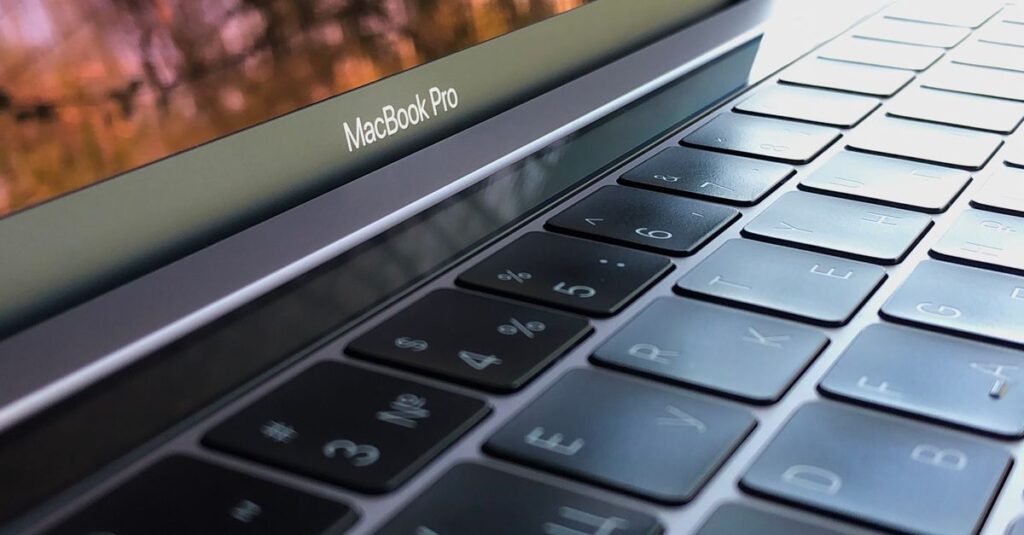
Apple’s $599 MacBook Neo has become a victim of its own pricing. The laptop was built around leftover A18 Pro chips originally made for the iPhone 16 Pro, and that stock has run out, forcing Apple to order a fresh production run from TSMC at today’s prices. Supply chain analysts say the change threatens the $599 price that made the machine a hit in the first place.
The details come from analyst Tim Culpan and supply chain analyst Ming-Chi Kuo in reports through May and June. Apple initially planned 5 to 6 million MacBook Neo units for 2026, doubled the order to 10 million as demand outran supply, and told suppliers including Foxconn and Quanta to prepare rush orders. CEO Tim Cook acknowledged the constraint on the April 30 investor call: “Right now we’re supply-constrained on the MacBook Neo. We were very bullish on the product before announcing it, but we under-called the level of enthusiasm that would be with it.”
Why recycled chips mattered so much
The MacBook Neo’s economics rest on a piece of inventory accounting. When TSMC produces A18 Pro chips for the iPhone 16 Pro, some come out with one defective GPU core and fail the six-core specification. Rather than scrapping them, Apple stockpiled these downbinned chips with five working cores, which happens to match the Neo’s advertised five-core GPU. The laptop effectively ran on silicon Apple had already paid for and could not use anywhere else, which is a large part of how the company hit $599 with 8GB of RAM and a 256GB drive.
The binned stock dated back to production runs from late 2023 through 2024, when TSMC’s N3E node entered volume production. That vintage matters for cost: the wafers were bought at two-year-old prices, before the AI-driven run-up in semiconductor and memory costs. The new production run means Apple pays current N3E wafer prices for chips it will still ship with one core disabled. TSMC’s N3E capacity is also contended: Nvidia and AMD are competing for the same node for AI accelerators, which pushes pricing and lead times the wrong way for a $599 laptop.
| Factor | Original Neo build | New production run |
|---|---|---|
| A18 Pro source | Downbinned iPhone stock, already paid | Fresh TSMC order at current prices |
| DRAM cost | 8GB LPDDR5X bought pre-shortage | Subject to AI-driven DRAM inflation |
| 2026 production plan | 5-6 million units | 10 million units |
| Entry price | $599 | Under review, possibly $699 |
Memory is the second squeeze
The A18 Pro uses InFO-PoP packaging, which means the DRAM sits directly on top of the processor in the same package. The original Neo inventory used 8GB LPDDR5X modules bought before the memory shortage. Any new build pays the current market rate, and that rate has been climbing all year as AI data centers absorb the DRAM supply. Apple has already raised iPhone prices by $100 across the lineup this month, citing memory and storage costs, so the pressure on the Neo is the same force that hit the rest of the catalog.
Culpan’s suggestion, picked up across the Apple press, is that Apple could follow the Mac mini playbook: discontinue the $599 256GB model and keep the $699 512GB version as the entry point, protecting margin at the cost of the headline price. Apple did exactly that with the Mac mini, where the cheapest configuration quietly disappeared from the lineup. TweakTown reporting adds that Apple could soften the blow by introducing new color options alongside the existing Citrus, Blush, Indigo and Silver chassis, giving the higher-priced entry a fresh sales hook.
What Apple stands to lose
The $599 figure is doing more work than a normal entry-level price. It undercut every Windows laptop and Chromebook in its class and drew buyers who had never considered a Mac, with education pricing bringing it to $499. The launch week brought in more new Mac customers than any Mac release, according to Apple’s own commentary, and delivery estimates stretched to weeks with many configurations back-ordered. Kuo reported that Apple added a new component supplier, Sunny, for the Neo’s CCM module as part of the production expansion, a sign of how far the company is stretching to keep units shipping.
Raising the entry price to $699 changes the competitive math. At that level, shoppers can find discounted M3 MacBook Airs, refurbished M2 Airs with 16GB of RAM, or Snapdragon and Intel machines in seasonal sales. The Neo’s advantage was never raw specifications; it was being conspicuously cheaper than everything around it. Internal analysis reported by the supply chain press suggests Apple knows this, which is why the base price has survived this long despite component inflation.
The other path is absorbing the cost. Apple could eat the margin hit to keep the $599 price through the current demand wave, treating the Neo as customer acquisition for the macOS ecosystem rather than a profit center. The company has done this before with products it viewed as strategic, but a doubled production run at inflated chip and memory prices is a much larger bill than a normal supply ramp. The math on a 10 million unit run makes the difference visible: every $20 of added cost per unit is $200 million across the order.
Longer term, Apple is hedging its supply chain. Reports have circulated that Apple is exploring Intel Foundry as a potential supplier for the future A21 chip, a break from exclusive reliance on TSMC for advanced nodes. That is a multi-year project and does nothing for the current Neo, but it shows the company treating component sourcing as a strategic risk rather than a procurement detail.
How the decision will show up
Either way, the resolution will appear in the fall lineup. If the $599 256GB Neo disappears from the store, the Mac mini precedent has repeated and the Neo’s story shifts from disruptor to ordinary product line. If it survives another season, Apple has decided the entry price is worth defending at whatever the new chips cost. Watch the education channel too: at $499 for students, the Neo was doing quiet work against Chromebooks in schools, and that is the segment most sensitive to even a $100 move.
The demand signal itself is unlikely to fade. A sub-$600 Mac with Apple silicon has no direct competitor from Microsoft’s partners, who have struggled to match the combination of battery life, performance and price at that tier. The question is only whether Apple keeps the pricing weapon sharp or lets component economics blunt it. The next few months will answer that, and the answer will say something about how Apple weighs ecosystem growth against margin in a year when every hardware maker is being squeezed by the same memory market.