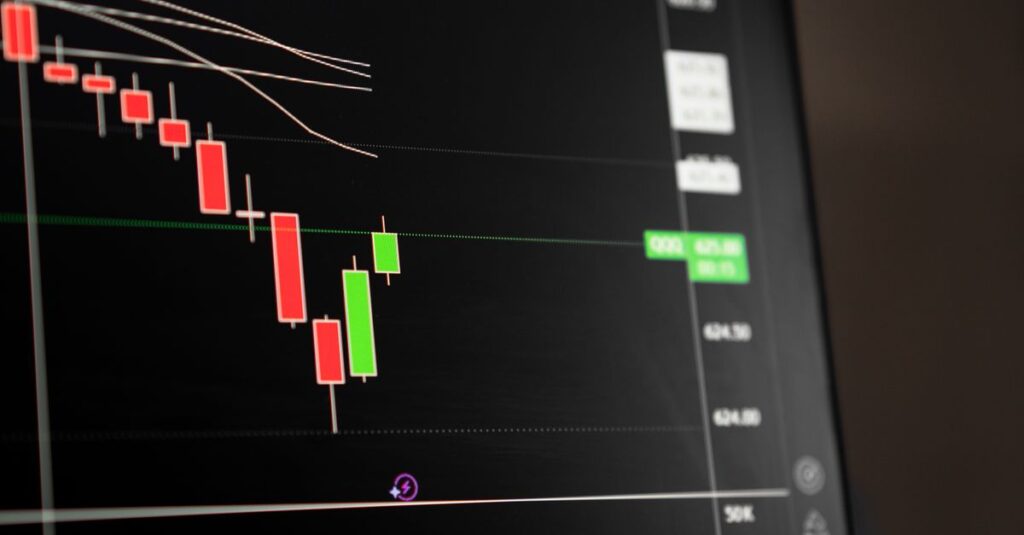
Global markets head into the Federal Reserve’s September 15-16 meeting with a rate hike priced near 85 percent, Brent crude testing $100 a barrel and the 10-year Treasury yield at its highest levels of the year, a combination that has equity strategists warning about positioning into the decision.
Fed chair Kevin Warsh has spent the past month building the case that inflation is not falling fast enough, telling audiences after Jackson Hole that officials would need to act if price pressures do not ease. Hot August CPI data sealed the repricing: odds of a hike on September 16 jumped from a coin flip in early September to above 85 percent by the weekend, with Deutsche Bank calling a hike the most likely policy outcome as far back as the summer. The August payrolls report did the rest, coming in at 162,000 jobs against consensus of 56,000, nearly triple expectations and enough to revive every hawkish bet that Waller’s comments had softened.
The oil problem
The complicating factor is energy. Escalating US-Iran tensions pushed Brent above $100 a barrel this week, its highest settle since May, after attacks on tankers and shipping through the Strait of Hormuz reduced flows to a two-month low. WTI trades near $96. Every $10 move in crude feeds directly into headline inflation on both sides of the Atlantic, and it is the reason the ECB already hiked to 2.50 percent this week while the Bank of Japan is set to follow on September 18. Three major central banks moving in the same direction within eight days is the kind of synchronized tightening that has not happened since the 2022 cycle, and it narrows rate differentials from every direction at once.
Shipping data show Hormuz transit volumes remain well below pre-war levels even after a partial summer recovery. The International Energy Agency has cut its 2026 global demand forecast repeatedly since the war began in February, and its latest report warns that renewed fighting clouds any outlook for normalization. Traders are pricing a no-deal status quo for months, not weeks. The IEA’s own math shows the scale: world supply rebounded to 102.6 million barrels a day in June, but that still left output roughly 9.4 million barrels below pre-war levels, and Gulf exports at 16.1 million barrels a day against a 24 million pre-war average.
| Central bank | Next meeting | Market expectation |
|---|---|---|
| Federal Reserve | September 15-16 | Hike odds above 85% |
| Bank of Japan | September 18 | Hike widely expected |
| European Central Bank | Done, September 10 | Rate at 2.50% |
Bonds under structural pressure
The bond market is fighting on two fronts. Global 10-year yields have climbed to their highest levels since 2008 in some markets, driven by inflation risk from oil and by borrowing: US public debt crossed $40 trillion for the first time this month, and the Treasury has had to triple the size of its regular buyback operations to keep the long end functioning. The 10-year yield sits near 4.78 percent after touching 4.857 percent last week, its highest since November 2023. Treasury secretary Scott Bessent announced a $6 billion buyback last week, tripling the normal operation, a signal that the department itself sees stress in the market for long-dated debt.
Analysts at Evercore argue a single Fed hike would have a trivial effect on long-term yields, since the pressure is structural rather than cyclical. That matters for equities, because the stock market has been able to ignore rising yields through most of 2026 while AI infrastructure spending lifted the index heavyweights. Strategists at Miller Tabak put it bluntly: higher yields do not matter for stocks until they do. The Dow fell 405 points on Wednesday of last week, the third straight decline for all three major indexes, and the S&P 500 has given back most of its August gains.
What a hike would do
For risk assets, the scenarios are uneven. A hike with a neutral statement is the outcome markets have mostly priced, and history suggests the announcement itself would produce a relief rally in equities even as bond yields stay elevated. A hike paired with language signaling more to come is the tail risk: it would push the 10-year through 5 percent, pressure the yen carry trade further and likely force crypto and tech valuations lower together. Japan’s currency is the pressure point. Tokyo’s foreign securities holdings fell $87.8 billion in August, a decline that Bloomberg reporting suggests matches the scale of a record yen defense, and a Fed hike alongside a BOJ hike on September 18 would compress the rate differential from both ends simultaneously.
A hold, now the minority outcome at roughly 15 percent, would trigger the largest repricing of the year. Fed governor Christopher Waller’s dovish comments earlier this month briefly cut hike odds to a coin flip, and that window alone sent bitcoin toward $82,000 and leveraged crypto stocks sharply higher. The asymmetry cuts both ways, and it is why positioning matters as much as the outcome.
Emerging markets are bracing too. Indian strategists flagged the Fed decision, crude and global cues as the drivers of a holiday-shortened week, with the Nifty-50 entering on a five-week losing streak. Dollar strength through the summer has already drained reserves across Asia, and a hawkish Fed statement would resume that pressure. Kazakhstan’s central bank cut rates more than expected this month, a reminder that not every economy is fighting inflation, but the outliers are few.
The week’s data flow is thin by design, with US retail sales and housing starts the only notable releases before the decision. That leaves the Fed itself as the event, and after a summer in which Warsh abandoned the committee’s usual forward guidance, markets have little to go on beyond the chair’s own rhetoric. Positioning data show hedge funds are net short equities at the highest levels since 2023, a setup that cuts in both directions depending on what the statement says. The last time positioning was this skewed into a Fed meeting, in December 2023, the rally that followed the pivot was the sharpest of the cycle.