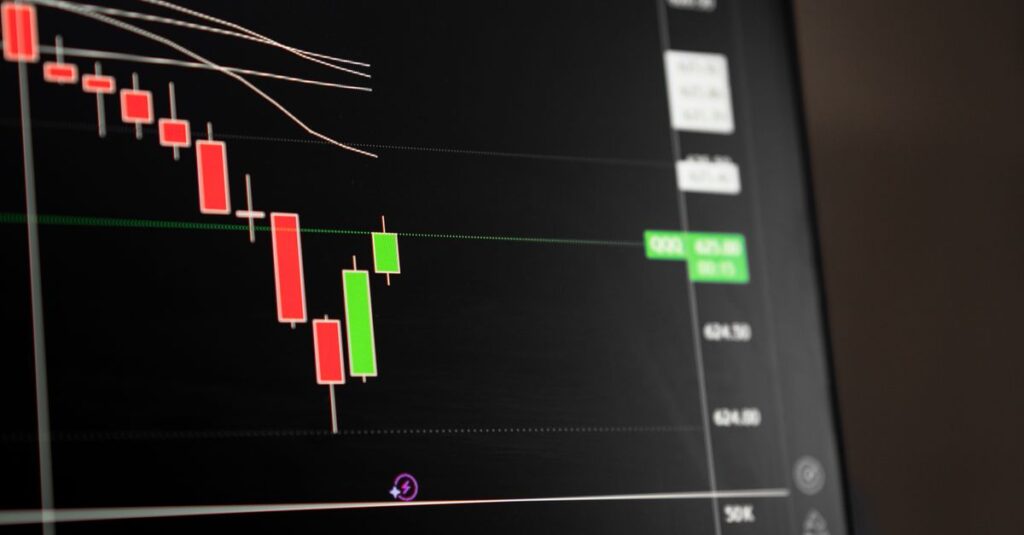
Oil prices fell to their lowest level in more than a week on Monday as traders bet that diplomacy at this week’s UN General Assembly in New York could open a path out of the US-Iran conflict. Brent crude dropped about 2% to trade near $100 a barrel, its fourth consecutive session of losses, while US West Texas Intermediate slipped to around $98.
The November Brent contract traded at $101.71 early in the Asian session, down $2.16 or 2.08%, after settling 0.91% lower on Friday, according to Reuters. WTI declined $2.15, or 2.14%, to $98.15. Both benchmarks touched their lowest levels since September 10 before recovering slightly. Earlier in the US session, Brent fell as low as $99 in intraday trading, breaking below the psychologically important $100 line for the first time since the conflict escalated.
Trump’s three options
The diplomatic hopes rest on thin but real signs of movement. President Donald Trump said on Sunday he was considering three ways to end the war with Iran: military action, economic isolation, or a negotiated deal. In remarks to Fox News, he said he was open to meeting Iranian President Masoud Pezeshkian, who is expected in New York this week for the General Assembly, which begins Tuesday.
Iran has not signaled reciprocal interest in a presidential meeting. But Tehran has conveyed its conditions to mediators for re-engaging in negotiations, according to Al Jazeera, which cited Iran’s security chief Mohsen Rezaei in an interview on Saturday. Washington has also received a list of demands from Tehran to end the war, Trump acknowledged. That the two sides are exchanging lists at all, rather than just missiles and threats, is what moved the price.
“It seems that a degree of risk premium is being removed from oil prices on hopes that a diplomatic path to de-escalate the US-Iran war may arrive this week,” said Tim Waterer, chief market analyst at KCM Trade.
Waterer added the obvious caveat: whether that hope proves warranted is another question.
| Benchmark | Price | Move | Note |
|---|---|---|---|
| Brent (November) | About $99-102 | Down roughly 2-3% | Fourth straight loss, lowest since Sept. 10 |
| WTI | About $95-98 | Down roughly 2-4% | Settled near $95 in US hours |
| US 10-year Treasury yield | 4.96-5.01% | Eased | Still near highest since 2007 |
| Nasdaq 100 | Record territory | Up about 1.9% | AI stocks led gains |
Supply is the counterweight
The diplomatic optimism is only half the story. Middle East export flows have recovered to about 80% of pre-war levels, according to TD Securities, which means physical supply is less tight than the headlines suggested a week ago. Brent had spiked as high as $110 earlier in September before sliding back, and the 12-month range for the benchmark now runs from $59 to $119, a spread that captures how violently this market has repriced.
“It appears that without a major escalation, Iran may have lost notable leverage in the Strait,” said Ryan McKay, director of commodity strategy at TD Securities. The UK Maritime Trade Operations Centre still reported at least two tankers attacked while transiting the Strait of Hormuz, so the shipping risk has not disappeared. It has just stopped getting worse.
The weekend brought fresh attacks that kept a floor under prices. Yemen’s Houthi rebels said they struck sensitive sites in the Saudi capital Riyadh with missiles and drones, along with an Aramco facility in Yanbu on the Red Sea, a key oil export hub. Saudi shipments are only partially recovered from the disruptions, and every attack on export infrastructure raises the cost of insuring cargoes through the region.
What the rally means beyond oil
The slide in crude rippled through other markets. Wall Street futures pointed higher ahead of Monday’s session, with the Dow up more than 400 points in premarket trading, and the Nasdaq 100 gained about 1.9% as AI stocks led. The US 10-year Treasury yield, which touched 5.04% earlier this month, its highest since 2007, eased back toward 4.96% as energy-driven inflation pressure cooled.
That linkage is the reason equity traders care about UN hallways. Oil above $110 was feeding directly into inflation expectations, which were keeping the Federal Reserve’s policy path tighter than markets would like. Every dollar Brent gives back is a small gift to rate-cut hopes, and the bond market’s Monday move reflected exactly that arithmetic. Emerging market currencies, which had been battered by the strong dollar and high yields, also caught a bid as the energy outlook improved.
For oil-importing economies the relief is immediate. India, Japan and the eurozone have all been absorbing import bills inflated by the conflict premium, and central banks there have had to factor energy costs into policy decisions at exactly the moment they wanted to ease. Brent back under $100 removes one of the more awkward inputs from their forecasts.
The week ahead
The week hinges on whether Pezeshkian’s New York visit produces anything concrete. A photo-op between Trump and the Iranian president would likely extend oil’s slide toward the mid-$90s. A breakdown, or a fresh Houthi strike on a major export terminal, would reverse it just as fast. Traders are pricing hope without conviction, which is why the volume behind Monday’s move was thin.
Analysts at TD Securities and other desks describe the market as a tug of war between recovering supply and persistent shipping threats. Both forces are real, and neither has won. The result is a benchmark that swings 3% on headlines while the underlying physical market inches back toward normal.
For now, the market’s judgment is that the risk premium built into crude since the conflict escalated is coming out slowly, one diplomatic headline at a time, while the physical market keeps reminding everyone that Hormuz is still a dangerous place to float a tanker.