
OpenAI and Samsung Electronics have made their most concrete progress yet on joint production and research of OpenAI’s next-generation custom chips, according to Harrison Kim, general manager of OpenAI Korea, who spoke at a press conference in Seoul on Tuesday.
“One of the areas where we have made the most progress and gained the most recognition with Samsung Electronics is our joint production and research on the next-generation chips we are developing,” Kim said, without giving details on Samsung’s exact role. Samsung declined to comment on customer-specific work.
Kim pointed to memory as the sticking point that makes the partnership valuable. Demand for memory chips keeps growing as models get bigger and computing gets more complex, and cooperating with South Korean suppliers has become a priority for OpenAI.
Where the chip program stands
OpenAI unveiled its first custom inference chip, called Jalapeno, in June. Broadcom co-designed the accelerator, TSMC is manufacturing it, and the chip reached tape-out in roughly nine months, an unusually short timeline that OpenAI credited partly to AI models helping with the design work. Reports from Korean media say Samsung’s sixth-generation HBM4 memory will feed the chip.
The roadmap does not stop there. OpenAI said in August that a second-generation chip is deep in development and a third generation is taking shape. Kim’s comments suggest Samsung’s role could expand from memory supply into production cooperation across generations.
Samsung and SK Hynix signed letters of intent last year to supply memory for OpenAI’s Stargate data center project, so the two sides already had a working relationship. What is new is the language around joint research on the processors themselves, not just the memory around them.
Why memory is the bottleneck
Training and running large models is increasingly limited by how fast data can move to processors, not by raw compute. High-bandwidth memory stacks DRAM dies vertically next to the accelerator, and each generation roughly doubles the bandwidth. That puts HBM makers like Samsung and SK Hynix in a position of unusual leverage.
SK Hynix has led the HBM market through the AI boom, supplying much of Nvidia’s demand, while Samsung has worked to qualify its own HBM4 with major customers. A deep relationship with OpenAI gives Samsung an anchor client for its newest memory at scale.
Kim also noted that Samsung is one of the largest deployments of ChatGPT in the world, with employees using the tools across research, development, marketing and sales. The software relationship and the silicon relationship now reinforce each other.
The broader custom chip race
OpenAI is not alone in building its own silicon. Google has run its TPU program for a decade. Amazon builds Trainium and Graviton chips with Annapurna Labs. Microsoft has its Maia accelerator, and Meta develops MTIA chips. The calculation is the same for each: renting Nvidia GPUs at scale costs billions per year, and custom accelerators can cut cost per token substantially.
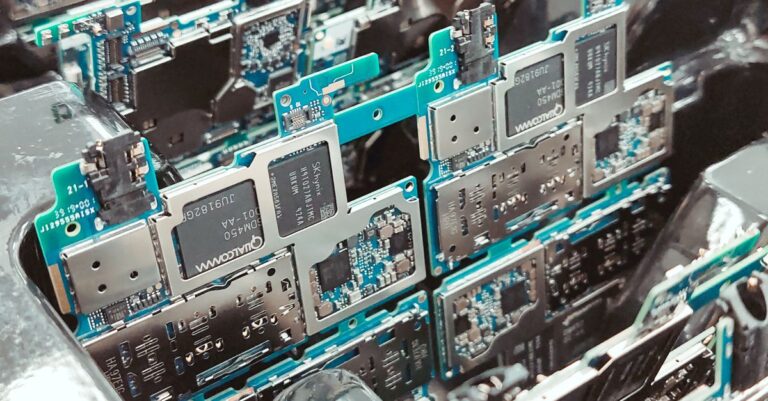
Qualcomm announced a partnership with Amazon on Tuesday to develop custom AI data center chips across several product generations, a sign that every large chipmaker wants a piece of the hyperscaler build-out. Broadcom, meanwhile, has become the design partner of choice for companies that want custom accelerators without running their own fabs, with an AI chip business that has grown into one of its largest revenue lines.
For Samsung, the stakes go beyond OpenAI. The company has reportedly held talks with Anthropic about 2-nanometer foundry work and advanced packaging, and its foundry business has been chasing TSMC for years. Landing a marquee customer like OpenAI for HBM4, and possibly for future manufacturing, would help close that gap.
Kim did not say when the next-generation chips would appear or which workloads they would serve. OpenAI’s Jalapeno chips handle inference, the cheaper and higher-volume side of the business, while training still runs largely on Nvidia hardware. Moving more of that stack in-house remains the long-term goal, and Tuesday’s comments are the clearest sign yet that Samsung intends to be part of it.

discussion