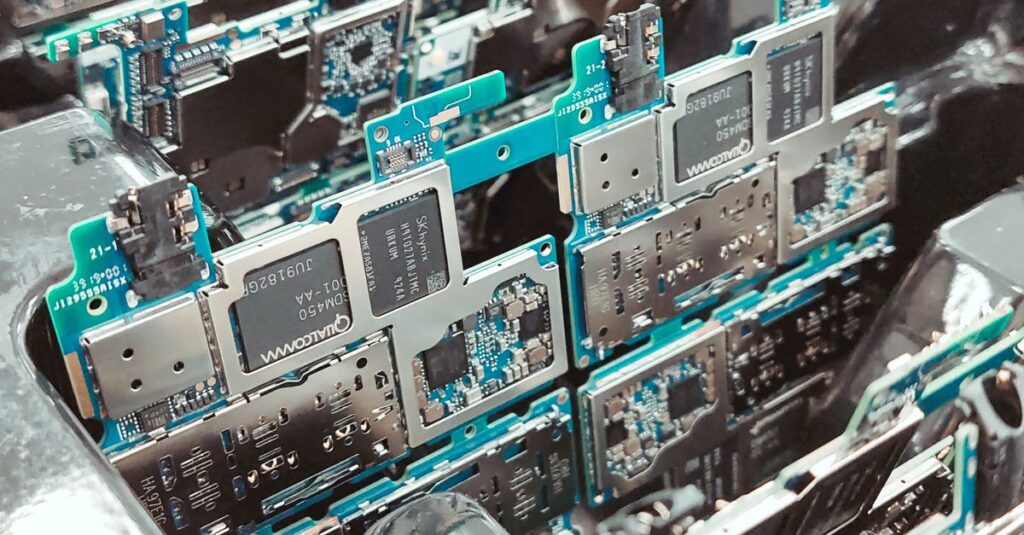
Qualcomm has unveiled its first 2nm mobile chipsets, the Snapdragon 8 Elite Gen 6 and 8 Elite Extreme Gen 6, at Snapdragon Summit, and the first phones carrying them arrive this week.
Both chips are built on TSMC’s 2nm process, a first for smartphones, and both use a custom Oryon CPU whose prime core reaches 5GHz, the fastest clock Qualcomm has shipped in a phone platform. Qualcomm claims 13% better CPU performance, 44% better GPU performance and 35% better NPU performance than last year’s Snapdragon 8 Elite Gen 5. The company positions the family around agentic AI, the catch-all term for on-device assistants that plan and execute multi-step tasks rather than answer single prompts.
The lineup splits in two for the first time in years. The standard 8 Elite Gen 6 carries the 2nm CPU and most of the platform. The Extreme variant adds 18MB of on-chip GPU memory, dedicated Adreno matrix cores, an Adreno Neural Fusion block that offloads rendering work for AI-driven frame delivery, LPDDR6 memory support, 8K video at 60fps instead of 30, 4K slow motion at 240fps and hardware support for the APV and H.266 codecs. Its NPU gets the full 35% bump; the standard chip gets 14%.
Qualcomm also pitched the tiered lineup as a pricing tool. The standard chip shares the 2nm CPU foundation without the video and memory extras, which lets brands put a genuine 2nm platform in phones that sell well below the ultra-premium tier. That matters in markets like India and Southeast Asia, where the price bands between flagships and upper-midrange devices have compressed and chip features are one of the few remaining ways to justify a premium.
Who ships first
Xiaomi moves first. The company unveils the 18 Pro and 18 Pro Max in Beijing on September 23, with the Pro on the standard chip and the Pro Max on the Extreme. Honor follows with the Magic9 Pro Max on the Extreme chip on September 28. iQOO brings the 16 and Pad Ultra to China on September 29, and RedMagic’s 12 Pro+ gaming phone arrives in October.
OnePlus confirmed the 16 will use the Extreme chip and set a OnePlus Gaming Conference for September 28 ahead of the phone’s launch. Motorola’s Signature 27, also on the Extreme variant, targets global availability later this year. Vivo, Oppo, Redmi, Nubia and ZTE round out the partner list, though Qualcomm has not assigned each brand to a specific model.
The bulk of the Western flagship class, including the Samsung Galaxy S27 and OnePlus 16 in most markets, is expected in the first quarter of 2027, keeping the usual cadence where Chinese brands launch weeks after the summit and everyone else follows at CES or MWC.
What the 2nm node buys
Moving to 2nm matters for sustained performance more than peak numbers. A denser node lets the same work run at lower voltage, which means less heat, which means the phone holds its top clocks longer instead of throttling after a few minutes of gaming or video recording. Apple is making the same move with the A20 Pro in the iPhone 18 Pro, which triples the vapor chamber area and repositions memory out of the main thermal path. Android flagships on the Snapdragon side get the efficiency gain through the chip itself.
The new FlexCache architecture is the less flashy change and possibly the more important one. It lets the CPU partition cache dynamically among cores and accelerators, which matters when an AI agent is running a long task in the background while the user scrolls, photographs and streams. Qualcomm says the platform was designed for exactly that pattern: a voice agent handling a task end to end without the cloud.
On-device AI is the marketing frame, but the practical driver is cost and privacy. Running a 30B-parameter model locally, which the Extreme chip supports, means an assistant can work without sending audio or screen content to a server. Whether consumers care is unproven. Whether regulators will eventually care is a safer bet, and Qualcomm is positioning for that world before it arrives.
The competitive picture
MediaTek’s next Dimensity flagship will answer the Gen 6 later this year, and the two companies have traded the performance crown for several generations. Samsung’s Exynos remains a factor in some Galaxy regions. The bigger structural story is TSMC capacity: 2nm wafers are scarce, Apple has locked in early allocation, and Qualcomm’s ability to supply every Android flagship that wants the chip will shape how many phones actually ship with it in the first quarter.
The capacity question is not theoretical. TSMC is building 13 leading-edge fabs in Taiwan and expanding its Arizona complex toward 12 fabrication and packaging facilities, but the company’s own executives have flagged construction labor and infrastructure as constraints. Chip equipment lead times have reportedly stretched to 40 months for some components. A tight 2nm supply through 2027 favors the customers with the deepest pockets and the longest-standing contracts.
Display and camera ecosystems move with the chip too. The Extreme variant’s 4K240 capture and APV codec support push phone makers toward new sensor and storage combinations, and early benchmark results suggest video recording, not gaming, is where the new platform separates from the old one most clearly.
For buyers, the practical advice from reviewers so far is to wait for phone-specific testing. Chip features do not all ship enabled, camera tuning varies wildly between brands on identical silicon, and last year’s Gen 5 flagships remain fast enough for most work. The phones that matter for the chip’s reputation arrive over the next ten days, starting with Xiaomi tonight.