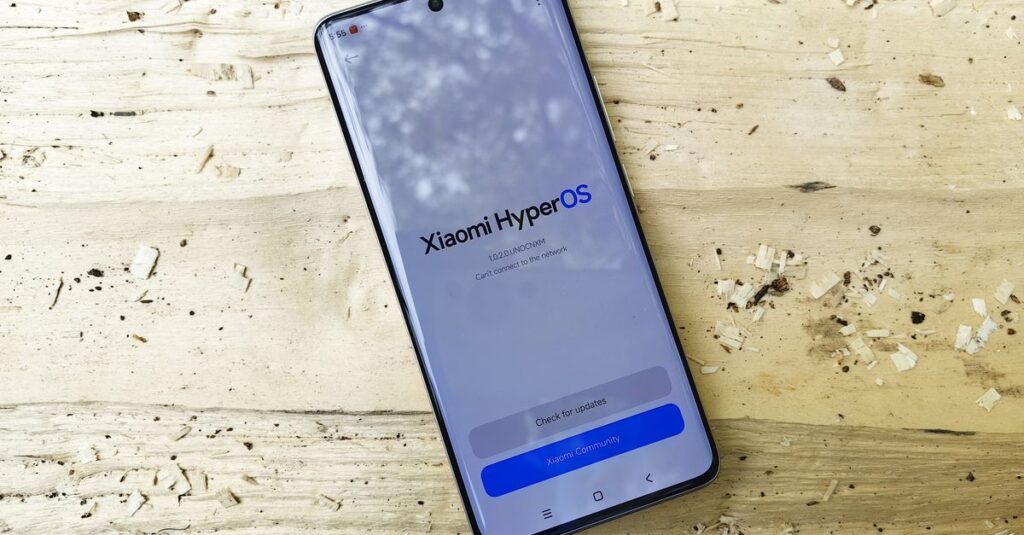
Xiaomi unveils the 18 Pro and 18 Pro Max in China tonight at 7 PM local time, and the two phones will be the first on the market with Qualcomm’s new Snapdragon 8 Elite Gen 6 chip. The launch lands mid-way through Qualcomm’s Snapdragon Summit, giving Xiaomi its usual spot at the front of the flagship queue for the second year running.
The headline spec is the processor. Both models use a 2nm platform built on a gate-all-around process, a step down from the 3nm node of last year’s Snapdragon 8 Elite Gen 5. Xiaomi claims the shrink brings better performance and power efficiency at the same time, and early teardown reports point to battery life gains of 15 to 20 percent over the Xiaomi 17 Pro generation. The Pro Max gets a higher-clocked variant, the Snapdragon 8 Elite Gen 6 Pro, with a faster Adreno GPU and more on-chip graphics memory. Under the hood the chip pairs next-generation Oryon CPU cores in a 2+3+3 arrangement with either 12 or 18 megabytes of on-chip graphics memory depending on the tier, plus 6 or 8 megabytes of last-level cache.
Cameras carry the rest of the story. Both Pro models carry two 200MP Leica sensors, one as the main camera with a 1/1.28-inch LOFIC 3.0 sensor for high dynamic range, and one as a periscope telephoto with 3x optical zoom. A 50MP ultrawide rounds out the triple setup. Xiaomi calls it the most advanced Leica camera system it has used on a numbered flagship, and the dual-200MP arrangement is a first for the series, which shipped a single 200MP sensor last year. The LOFIC sensor design keeps highlight detail in bright scenes that conventional sensors clip, which matters most for night shots and backlit portraits.
Screens, batteries and a button
Displays come from the TCL M11 Super Pixel RGB OLED panel with bezels measured at 0.99mm. The Pro keeps a compact flat panel around 6.3 inches at 2K resolution, while the Pro Max stretches to 6.9 inches. Both phones bring back the secondary rear display that debuted on the Xiaomi 17 Pro, now described as an interactive AI-powered window rather than a simple notification strip. Leaked renders also show the Pro with a privacy display option on the rear panel, a feature aimed at users who handle sensitive material in public.
Battery specs split the two models. The Pro carries a 7,000mAh silicon-anode cell with unusually high silicon content, rated at 32 percent, while the Pro Max goes to 8,500mAh. Wired charging sits at 100W on both, certified by the Chinese 3C agency in August, with 50W wireless on top. A dedicated AI button on the frame gives one-press access to assistant features and can be remapped into the smart home and EV ecosystem, an angle Xiaomi has pushed hard as it expands its car and home business.
Software is HyperOS 4 on Android 17, and both phones carry IP68 and IP69 ratings. Chinese pricing has not leaked in full, but analysts expect the Pro Max to carry a meaningful premium over the Pro given the exclusive chip tier and the larger battery.
The global picture
Buyers outside China will wait. Global availability is expected between December 2026 and early 2027, with estimated pricing of $1,249 to $1,349 for the Pro and $1,399 to $1,499 for the Pro Max. Poland and other European markets should see retail stock in the first quarter of 2027. The standard Xiaomi 18 comes later still, likely December or January, and leaks suggest it will use the regular Elite chip rather than the Pro variant because the 2nm Pro silicon is, in the words of one leaker, extremely expensive. For the Indian market, Xiaomi is reportedly planning to bring only the Pro and Pro Max, skipping the base model entirely.
That cost pressure is the quiet story of this launch cycle. Early reports peg the Snapdragon 8 Elite Gen 6 Pro at roughly $300 per unit, a price that reshapes which phones can afford it. The three-tier lineup reflects the math: the Pro Max gets the expensive chip, the Pro and base models get the standard one, and the Ultra, if it ships with Qualcomm silicon rather than the in-house Xring design, would be the only other candidate for the top tier. Component inflation has already forced design compromises across the industry, and 2nm wafers are the most expensive the sector has ever bought.
Context: a crowded September
The launch caps a busy stretch for Xiaomi. The company opened its fall season on September 7 with the Xiaomi 18 Fold, a mid-folding phone built on its own 3nm Xring O3 chip and the first handset to ship with LPDDR6 memory. The foldable pairs a 200MP Leica main camera with a 6,000mAh battery at 10.68mm thick when closed. Xiaomi also teased the Pro series earlier in the month with a poster headlined Full Upgrade, listing five shared features across both models.
The Pro launch also lands against a shifting competitive field. MediaTek entered the laptop market this week with its 3nm Dimensity CX chip aimed at the Gemini platform, and Chinese memory maker CXMT claimed its new G5 DRAM platform has closed to within a node of Samsung and SK Hynix, reaching an 11.95nm effective process with quadruple exposure. The supply chain underneath flagship phones is consolidating fast, and the 2nm generation will test whether component costs can be passed to buyers without killing demand.
Competitors are not standing still. Vivo and Oppo plan flagship launches in the same window, and Qualcomm used its Summit to position the Elite Gen 6 family as the default for the 2027 flagship season. Xiaomi gets the halo of first availability, but rivals will match the silicon within weeks, which puts the weight of differentiation back on cameras, batteries and software.
For now, the race is Xiaomi’s to lose. Being first on a new flagship chip has become a reliable marketing win for the brand, and tonight extends a streak that started with the Xiaomi 17 series last September. Whether the dual-200MP cameras and the AI rear screen justify the expected price tags is a question for the reviews, which will follow in the coming days as units reach testers.