
Wall Street closed its final trading day of August firmly in the red on Monday, with the Dow Jones Industrial Average shedding 374 points as escalating US-Iran military strikes pushed oil prices above $90 a barrel and cemented expectations that the Federal Reserve may raise interest rates as early as next month.
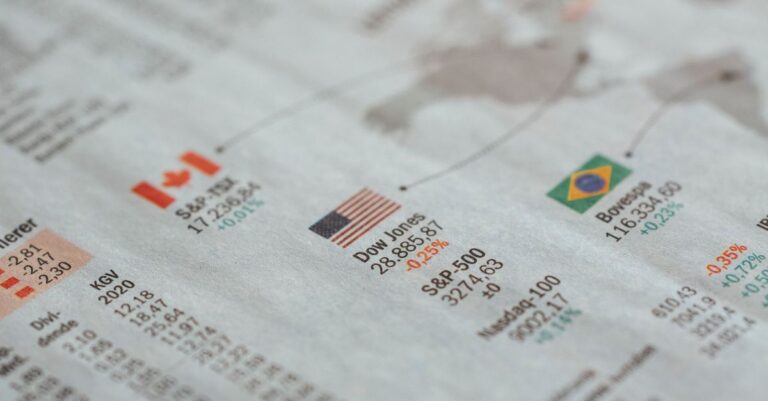
The blue-chip index fell 0.70 percent to close at 53,185.90, while the S&P 500 declined 0.33 percent to 7,686.14 and the Nasdaq Composite slipped 0.12 percent to 26,370.89. The losses capped a session dominated by geopolitical anxiety after US forces struck Iranian military launchers over the weekend, reigniting fears of a broader conflict in the Persian Gulf region.
Oil Drives the Selloff
The immediate catalyst for the market decline was a sharp jump in crude oil prices. Brent crude surged above $90 a barrel in early trading, briefly touching $90.60 before pulling back slightly. West Texas Intermediate climbed to around $85. The move came after reports that Iran had been preparing to deploy mines in the Strait of Hormuz, prompting the US preemptive strikes on the launchers.
The Strait of Hormuz handles roughly one-fifth of global oil trade, making any disruption a matter of acute concern for energy markets and the broader economy. ING analysts estimated that between 5 and 8 million barrels per day transit the waterway, leaving enormous volumes vulnerable to any further escalation.
Treasury 10-year yields rose to their highest level since January 2025, reflecting the dual pressures of higher energy costs feeding into inflation expectations and the growing likelihood that the Fed will respond with tighter monetary policy. The two-year yield climbed to 4.36 percent on Friday after Fed Chair Kevin Warsh signaled that a rate hike remained on the table.
Warsh Sets the Tone at Jackson Hole
The market mood had already been rattled on Friday by Warsh’s keynote address at the Kansas City Fed’s annual symposium in Jackson Hole, Wyoming. In his first major public speech since taking office, Warsh delivered a notably hawkish message on inflation, saying that recent softer data did not tell me that underlying trends have meaningfully improved.
Warsh emphasized that price stability is not self-executing and that the Fed would need to see clear and sustained progress toward its 2 percent inflation target before it could consider standing pat. The July PCE inflation reading came in at 3.7 percent headline and 3.3 percent core, both well above the target, while a Dallas Fed measure that strips out extremes held at 2.3 percent.
The implied probability of a September rate hike jumped to 66.1 percent on Monday, according to CME FedWatch data, nearly doubling from the roughly 35 percent level before Warsh spoke. Markets had previously expected little probability of a rate increase until at least December, making the repricing a dramatic shift in a single trading session.
Big Tech Leads the Decline
The selloff was broad-based but hit technology stocks particularly hard. Alphabet dropped 3.16 percent, Amazon fell 2.45 percent, and other mega-cap names contributed to the Dow’s decline. The pressure on tech reflected the sector’s sensitivity to interest rate expectations, as higher rates increase the discount applied to future earnings and make bonds a more attractive alternative to growth stocks.
Honeywell International was another notable decliner, pulling the Dow lower on concerns about the industrial conglomerate’s exposure to global trade disruptions. The broader market saw declining issues outnumber advancers on both the New York Stock Exchange and the Nasdaq, with selling pressure intensifying through the final hour of trading.
Despite the weak close, the major indexes still posted gains for the month of August as a whole. The S&P 500 had reached an all-time high of 7,816.70 earlier in the month before retreating on the geopolitical and monetary policy concerns that dominated the final week.
The Global Policy Divergence
The Fed’s hawkish stance stands in stark contrast to moves by other major central banks. Norway’s Norges Bank delivered a surprise 25-basis-point rate cut last week, its first reduction in five years, bringing the policy rate to 4.25 percent. The decision took most analysts by surprise, with the bank citing faster-than-expected progress on inflation. Markets are now pricing a high probability of another cut to 4 percent at the September meeting.
Switzerland cut its borrowing costs to zero, while the ECB signaled it might need to adapt its rate cut plans if oil price volatility proved persistent. The divergence highlights the challenge facing global policymakers as they navigate a landscape shaped by trade wars, Middle East conflict, and divergent economic conditions.
Treasury Secretary Scott Bessent pushed back against the case for a US rate hike, telling CNBC that the economy was experiencing a supply shock and that historically central banks do not raise into such events. Core inflation has remained very, very restrained, he argued from the G20 summit in North Carolina.
What Investors Are Watching
The key data points in the coming days will shape whether the September rate hike expectation holds or fades. August CPI data is due September 10, followed by the PCE report later in the month. Any further escalation in the Strait of Hormuz could push oil prices higher and strengthen the case for tighter policy, while cooler inflation readings would give Warsh reason to pause.
For now, the market is pricing in a world where geopolitics and monetary policy are moving in the same direction, both pointing toward higher costs and tighter financial conditions. The August close suggests investors are not yet ready to fully embrace that scenario, but they are no longer willing to bet against it either.
discussion