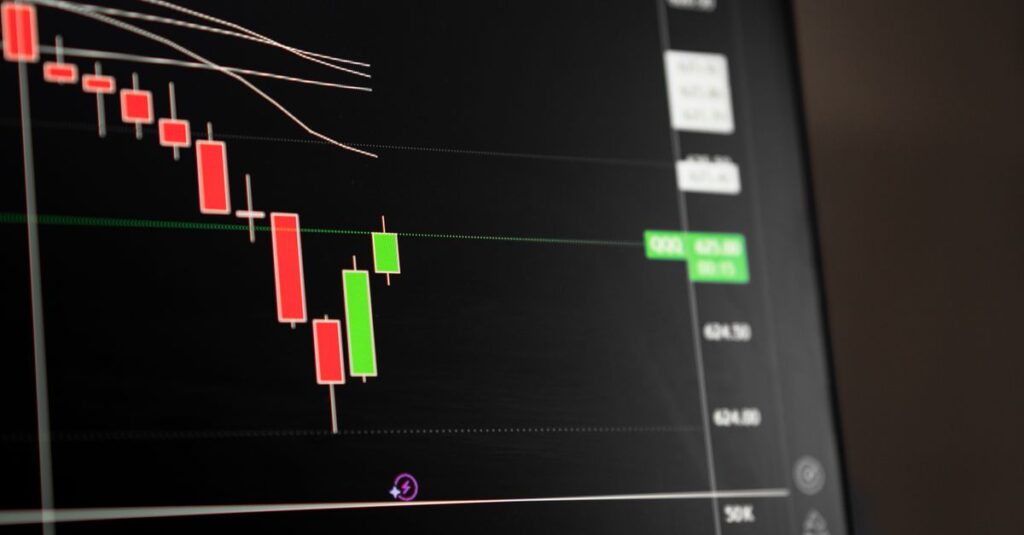
US stocks rallied Thursday, recovering most of their losses for the week as falling oil prices and easing pressure in the bond market gave investors a reason to buy a day after the Federal Reserve raised interest rates. The Nasdaq and S&P 500 led the gains in what traders described as post-hike buying rather than a reversal of the Fed’s message.
The rebound came after a rough stretch. Stocks finished lower Wednesday following the Fed’s unanimous decision to lift its key rate by a quarter percentage point to a target range of 3.75% to 4%, the first increase since July 2023. Treasury yields had climbed to their highest levels since 2007 earlier in the week, with the 10-year crossing 5% for the first time since that era and the G7 average yield hitting its highest level since mid-2008.
Why the Fed is still the story
The rate decision itself was expected. The surprise, if anything, was the tone. The Fed’s latest projections show 16 of 18 officials expecting at least one further quarter-point hike this year, and the median year-end rate projection moved up to 4.1%. Markets read that as a committee that sees more work ahead, not a one-and-done adjustment.
Fed Chair Kevin Warsh put it plainly at the press conference: “the plain fact is that inflation is too high and has been for too long.” Daniela Hathorn, senior market analyst at Capital.com, said the more important message was that policymakers do not believe the tightening cycle is finished. She noted Warsh stressed the Fed wants to prevent the energy shock from generating second- and third-round effects on prices, even while acknowledging it cannot directly influence oil.
President Donald Trump told CNBC on Wednesday he still has confidence in Warsh, but said he wants the central bank to cut rates to 1% “or lower.” The gap between the White House’s preference and the Fed’s projected path is now one of the more conspicuous tensions in the policy picture, and investors are watching for any sign it becomes more than rhetoric.
Oil is doing the heavy lifting
The day’s relief came mostly from energy. Crude prices slipped after Saudi Aramco made progress bypassing a damaged section of its East-West pipeline, with the company working to restore about half the line’s capacity within days. Brent crude had spent recent sessions above $100 a barrel, up more than 65% this year, as the conflict around the Strait of Hormuz kept supply chains tight and tanker traffic unpredictable.
That trajectory matters for the Fed’s job. Higher oil feeds directly into gasoline, diesel and transport costs, and central banks treat it as an inflationary shock rather than a demand signal. The past week’s bond sell-off reflected exactly that fear: investors demanding more yield to hold long-dated government debt while inflation risk from energy and heavy fiscal borrowing sit in the same window.
Economists at Capital Economics wrote this week that the largest rises in long-term borrowing costs were showing up in the US, UK, France, Italy and Japan, where fiscal outlooks are most stretched. They stopped short of calling it a bond market crisis but said there are rational reasons for investors to demand higher returns: geopolitical and inflation uncertainty, questions over US monetary policy, and unsustainable fiscal positions.
John Canavan, lead analyst at Oxford Economics, told the BBC that inflation risk from higher oil, high government debt levels and uncertainty around the vast sums flowing into AI investment were all pushing borrowing costs up. He flagged the record pace of corporate borrowing in recent weeks, mostly for AI and data center development, as a distinct driver of long-term yields in the US. Higher yields, he warned, mean companies pay more to borrow and may pass that cost to customers.
What the rally does and does not mean
Thursday’s bounce should be read carefully. Stocks were not pricing in a friendlier Fed. They were recovering ground lost to a rate hike and to the scariest yield prints in nearly two decades, with oil pulling back enough to make the inflation math slightly less daunting. If the Aramco repair stalls or the Hormuz situation deteriorates, the trade reverses quickly, because nothing structural changed on Thursday.
The bond market remains the constraint. A 10-year yield above 5% filters through to mortgages, car loans and corporate borrowing, and it competes with equities for capital in a way it has not since before the financial crisis. Record corporate issuance in recent weeks, much of it funding AI and data center build-outs, has added to the supply investors must absorb, and buyers are demanding compensation for the privilege.
The week’s sequence is worth noting for what it says about the current regime. Yields surged on oil and fiscal fears. The Fed hiked into that backdrop and signaled more. Stocks fell, then bought the dip the moment oil eased. That is a market trading the inflation path day to day, not one that has settled on where rates land. Positioning is short-term by necessity, and momentum in either direction can extend further than fundamentals justify.
For the rest of the week, attention shifts to how yields settle after the post-Fed repricing and whether oil holds its lower range through the Aramco restoration window. Equity investors got the calm day they needed. Whether it extends depends on forces nobody in the equity market controls.