
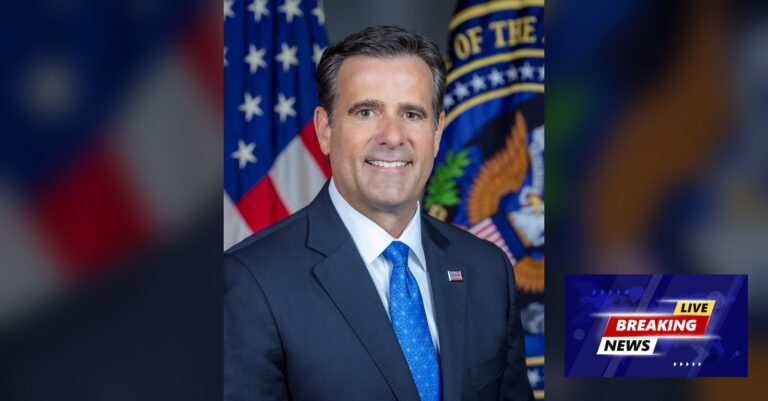
CIA Director John Ratcliffe traveled to Moscow on Tuesday for a rare, unannounced visit to the Russian capital, meeting with Russian officials as U.S.-mediated efforts to end the war in Ukraine remain stalled.
The trip, first reported by CBS News and later confirmed by Axios, Reuters, the Wall Street Journal, CNN, and the BBC, marks Ratcliffe’s first known visit to Russia since becoming CIA director in January 2025. It is also the highest-profile known visit to Moscow by a Trump administration official since taking office, coming at a moment when the war in Ukraine enters its fifth year with no diplomatic resolution in sight.
Flight-tracking data showed a U.S. Air Force Boeing C-17A Globemaster III transport aircraft arriving at Moscow’s Vnukovo Airport on Tuesday, followed by a U.S. diplomatic motorcade. Neither Washington nor Moscow publicly disclosed the purpose of the visit or the identity of Ratcliffe’s interlocutors. The CIA declined immediate comment, and the Kremlin did not confirm a formal meeting schedule involving the Trump administration.
Ukraine Asked to Pause Strikes
Before the CIA director’s arrival, the United States informed Ukraine that a senior delegation would travel to Moscow and asked Kyiv to suspend long-range strikes until the delegation had departed, according to a senior Ukrainian official who spoke to the Kyiv Independent. Ukraine reportedly complied with the request during the window of the visit.
The request suggests the visit was treated with a high degree of operational sensitivity, with Washington seeking to avoid any incident that could escalate tensions during the meetings. The U.S. has previously requested similar pauses during sensitive diplomatic moments, though asking Ukraine to halt offensive operations underscores the high stakes involved in the encounter.
Ratcliffe’s arrival follows months of deadlock in U.S.-brokered peace talks between Moscow and Kyiv. The two sides remain far apart on core issues including territorial concessions, security guarantees, military arrangements, and the terms of any ceasefire. President Putin recently dismissed Ukraine’s latest peace proposals as too exotic for Russia to consider, while Zelensky has pushed for legally binding security guarantees from the United States and European partners.
Iran Factor Looms Over Visit
The timing adds another layer of complexity. One day before Ratcliffe landed in Moscow, Treasury Secretary Scott Bessent publicly launched Operation Economic Outcast, a campaign of secondary sanctions and financial pressure intended to isolate Iran from remaining commercial partners. Russia has long been one of Tehran’s most important strategic partners, providing military cooperation, nuclear technology, and diplomatic cover.
Whether Ratcliffe’s meetings touched on Iran-related intelligence sharing, sanctions coordination, or simply the broader strategic picture remains unknown. However, the convergence of the CIA visit with the new pressure campaign on Iran suggests a possible linkage between the two tracks of U.S. foreign policy. Moscow has consistently condemned Western military action against Iran while avoiding direct involvement in the conflict.
The visit also comes as the New START treaty, the last major nuclear arms control agreement between Washington and Moscow, expired in February 2026. Russia has conducted two nuclear-capable missile tests in recent days, further raising tensions and underscoring the urgency of maintaining some form of strategic communication between the two nuclear superpowers.
Historical Parallel Raises Concerns
The last CIA director to visit Moscow was William Burns in November 2021, who met Russian officials three months before the full-scale invasion of Ukraine. That historical parallel has not been lost on analysts, who caution that high-level intelligence contact does not always prevent escalation.
It appears to be Ratcliffe’s first known trip to Russia as CIA director, though he has maintained contact with Russian intelligence counterparts. – CBS News
Analysts note that intelligence contacts of this nature can serve multiple purposes: crisis deconfliction, prisoner swaps, signaling of red lines, or exploratory discussions of broader settlements. History shows that such contacts sometimes produce tangible results and sometimes do not. The opacity is deliberate. Intelligence diplomacy is designed to function outside the daily news cycle.
For Ukraine, the temporary request to pause strikes and the promise of a later debrief suggest that Washington continues to treat Kyiv as a partner that must be managed carefully during sensitive moments with Moscow. For Russia, hosting a CIA director without public fanfare allows the Kremlin to maintain the appearance of openness to dialogue while revealing little about its own bottom lines.
Neither Washington nor Moscow has confirmed the identity of Ratcliffe’s Russian interlocutors, whether the meetings included political figures beyond the intelligence services, or any specific agenda items. Whether the visit produces movement on any of the outstanding files, including Ukraine, Iran, detainees, or intelligence-to-intelligence protocols, will become clearer in the coming days and weeks.

discussion