Iran has offered to reopen the Strait of Hormuz within seven days if the United States takes initial steps toward easing military pressure and lifting its blockade of Iranian ports, according to a senior Iranian official who spoke to Reuters and to Kyodo News.
The offer, approved by Supreme Leader Mojtaba Khamenei and the Supreme National Security Council according to the official, was conveyed to Washington through mediators. It calls for renewed negotiations toward a permanent end to hostilities in a conflict that has disrupted Gulf energy shipments since US and Israeli strikes on Iran in February. Oil fell on the headlines: WTI dropped more than 1.6 percent to near $90 a barrel, adding to Monday’s 3 percent slide, when reports first surfaced that Saudi Arabia is working to resume flows on its damaged East-West pipeline and that diplomacy around the strait is picking up.
The seven-day framing is the most concrete timeline any side has put on the table since the June memorandum collapsed. Previous statements from Tehran were open-ended conditions without a deadline. This one puts a number on it, which gives both markets and mediators something to measure against.
The conditions attached
Iranian officials framed the offer as a handshake, not a surrender. Parliament speaker Mohammad Bagher Ghalibaf said on Sunday, per the semi-official Fars news agency, that the strait would remain closed until US commitments are fulfilled, and that Iran would keep fighting and negotiating at the same time, using military force to deter its enemies and diplomacy to consolidate battlefield gains. The proposal reportedly demands an end to US military pressure, lifting of the naval blockade on Iranian ports, and changes to sanctions that restrict Iranian shipping.
Tehran plans to consult intermediary countries during the UN General Assembly this week, though the official ruled out a meeting between President Masoud Pezeshkian and President Trump. The mediation channel matters because the last formal arrangement, a memorandum signed in June that promised an immediate reopening and a phased end to hostilities, collapsed within weeks, and neither side has since held a direct negotiation that produced results. Qatar and Oman have served as the main intermediaries, with Pakistan brokering the LNG angle earlier in the year.
| Item | Detail |
|---|---|
| Offer | Reopen Hormuz within 7 days |
| Condition | US eases military pressure, lifts port blockade |
| Approved by | Supreme Leader Mojtaba Khamenei, Security Council |
| Channel | Mediators; talks at UN General Assembly |
| Market reaction | WTI down about 1.7 percent to near $90 |
| Precedent | June memorandum collapsed within weeks |
Why the strait matters this much
The Strait of Hormuz is the chokepoint for roughly a fifth of the world’s oil and a large share of its liquefied natural gas. Its effective closure since February has reshaped energy markets. The International Energy Agency’s September report put global oil supply on track to fall by 5.7 million barrels per day this year, with Gulf exports in August running at nearly half their pre-war level. Brent crude spiked to $113.48 a barrel on September 9 before easing back, and global oil inventories have drawn down by more than 500 million barrels since the war began.
Saudi Arabia has been rerouting cargoes. After drones launched from Iraq damaged the East-West pipeline, which can carry 7 million barrels per day, Riyadh suspended loadings at its Yanbu Red Sea terminal and shifted volumes to ship-to-ship transfers off Oman’s Sohar port. Those transfers rose to 2.7 million barrels per day from 1.5 million in August, according to Kpler data cited by Reuters. US Energy Secretary Chris Wright told CNBC the pipeline outage would be measured in days; independent analysts at Rapidan Energy expect Saudi exports to fall by 400,000 barrels per day this month regardless, and warned that risk stays skewed toward a larger disruption if the outage extends past September or proxy groups escalate attacks.
“As long as the legitimate rights of the Iranian people are not recognized and the US does not fulfill its commitments, the Strait of Hormuz will remain closed,” Ghalibaf said, according to Fars.
What happens next
The offer lands days before President Trump hosts Chinese leader Xi Jinping in Washington on Thursday, a summit where energy prices and the Iran war sit on the agenda alongside tariffs. China, the largest buyer of Gulf crude, has a direct interest in the strait reopening, and mediators have used that leverage on both sides. Beijing has also watched its own supply chains bend around the closure, with Qatari LNG rerouted and Indian refiners paying premiums for Atlantic basin barrels.
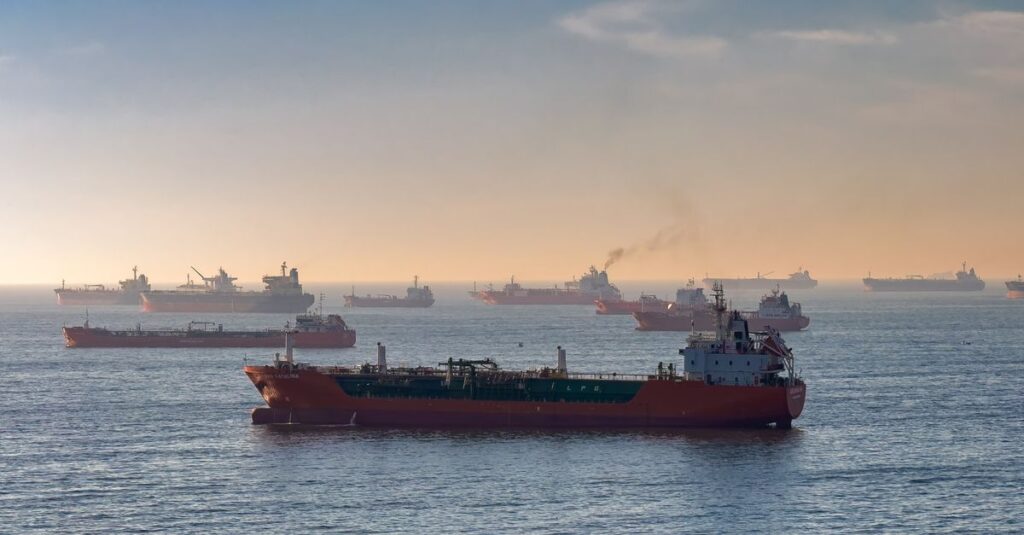
Traders treated the report as directionally positive but unverified. The June memorandum also promised an immediate reopening, and its collapse left dozens of tankers stranded in the Gulf, with more than 70 vessels still stuck there by the count of Lloyd’s List Intelligence in August. Shipping data still shows transit far below pre-war norms, and Iran has attacked ships using the bypass route around Oman in the past, striking two in early August alone. Admiral Brad Cooper, the US Central Command chief, said Monday that more than one billion barrels of crude have moved through the strait under US escort operations over the past two months, alongside more than 2,000 commercial vessels.
The seven-day clock, if it starts, would be the clearest test yet of whether either government can deliver on a promise its hardliners accepted. Oil markets gave back some war premium on the news, with Brent near $92 after peaking above $113 this month. Diesel markets tell a harsher story: US diesel prices topped $200 a barrel in early September, up 94 percent from pre-war levels, and refinery margins across the Atlantic basin hit records as crude and product prices diverged. A reopened strait would take months, not days, to normalize product flows, since refined product exports from the Gulf remain down roughly 60 percent from February. That gap is why the term curve stayed in steep backwardation even as the front of the market sold off on the headlines.