
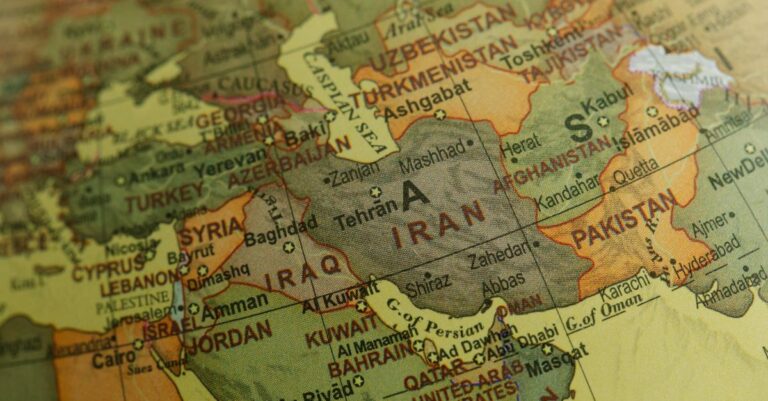
An oil tanker caught fire after striking two sea mines near the Strait of Hormuz, Iran’s Revolutionary Guard revealed on Monday, as the UK Maritime Trade Operations logged its third vessel attack near Oman this month, deepening the crisis threatening global energy supply chains.
The incident, which occurred on August 29 approximately 12 nautical miles north of Khasab, Oman, forced the crew to battle a blaze on deck before the fire was brought under control. UKMTO issued Warning 122-26 on August 30, describing a crude oil tanker being struck by an unknown projectile while transiting inbound into the Arabian Gulf. No casualties or environmental damage were reported, and authorities said they were investigating the incident. The vessel’s identity, flag, ownership, and the full extent of the damage have not been publicly disclosed.
Iran’s Revolutionary Guard later provided additional details, confirming the vessel had struck two mines in the vicinity of the strait. The disclosure marked a significant escalation in Iran’s maritime campaign, shifting from previously reported projectile attacks to the use of submerged mines, a tactic that is far more difficult for commercial vessels to detect and avoid using standard navigation equipment.
A Pattern of Attacks Near Oman
The August 29 incident was the third reported attack on a commercial vessel near the Omani coast in the past week. UKMTO Warning 121-26, issued on August 27, reported a tanker struck by an unknown projectile near Khasab on August 25, causing a fire that was subsequently extinguished with all crew members reported safe. Just days before that, on August 24, an oil tanker identified as the Liberia-flagged Aframax Metro Venetian was hit by an unknown projectile approximately 9 nautical miles northeast of Ash Shishah, Oman, while carrying jet fuel outbound from the Gulf.
The Metro Venetian sustained engine-room damage that temporarily disabled the vessel, though it later proceeded to Fujairah under its own power. No casualties were reported. The pattern of strikes concentrated along the Omani-side corridor of the strait has raised alarm among shipping companies, insurers, and energy analysts, who warn that the attacks threaten to disrupt one of the world’s most critical oil transit routes at a time of already elevated global energy prices.
Earlier in August, the bulk carrier Minoan Dignity was struck near the strait, resulting in the death of its chief engineer, according to maritime security reports. That incident marked the first fatal casualty from a direct attack on commercial shipping in the strait since the conflict began, and it prompted a reassessment of risk by several major tanker operators.
Mines Change the Calculus for Shipping
The shift from projectile attacks to sea mines represents a tactical escalation that could have far-reaching consequences for commercial shipping through the strait. Unlike missiles or drones, which can be intercepted by naval air defence systems deployed by the US and its Gulf allies, mines are passive weapons that sit silently beneath the surface until a vessel passes over them. Detecting and clearing mines requires specialized naval assets and can take weeks or months, during which entire shipping lanes may need to be closed to commercial traffic.
The US military only completed clearing mines from the main shipping lane through the strait days before the latest attacks, an operation the Trump administration had highlighted as evidence that safe passage was being restored through the critical waterway. The new mine incidents suggest that either the clearing operation missed some devices, or that fresh mines have been laid in the southern Omani corridor since the main lane was declared safe to transit.
Maritime security analysts noted that the incidents occurred in the same general area as previous attacks, concentrated near the narrow Musandam Peninsula approaches on the Omani side. The UKMTO advisory remains in effect, urging all commercial vessels to transit the strait with heightened caution and report any suspicious activity immediately to military authorities monitoring the waterway.
Broader Impact on Energy Markets
The string of attacks has contributed to a sustained elevation in oil tanker insurance premiums across the region, adding an estimated 5 to 15 percent to the cost of transiting the strait compared to pre-conflict levels. Major shipping companies have increasingly rerouted vessels around the Cape of Good Hope rather than risk the Hormuz passage, a detour that adds roughly 10 to 14 days to voyages between the Gulf and Asian markets. Several tanker operators have suspended Gulf route bookings entirely until security conditions improve.
The Strait of Hormuz handles approximately 20 million barrels of oil per day, roughly a fifth of global consumption. Any sustained disruption to shipping through the waterway has immediate and severe consequences for energy prices worldwide. Oil benchmark Brent crude has risen more than 40 percent since the conflict began in February, driven in large part by the repeated closure and reopening of the strait and the associated uncertainty about supply continuity.
Meanwhile, Iran’s foreign minister Araghchi stated that negotiations between Tehran and Muscat regarding management of the strait were nearing completion, though no formal agreement has been announced. Oman has positioned itself as a mediator in the dispute, with its foreign minister visiting Tehran on August 25 to advance discussions. However, the continued mine-laying and projectile attacks suggest that military operations on the ground are outpacing diplomatic efforts to find a negotiated settlement.
The latest incidents also raise urgent questions about the safety of the fleet of crude oil tankers, LNG carriers, and bulk freighters that transit the strait daily, many of them carrying cargo bound for refineries in India, China, Japan, and South Korea. Port authorities in Fujairah, the UAE’s main oil storage hub just outside the strait, reported increased vessel arrivals as ships divert from the contested zone, placing additional strain on already congested port facilities along the Gulf of Oman coast.

discussion